Exact2Pass

Last Update 8 hours ago Total Questions : 139
The Performing Cybersecurity Using Cisco Security Technologies content is now fully updated, with all current exam questions added 8 hours ago. Deciding to include 350-201 practice exam questions in your study plan goes far beyond basic test preparation.
You'll find that our 350-201 exam questions frequently feature detailed scenarios and practical problem-solving exercises that directly mirror industry challenges. Engaging with these 350-201 sample sets allows you to effectively manage your time and pace yourself, giving you the ability to finish any Performing Cybersecurity Using Cisco Security Technologies practice test comfortably within the allotted time.
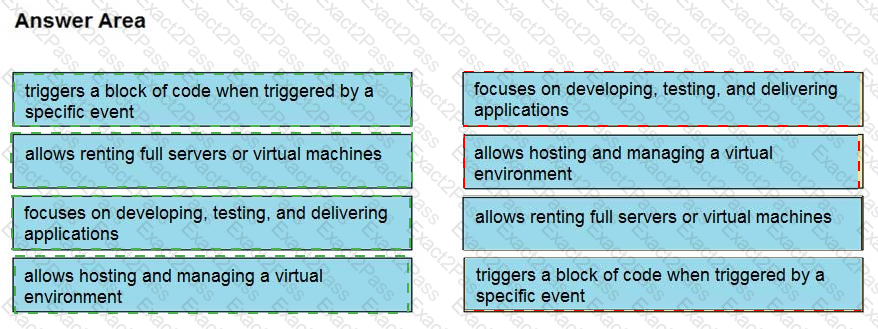
Drag and drop the cloud computing service descriptions from the left onto the cloud service categories on the right.
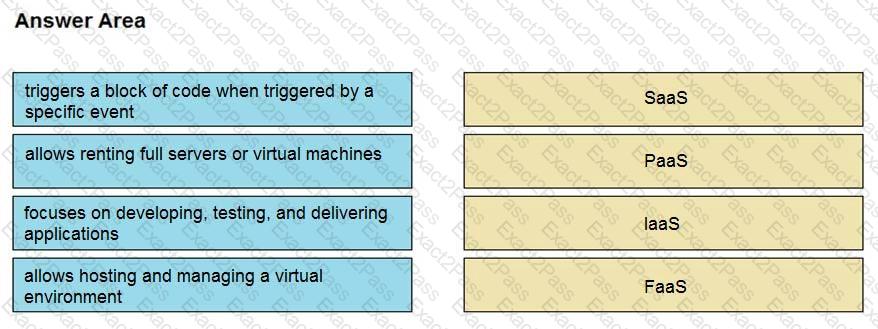
Refer to the exhibit.
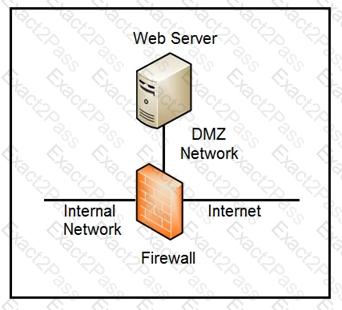
Which two steps mitigate attacks on the webserver from the Internet? (Choose two.)
A new malware variant is discovered hidden in pirated software that is distributed on the Internet. Executives have asked for an organizational risk assessment. The security officer is given a list of all assets. According to NIST, which two elements are missing to calculate the risk assessment? (Choose two.)
A company recently completed an internal audit and discovered that there is CSRF vulnerability in 20 of its hosted applications. Based on the audit, which recommendation should an engineer make for patching?
A customer is using a central device to manage network devices over SNMPv2. A remote attacker caused a denial of service condition and can trigger this vulnerability by issuing a GET request for the ciscoFlashMIB OID on an affected device. Which should be disabled to resolve the issue?
Refer to the exhibit.
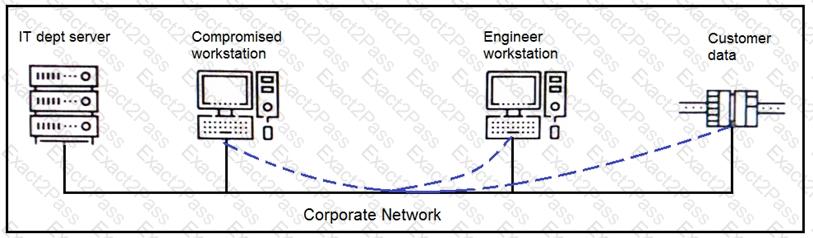
An engineer received a report that an attacker has compromised a workstation and gained access to sensitive customer data from the network using insecure protocols. Which action prevents this type of attack in the future?
According to GDPR, what should be done with data to ensure its confidentiality, integrity, and availability?
The incident response team receives information about the abnormal behavior of a host. A malicious file is found being executed from an external USB flash drive. The team collects and documents all the necessary evidence from the computing resource. What is the next step?
A security analyst receives an escalation regarding an unidentified connection on the Accounting A1 server within a monitored zone. The analyst pulls the logs and discovers that a Powershell process and a WMI tool process were started on the server after the connection was established and that a PE format file was created in the system directory. What is the next step the analyst should take?
A SOC team receives multiple alerts by a rule that detects requests to malicious URLs and informs the incident response team to block the malicious URLs requested on the firewall. Which action will improve the effectiveness of the process?