Exact2Pass

Enterprise cloud operations across modern corporate infrastructures require real-time resource orchestration, strict identity boundaries, and automated governance frameworks. As organizations consolidate hybrid workloads within Microsoft Azure, systems engineers and platform administrators must manage compute scaling, storage tiering, and complex software-defined networking topologies. The Microsoft Certified: Azure Administrator Associate credential validates whether an engineer can handle production tenant management under strict operational and security standards.
Clearing the AZ-104 examination demands far more than basic navigation of the Azure Portal. Many candidates struggle on scenario-driven questions because they rely on unverified public study notes or static question lists, leaving them unprepared for multi-tiered architecture challenges. Test takers must be able to diagnose overlapping address spaces in virtual network peering, resolve Microsoft Entra ID role inheritance conflicts, and configure automated scaling rules within Virtual Machine Scale Sets (VMSS) during heavy traffic surges.
True operational readiness requires building hands-on competence in authoring Bicep and ARM deployment templates, configuring granular role-based access control (RBAC), and analyzing telemetry in Log Analytics workspaces. Sourcing high-quality az-104 exam questions and using a well-structured microsoft azure administrator az-104 study guide ensures you develop the technical judgment necessary for enterprise cloud administration. Exact2Pass provides calibrated, scenario-based practice environments designed to mirror official Microsoft performance standards, giving you the practical analytical skills needed to pass on your first attempt.
The AZ-104 assessment evaluates your ability to configure, secure, and troubleshoot enterprise Azure resources across hybrid and multi-region deployments. Our practice tests replicate official exam scenarios, challenging you to resolve network routing conflicts, evaluate storage access policies, and deploy containerized services. Regular practice in a timed environment builds the technical confidence and pacing required to excel on exam day.
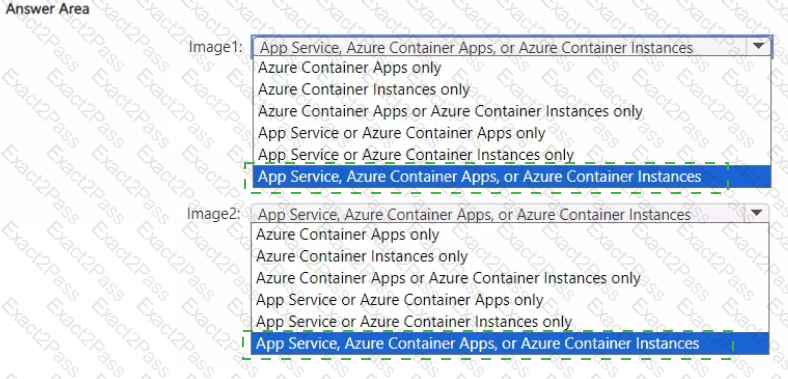
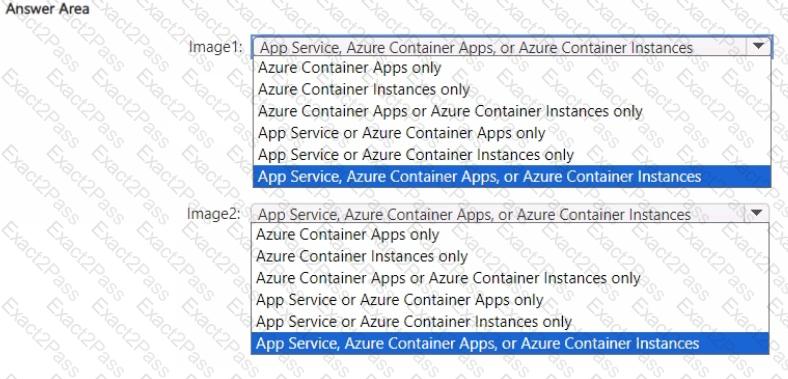
You need to implement the planned changes for the new containers.
Which Azure services can you use for each image? To answer, select the appropriate options in the answer area.
NOTE: Each correct selection is worth one point.
You need to implement the planned changes for the storage account content. Which containers and file shares can you use to organize the content?
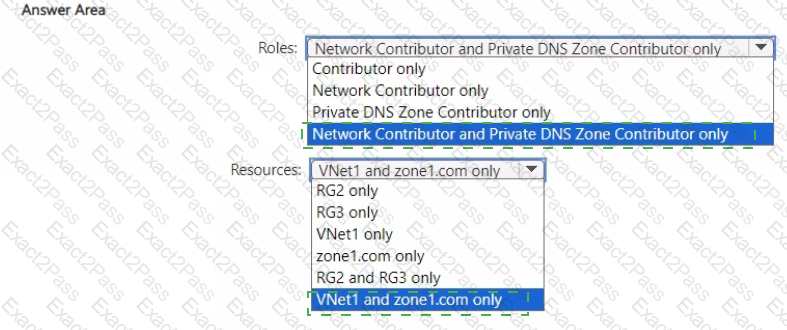
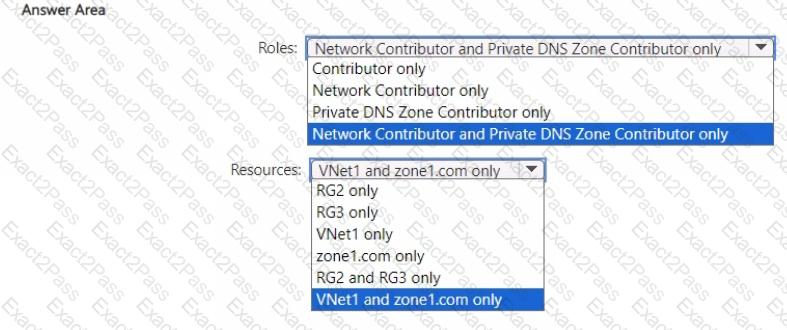
You need to implement the planned changes for User1.
Which roles should you assign to User1, and for which resources? To answer, select the appropriate options in the answer area.
NOTE: Each correct selection is worth one point.
You need to implement the planned changes for DCR1. Which type of query should you use?
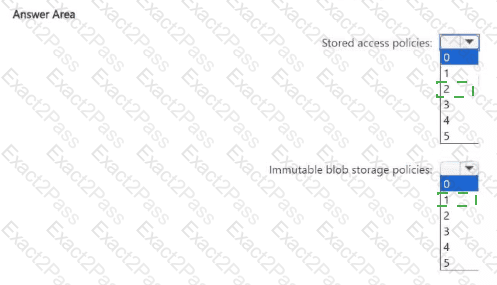
You implement the planned changes for cont2.
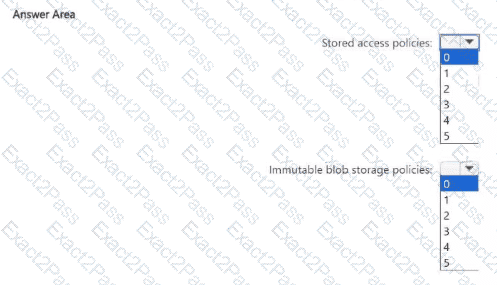
What is the maximum number of additional access policies you can create for cont2? To answer, select the appropriate options in the answer area.
NOTE: Each correct selection is worth one point.
You need to configure WebApp1 to meet the technical requirements.
Which certificate can you use from Vault1?
You need to configure encryption for the virtual machines. The solution must meet the technical requirements.
Which virtual machines can you encrypt?
You need to add VM1 and VM2 to the backend poo! of LB1. What should you do first?
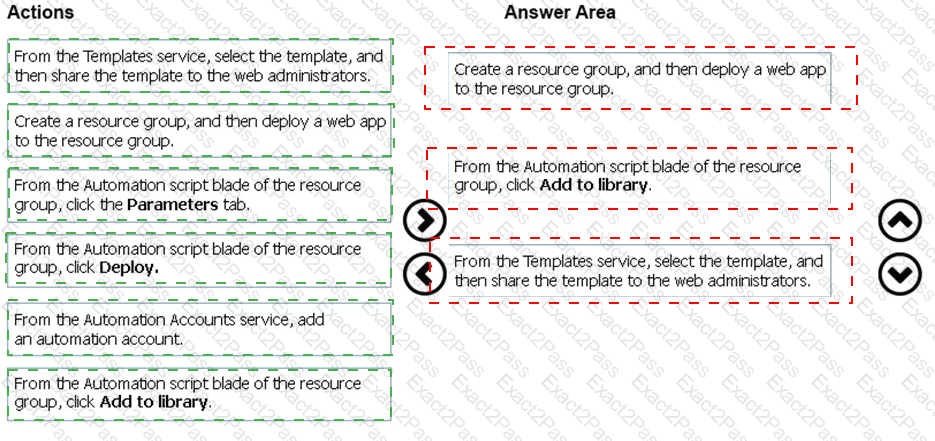
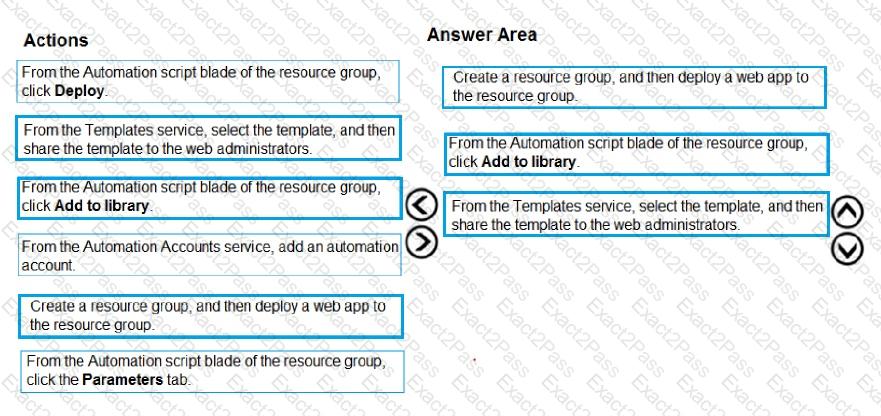
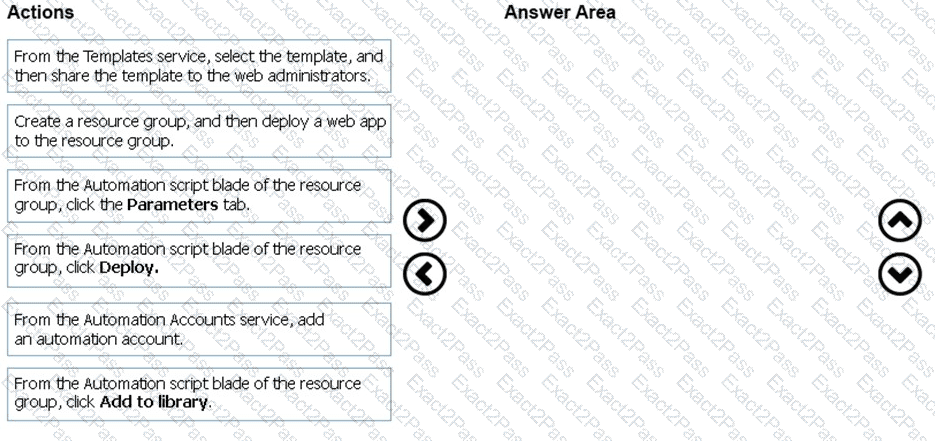
You need to prepare the environment to ensure that the web administrators can deploy the web apps as quickly as possible.
Which three actions should you perform in sequence? To answer, move the appropriate actions from the list of actions to the answer area and arrange them in the correct order.
You need to prepare the environment to meet the authentication requirements.
Which two actions should you perform? Each correct answer presents part of the solution.
NOTE: Each correct selection is worth one point.