Exact2Pass

Last Update 13 hours ago Total Questions : 422
The Administering Relational Databases on Microsoft Azure content is now fully updated, with all current exam questions added 13 hours ago. Deciding to include DP-300 practice exam questions in your study plan goes far beyond basic test preparation.
You'll find that our DP-300 exam questions frequently feature detailed scenarios and practical problem-solving exercises that directly mirror industry challenges. Engaging with these DP-300 sample sets allows you to effectively manage your time and pace yourself, giving you the ability to finish any Administering Relational Databases on Microsoft Azure practice test comfortably within the allotted time.
You have 25 Azure SQL databases.
You need to implement a centralized database management solution that uses Transact-SQL What should you include in the solution?
Your on-premises network contains a server that hosts a 60-TB database named DB 1. The network has a 10-Mbps internet connection.
You need to migrate DB 1 to Azure. The solution must minimize how long it takes to migrate the database.
What should you use?
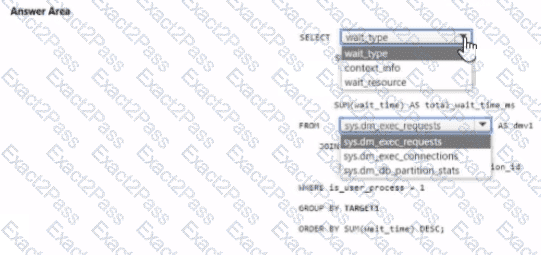
You have an Azure SQL database.
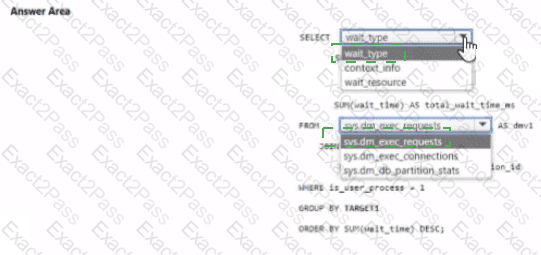
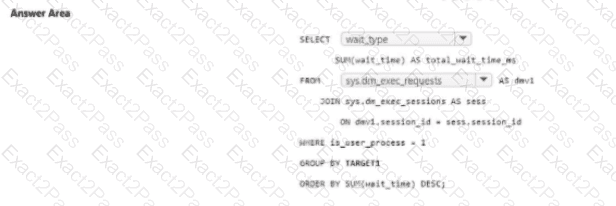
You need to identify whether a delayed query execution is associated to a RESOURCE wait.
How should you complete the Transact –SQL statement? To answer, select the appropriate option in the answer area.
NOTE: Each correct selection is worth one point.
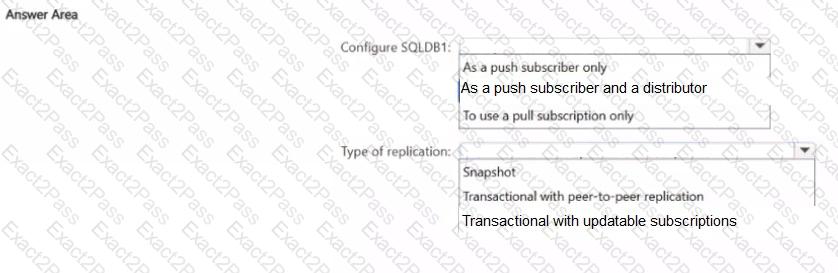
You have an on-premises Microsoft SOL Server instance named S0LSVR1 that hosts a database named DB1.
You have an Azure subscription that contains an Azure SQL database named SQLDB1.
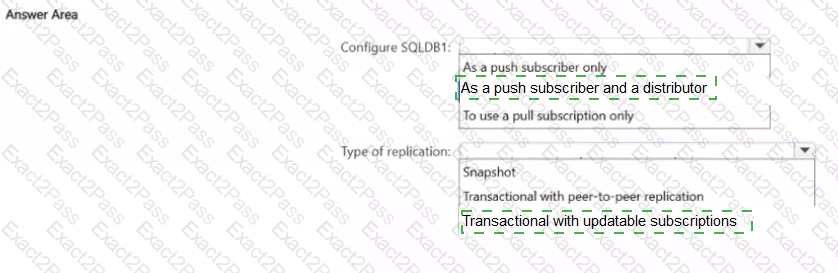
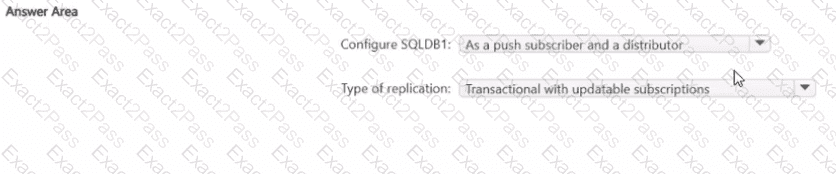
You need to migrate the data stored in DB1 to SQLD81 by using SQL Server replication. The solution must minimize the performance impact on D81.
How should you configure the replication? To answer, select the appropriate options in the answer area.
NOTE: Each correct selection is worth one point.
You need to recommend a solution to ensure that the performance of DB3 is optimized after the migration to Azure SQL Database. The solution must meet availability requirements.
What should you include in the recommendation?
What should you implement to meet the disaster recovery requirements for the PaaS solution?
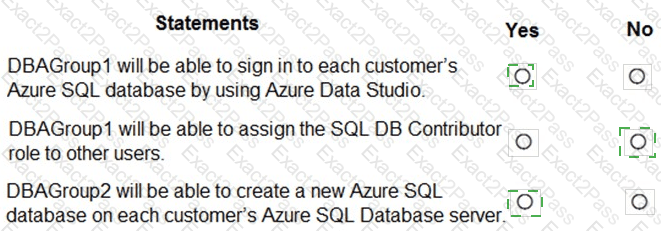
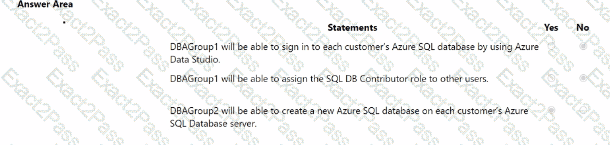
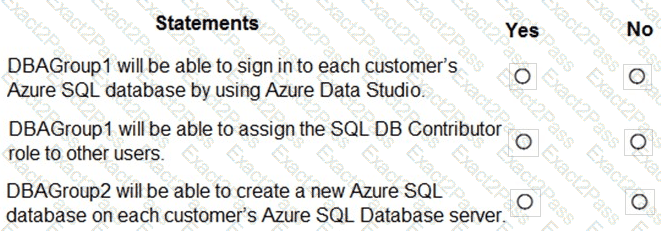
You are evaluating the role assignments.
For each of the following statements, select Yes if the statement is true. Otherwise, select No.
NOTE: Each correct selection is worth one point.
You need to implement a solution to notify the administrators. The solution must meet the monitoring requirements.
What should you do?
Based on the PaaS prototype, which Azure SQL Database compute tier should you use?
What should you use to migrate the PostgreSQL database?