Exact2Pass

Last Update 18 hours ago Total Questions : 209
The Implementing Analytics Solutions Using Microsoft Fabric content is now fully updated, with all current exam questions added 18 hours ago. Deciding to include DP-600 practice exam questions in your study plan goes far beyond basic test preparation.
You'll find that our DP-600 exam questions frequently feature detailed scenarios and practical problem-solving exercises that directly mirror industry challenges. Engaging with these DP-600 sample sets allows you to effectively manage your time and pace yourself, giving you the ability to finish any Implementing Analytics Solutions Using Microsoft Fabric practice test comfortably within the allotted time.
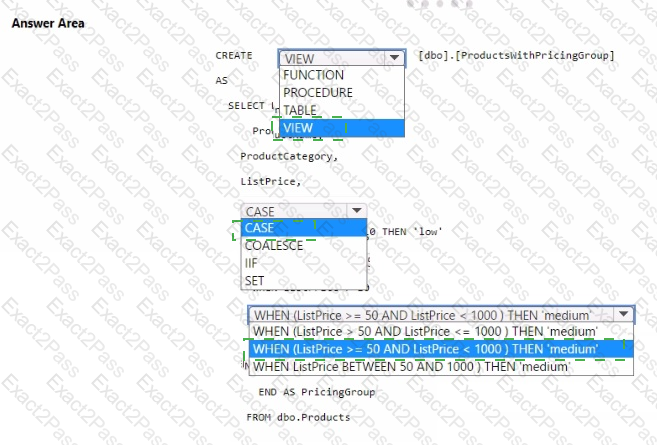
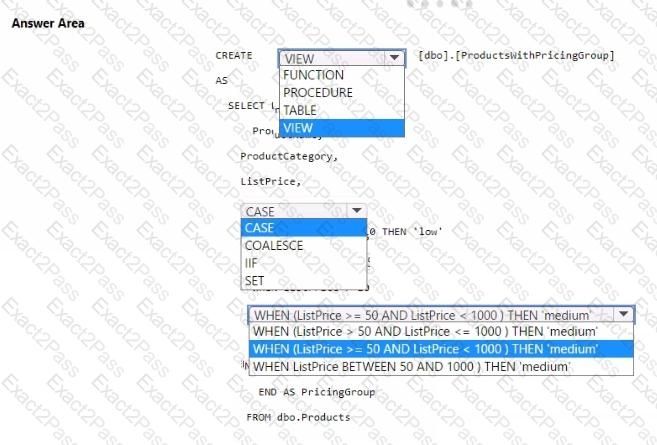
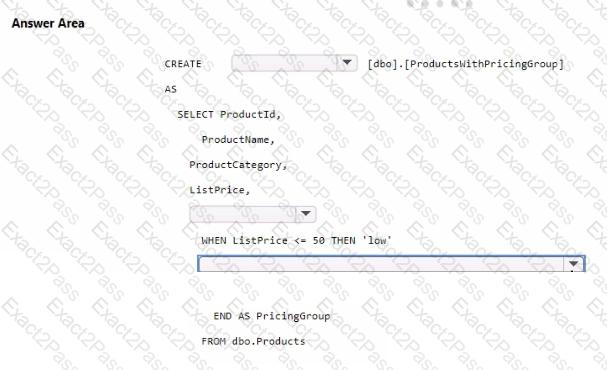
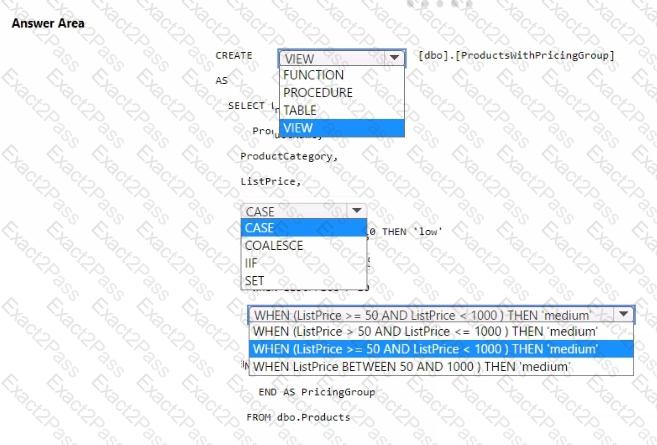
You need to resolve the issue with the pricing group classification.
How should you complete the T-SQL statement? To answer, select the appropriate options in the answer area.
NOTE: Each correct selection is worth one point.
You have a Fabric tenant.
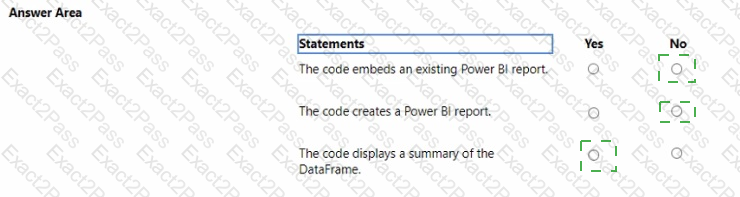
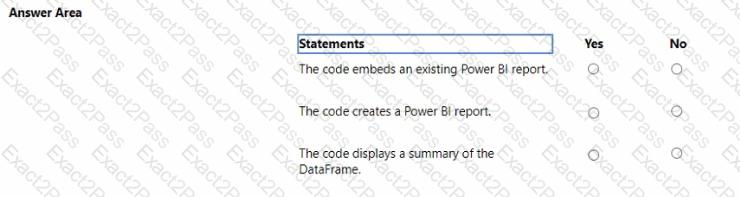
You plan to create a Fabric notebook that will use Spark DataFrames to generate Microsoft Power Bl visuals.
You run the following code.

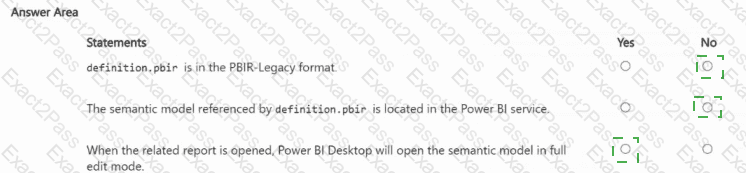
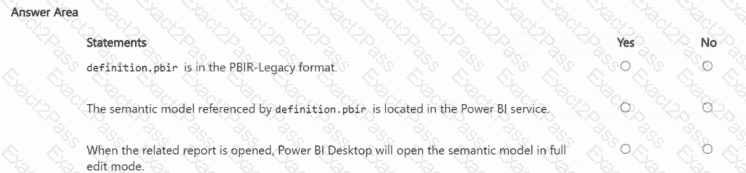
For each of the following statements, select Yes if the statement is true. Otherwise, select No. NOTE: Each correct selection is worth one point.
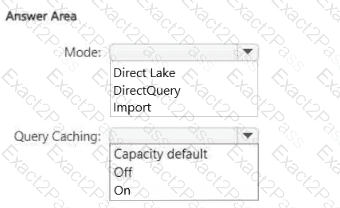
You have a Fabric tenant that contains a lakehouse named LH1.
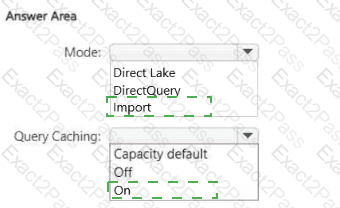
You need to deploy a new semantic model. The solution must meet the following requirements:
• Support complex calculated columns that include aggregate functions, calculated tables, and Multidimensional Expressions (MDX) user hierarchies.
• Minimize page rendering times.
How should you configure the model? To answer, select the appropriate options in the answer area.
NOTE: Each correct selection is worth one point.
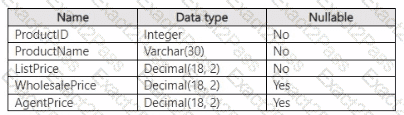
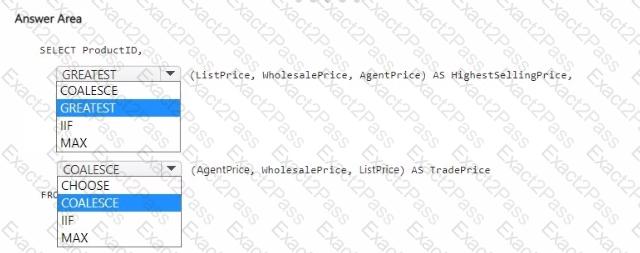
You have a Fabric warehouse that contains a table named Sales.Products. Sales.Products contains the following columns.
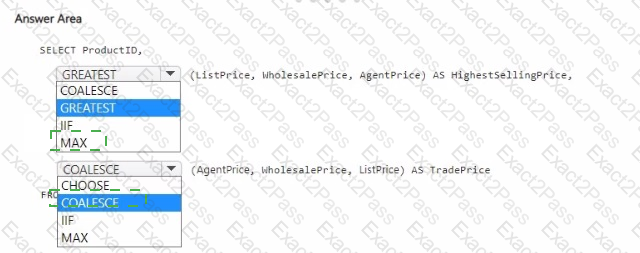
You need to write a T-SQL query that will return the following columns.
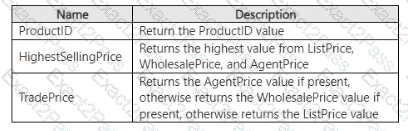
How should you complete the code? To answer, select the appropriate options in the answer area.
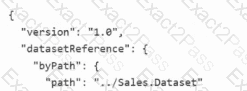
You have a Microsoft Power BI project that contains a file named definition.pbir. definition.pbir contains the following JSON.
You have a Fabric tenant that contains a lakehouse named Lakehouse1. Lakehouse1 contains a subfolder named Subfolder1 that contains CSV files. You need to convert the CSV files into the delta format that has V-Order optimization enabled. What should you do from Lakehouse explorer?
You need to provide Power Bl developers with access to the pipeline. The solution must meet the following requirements:
• Ensure that the developers can deploy items to the workspaces for Development and Test.
• Prevent the developers from deploying items to the workspace for Production.
• Follow the principle of least privilege.
Which three levels of access should you assign to the developers? Each correct answer presents part of the solution. NOTE: Each correct answer is worth one point.
Which type of data store should you recommend in the AnalyticsPOC workspace?
What should you recommend using to ingest the customer data into the data store in the AnatyticsPOC workspace?
You need to ensure the data loading activities in the AnalyticsPOC workspace are executed in the appropriate sequence. The solution must meet the technical requirements.
What should you do?