Exact2Pass

Last Update 2 hours ago Total Questions : 16
The Nutanix Certified Master - Multicloud Infrastructure (NCM-MCI)v6.5 content is now fully updated, with all current exam questions added 2 hours ago. Deciding to include NCM-MCI-6.5 practice exam questions in your study plan goes far beyond basic test preparation.
You'll find that our NCM-MCI-6.5 exam questions frequently feature detailed scenarios and practical problem-solving exercises that directly mirror industry challenges. Engaging with these NCM-MCI-6.5 sample sets allows you to effectively manage your time and pace yourself, giving you the ability to finish any Nutanix Certified Master - Multicloud Infrastructure (NCM-MCI)v6.5 practice test comfortably within the allotted time.
Task 5
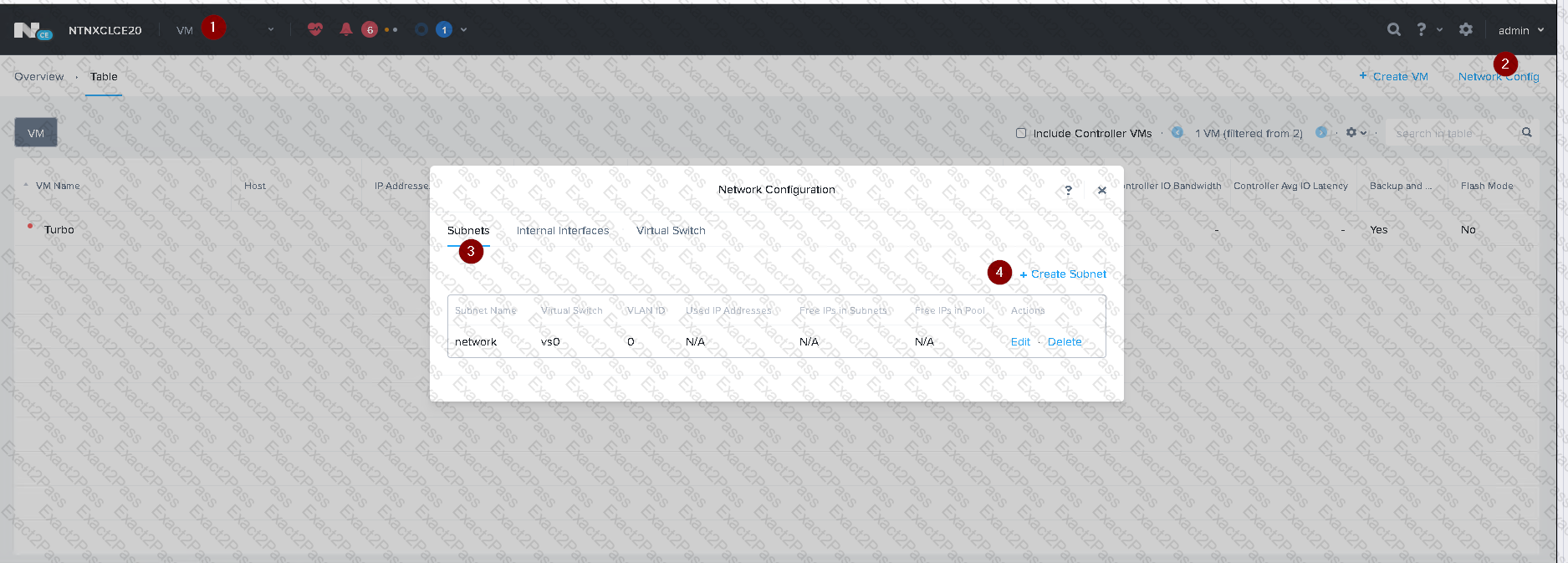
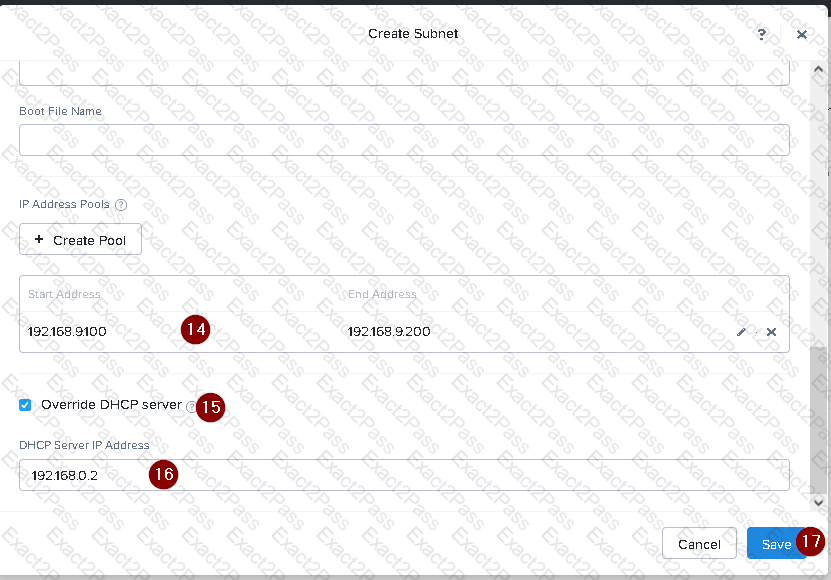
An administrator has been informed that a new workload requires a logically segmented network to meet security requirements.
Network configuration:
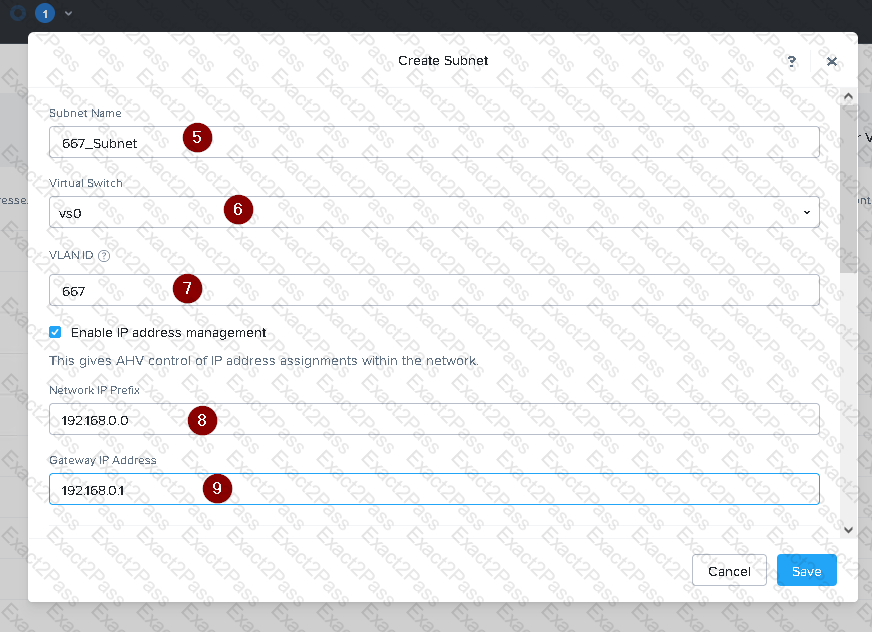
VLAN: 667
Network: 192.168.0.0
Subnet Mask: 255.255.255.0
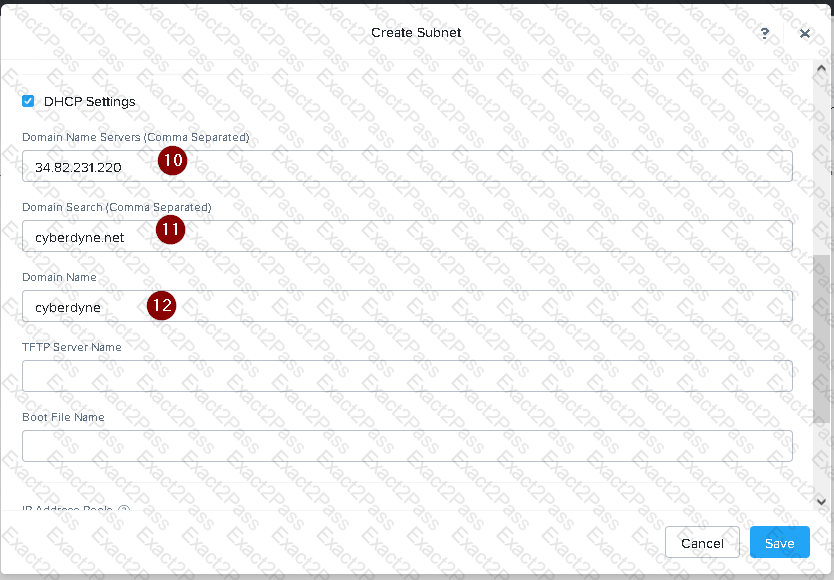
DNS server: 34.82.231.220
Default Gateway: 192.168.0.1
Domain: cyberdyne.net
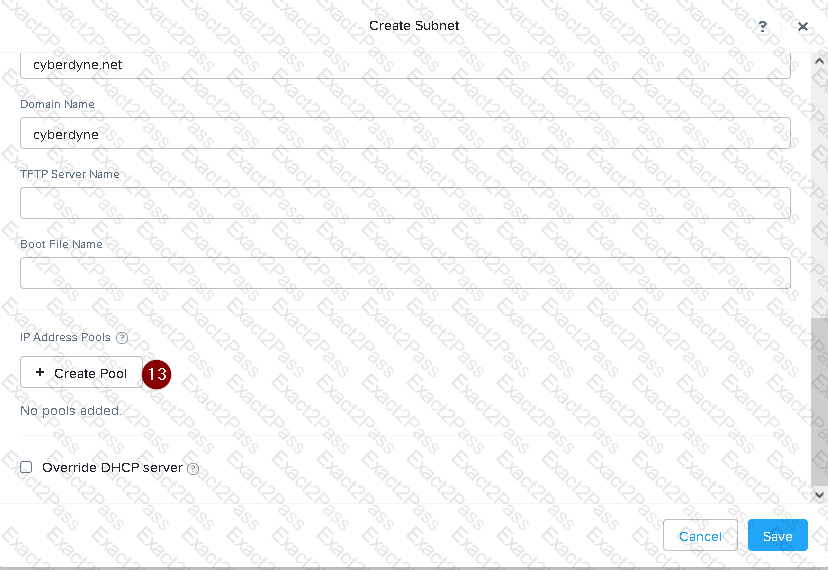
IP Pool: 192.168.9.100-200
DHCP Server IP: 192.168.0.2
Configure the cluster to meet the requirements for the new workload if new objects are required, start the name with 667.
Task 12
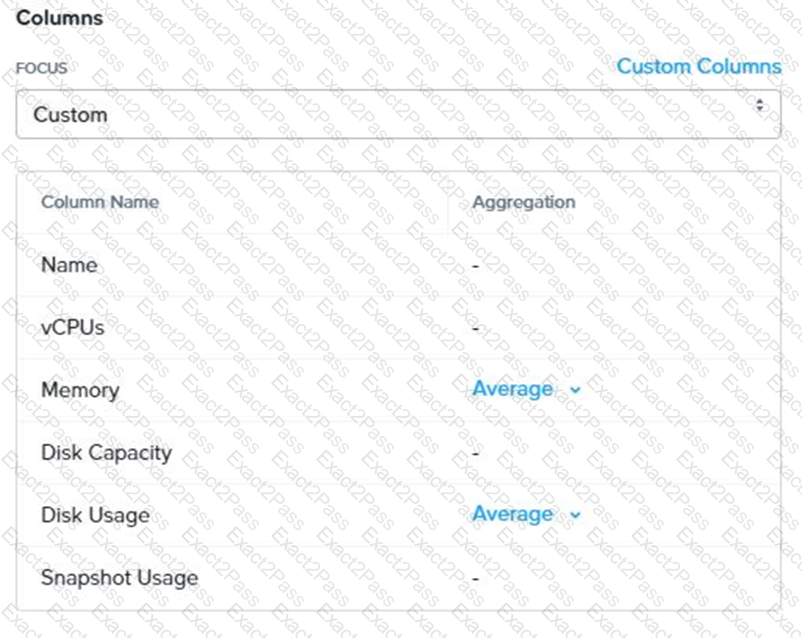
An administrator needs to create a report named VMs_Power_State that lists the VMs in the cluster and their basic details including the power state for the last month.
No other entities should be included in the report.
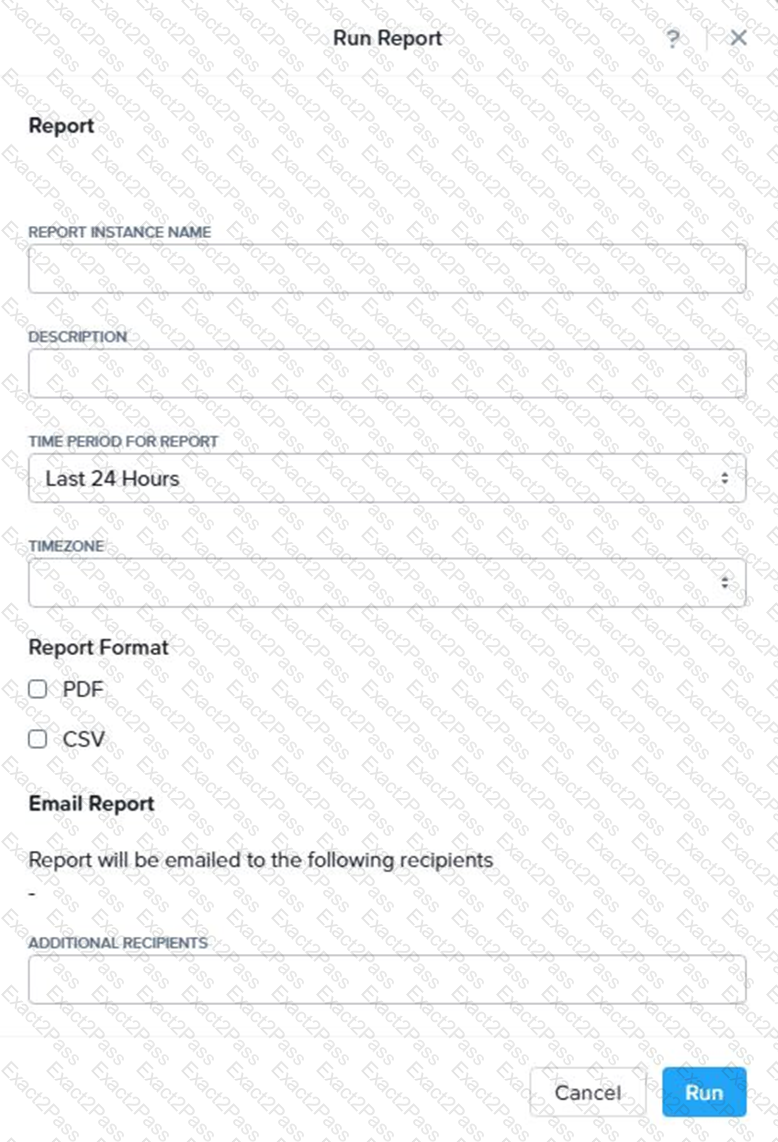
The report should run monthly and should send an email to admin@syberdyne.net when it runs.
Generate an instance of the report named VMs_Power_State as a CSV and save the zip file as Desktop\Files\VMs_Power_state.zip
Note: Make sure the report and zip file are named correctly. The SMTP server will not be configured.
Task 6
An administrator has requested the commands needed to configure traffic segmentation on an unconfigured node. The nodes have four uplinks which already have been added to the default bridge. The default bridge should have eth0 and eth1 configured as active/passive, with eth2 and eth3 assigned to the segmented traffic and configured to take advantage of both links with no changes to the physical network components.
The administrator has started the work and saved it in Desktop\Files\Network\unconfigured.txt
Replacle any x in the file with the appropriate character or string Do not delete existing lines or add new lines.
Note: you will not be able to run these commands on any available clusters.
Unconfigured.txt
manage_ovs --bond_name brX-up --bond_mode xxxxxxxxxxx --interfaces ethX,ethX update_uplinks
manage_ovs --bridge_name brX-up --interfaces ethX,ethX --bond_name bond1 --bond_mode xxxxxxxxxxx update_uplinks
Task 9
Part1
An administrator logs into Prism Element and sees an alert stating the following:
Cluster services down on Controller VM (35.197.75.196)
Correct this issue in the least disruptive manner.
Part2
In a separate request, the security team has noticed a newly created cluster is reporting.
CVM [35.197.75.196] is using the default password.
They have provided some new security requirements for cluster level security.
Security requirements:
Update the default password for the root user on the node to match the admin user password: Note: 192.168.x.x is not available. To access a node use the Host IP (172.30.0.x) from a CVM or the supplied external IP address.
Update the default password for the nutanix user on the CVM to match the admin user password.
Resolve the alert that is being reported.
Output the cluster-wide configuration of the SCMA policy to Desktop\Files\output.txt before changes are made.
Enable the Advance intrusion Detection Environment (AIDE) to run on a weekly basis for the cluster.
Enable high-strength password policies for the cluster.
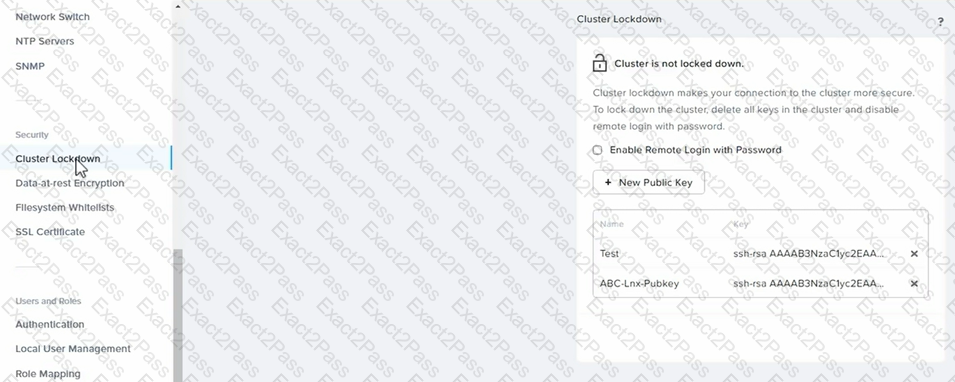
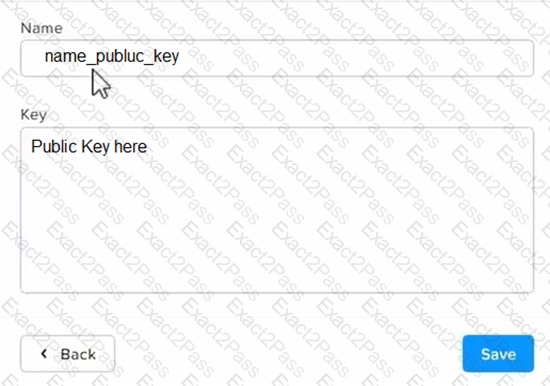
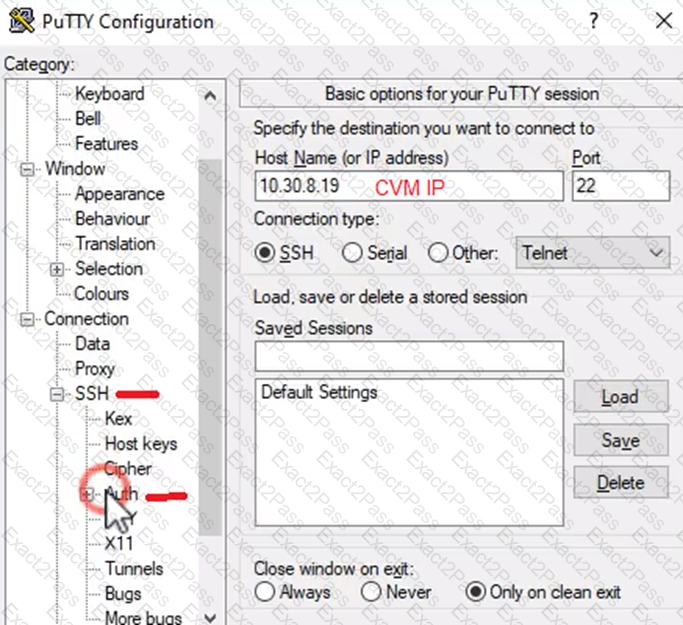
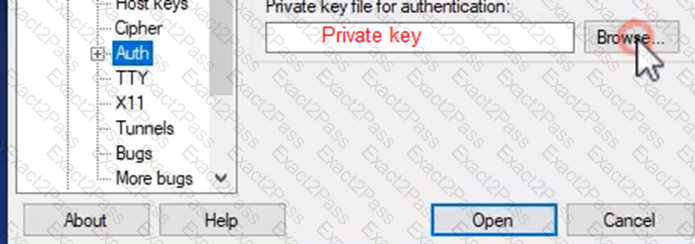
Ensure CVMs require SSH keys for login instead of passwords. (SSH keys are located in the Desktop\Files\SSH folder).
Ensure the clusters meets these requirements. Do not reboot any cluster components.