Exact2Pass

Last Update 10 hours ago Total Questions : 75
The SolarWinds Observability Self-Hosted Fundamentals content is now fully updated, with all current exam questions added 10 hours ago. Deciding to include Observability-Self-Hosted-Fundamentals practice exam questions in your study plan goes far beyond basic test preparation.
You'll find that our Observability-Self-Hosted-Fundamentals exam questions frequently feature detailed scenarios and practical problem-solving exercises that directly mirror industry challenges. Engaging with these Observability-Self-Hosted-Fundamentals sample sets allows you to effectively manage your time and pace yourself, giving you the ability to finish any SolarWinds Observability Self-Hosted Fundamentals practice test comfortably within the allotted time.
Which two of the following statements apply to SolarWinds Hybrid Cloud Observability (HCO) Platform? (Choose two.)
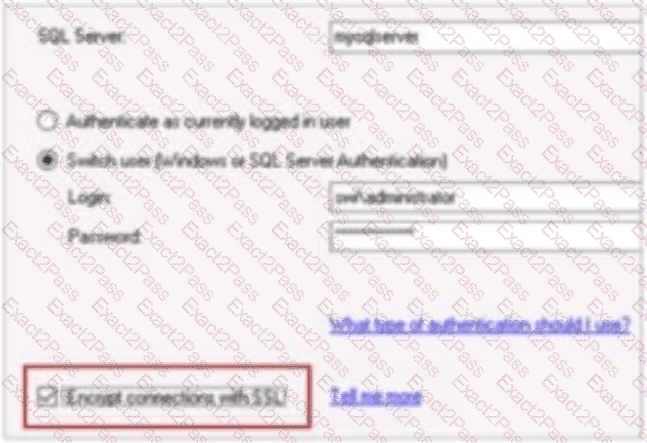
What is the effect of checking the Encrypt connections with SSL box in the configuration wizard?
A performance issue on a network is being troubleshooted and needs customization of metrics and entities to be viewed during troubleshooting. Which tool combination / no combination would allow this to happen?
An alert has been created to email when AppInsight for SQL detects a database fragmentation that exceeds 30%. The issue is not considered resolved unless the fragmentation is below 10%. How would the reset conditions be configured for this alert?
Which two of the following settings are present in modern dashboards and not classic dashboards? (Choose two.)
Which two of the following use cases are utilized for account limitations? (Choose two.)
Alerts A and B were assigned the same trigger action through the action manager. What describes what happens when the action is modified while editing alert A's configuration?
Which statement regarding SolarWinds* Hybrid Cloud Observability (HCO) groups is accurate?
A user reported they could not see data related to monitored nodes beyond their geographical location within SolarWinds* Hybrid Cloud Observability (HCO). Other staff within the organization do not have the same problem. What is the likely cause of the issue?
Which two of the following settings can be configured while adding a single node for monitoring within "manage nodes"? (Choose two.)

