Exact2Pass

Last Update 4 hours ago Total Questions : 154
The Certified Associate in Python Programming content is now fully updated, with all current exam questions added 4 hours ago. Deciding to include PCAP-31-03 practice exam questions in your study plan goes far beyond basic test preparation.
You'll find that our PCAP-31-03 exam questions frequently feature detailed scenarios and practical problem-solving exercises that directly mirror industry challenges. Engaging with these PCAP-31-03 sample sets allows you to effectively manage your time and pace yourself, giving you the ability to finish any Certified Associate in Python Programming practice test comfortably within the allotted time.
A variable stored separately in every object is called:
Which of the following lambda definitions are correct? (Select two answers)
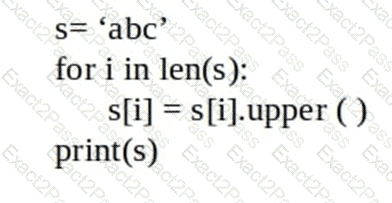
What is the expected output of the following snippet?
An operator able to perform bitwise shifts is coded as (select two answers)
Which of the following statements are true? (Select two answers)
Which of the following expression evaluate to True? (Select two answers)

