Exact2Pass

Last Update 22 hours ago Total Questions : 73
The Designing and Implementing Multi-Agent AI Solutions content is now fully updated, with all current exam questions added 22 hours ago. Deciding to include AI-500 practice exam questions in your study plan goes far beyond basic test preparation.
You'll find that our AI-500 exam questions frequently feature detailed scenarios and practical problem-solving exercises that directly mirror industry challenges. Engaging with these AI-500 sample sets allows you to effectively manage your time and pace yourself, giving you the ability to finish any Designing and Implementing Multi-Agent AI Solutions practice test comfortably within the allotted time.
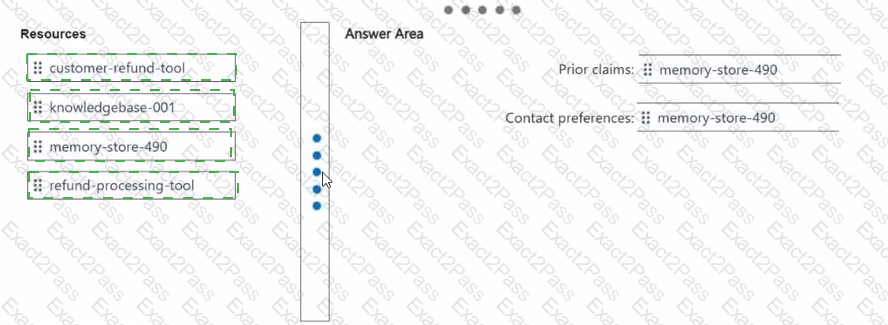
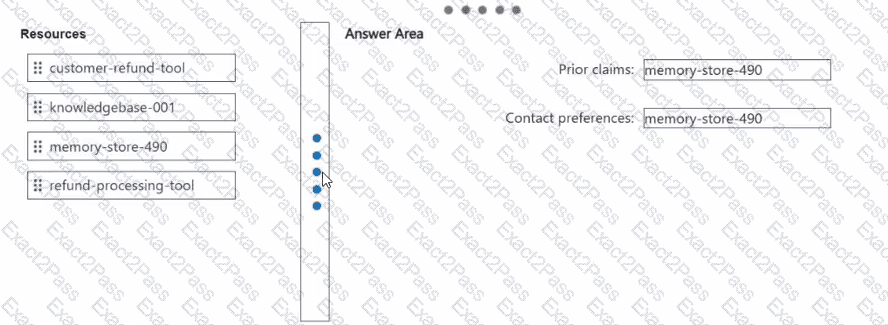
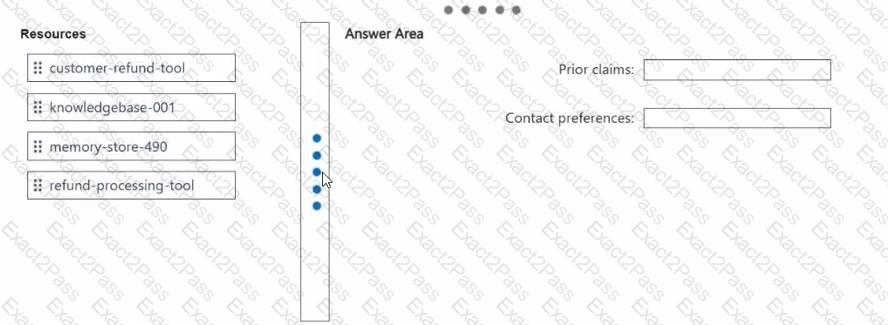
You need to recommend a memory retrieval strategy to support the planned changes for claim Approval.
What should you recommend? To answer, drag the appropriate resources to the correct requirements. Each resource may be used once, more than once, or not at all. You may need to drag the split bar between panes or scroll to view content.
NOTE: Each correct selection is worth one point.
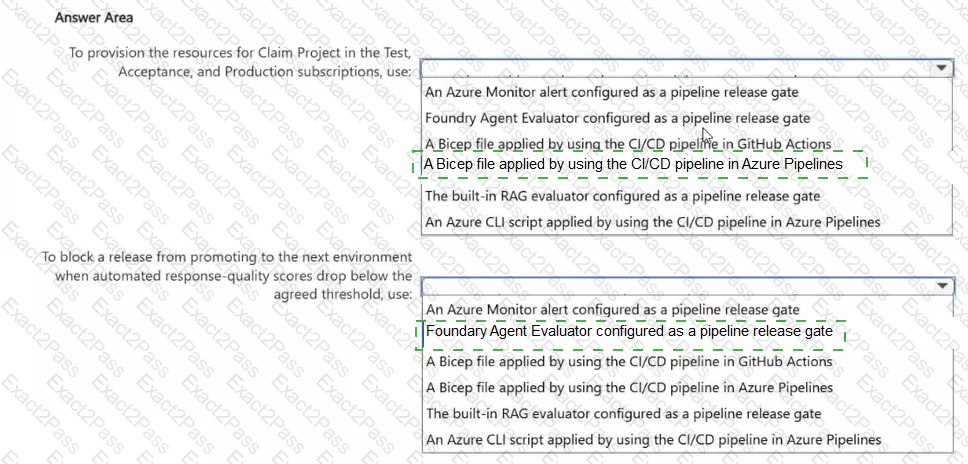
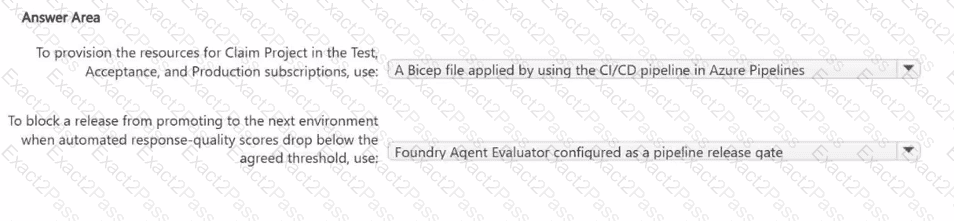
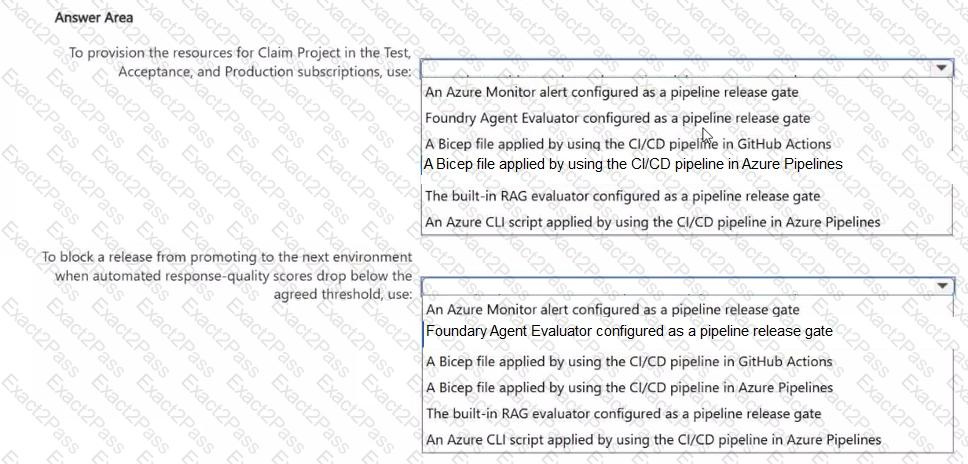
You need to recommend an end-to-end release lifecycle for claim Approval. The solution must meet the technical requirements.
What should you recommend for each requirement? To answer, drag the appropriate recommendations to the correct requirements. Each recommendation may be used once, more than once, or not at all. You may need to drag the split bar between panes or scroll to view content.
NOTE: Each correct selection is worth one point.
You need to recommend changes to decrease the Claim Approval duration without breaking any existing functionality.
What should you recommend?
You need to implement the business rule for claim Approval. Which workflow node should you use?
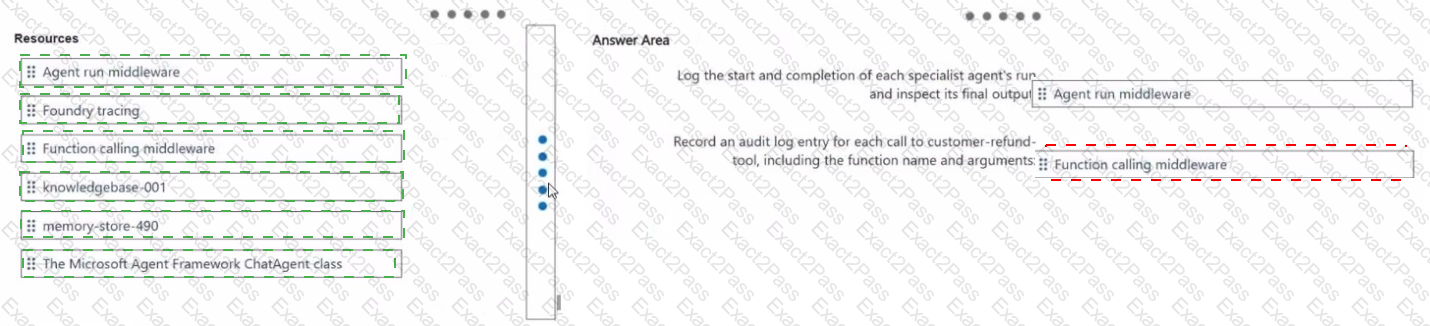
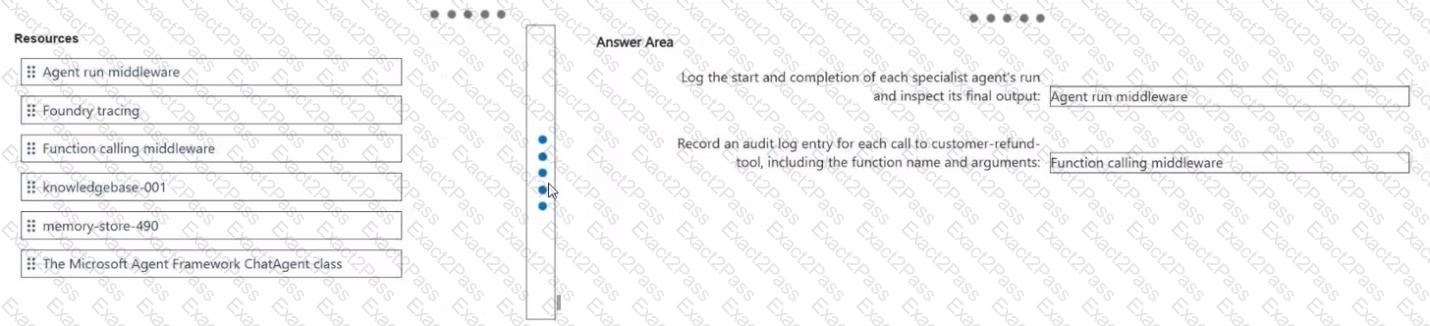
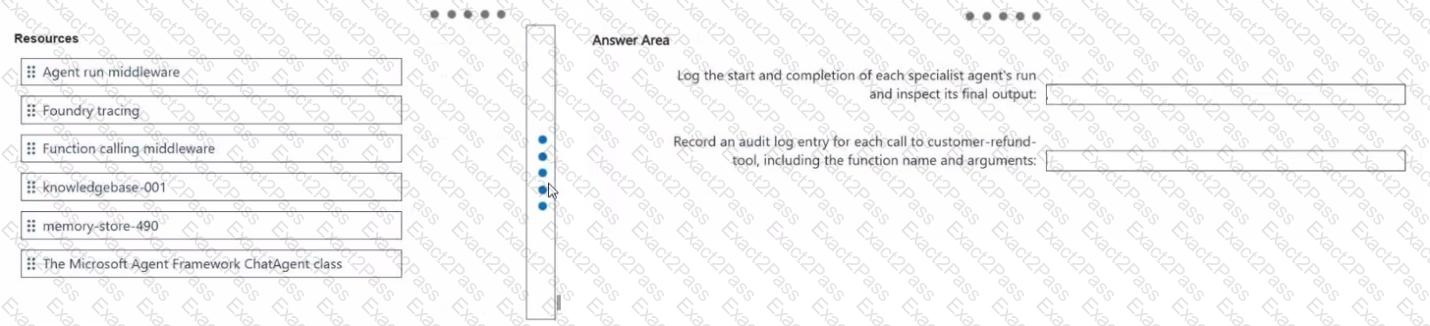
You need to implement a logging solution for claim Approval.
What should you use for each process? To answer, drag the appropriate resources to the correct processes. Each resource may be used once, more than once, or not at all. You may need to drag the split bar between panes or scroll to view content.
NOTE: Each correct selection is worth one point.
You need to implement an advanced prompt engineering strategy to resolve the Patient Intake agent issues. The solution must prevent hardcoding new logic into the agent ' s core prompt.
What should you do?
You need to define a strategy to meet the business requirements for emergency room visits.
Which workflow node should you add to the Lead Orchestrator workflow?
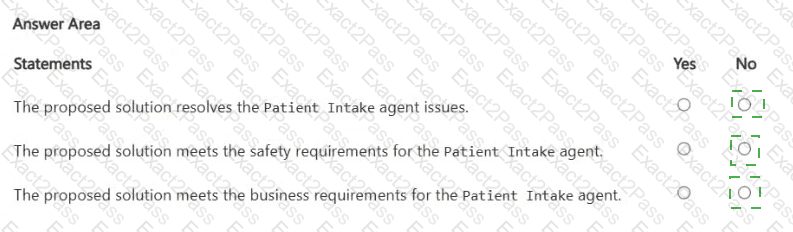
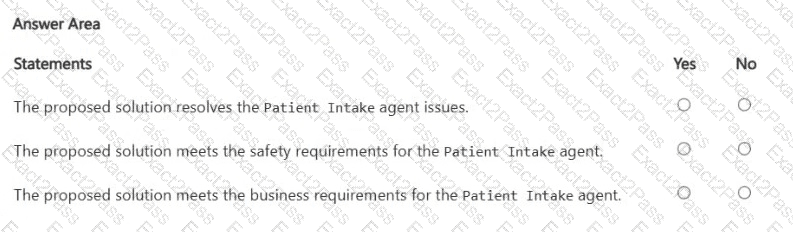
You are validating the outcome of the consultant proposal for the Patient Intake agent.
For each of the following statements, select Yes if the statement is true. Otherwise, select No.
NOTE: Each correct selection is worth one point.
You need to design a solution to resolve the Scheduling agent issue.
What should you include in the design?
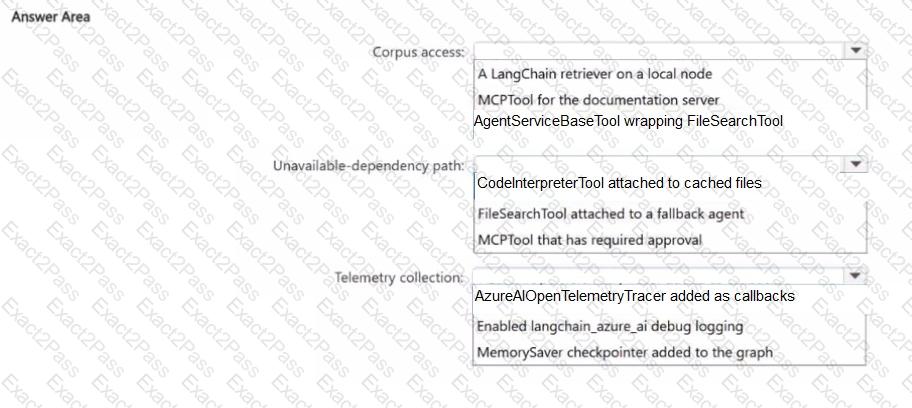
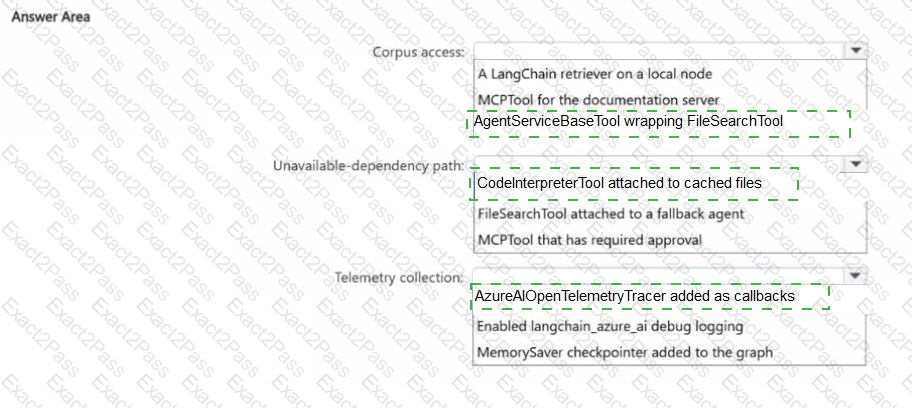
You have a Microsoft Foundry agent built by using LangGraph. The agent retrieves policy content from a vector store. The LangGraph orchestration runs in Azure Container Apps, and the operations team uses Azure Monitor to inspect agent runs.
You discover that the vector store is sometimes unreachable during Azure regional maintenance windows
You need to configure the tool ecosystem to ensure that the agent can answer policy questions during outages The solution must meet the following requirements:
• Use the project vector store without adding a local retrieval node for the primary path.
• Run the cached-policy lookup in the same compute environment as the LangGraph code.
• Emit agent, model, and tool spans that can be inspected in Azure Monitor
How should you configure the tool ecosystem? To answer, select the appropriate options in the answer area.
NOTE: Each correct selection is worth one point.