Exact2Pass

Last Update 5 hours ago Total Questions : 150
The Developing AI Apps and Agents on Azure content is now fully updated, with all current exam questions added 5 hours ago. Deciding to include AI-103 practice exam questions in your study plan goes far beyond basic test preparation.
You'll find that our AI-103 exam questions frequently feature detailed scenarios and practical problem-solving exercises that directly mirror industry challenges. Engaging with these AI-103 sample sets allows you to effectively manage your time and pace yourself, giving you the ability to finish any Developing AI Apps and Agents on Azure practice test comfortably within the allotted time.
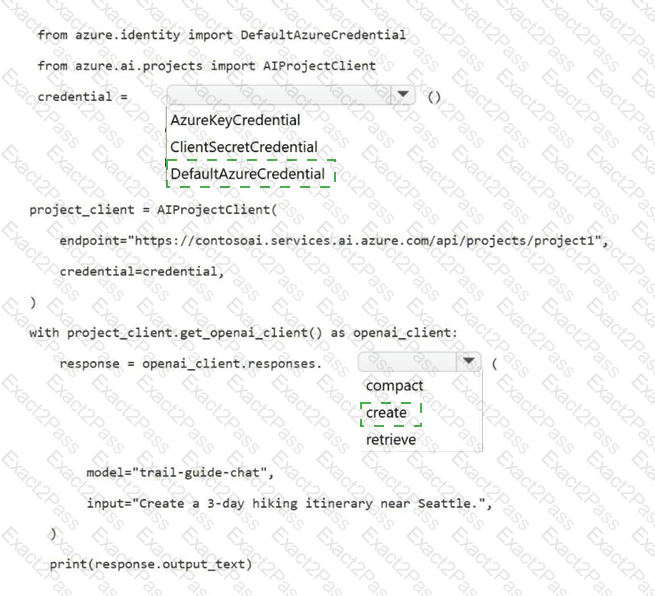
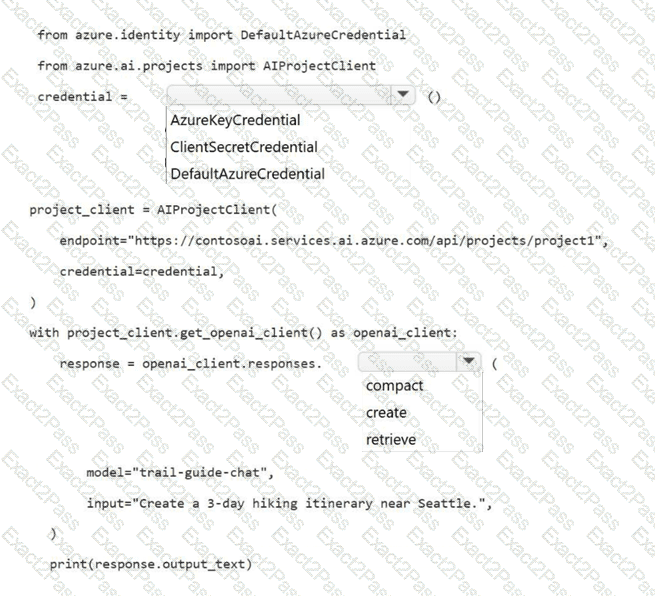
You have a Python application named App1 that integrates with a Microsoft Foundry project named Project1.
You need to ensure that App1 meets the following requirements:
• Authenticates by using a Microsoft Entra managed identity
• Sends prompts to a dYouloyed model by using the Azure OpenAI Responses API
How should you complete the Python code? To answer, select the appropriate options in the answer area.
NOTE: Each correct selection is worth one point.
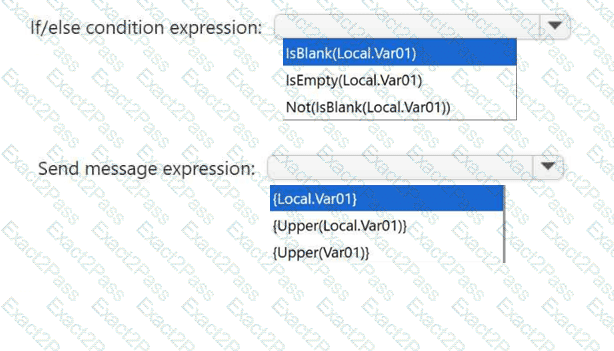
You have a Microsoft Foundry project that contains a workflow for a customer support triage process.
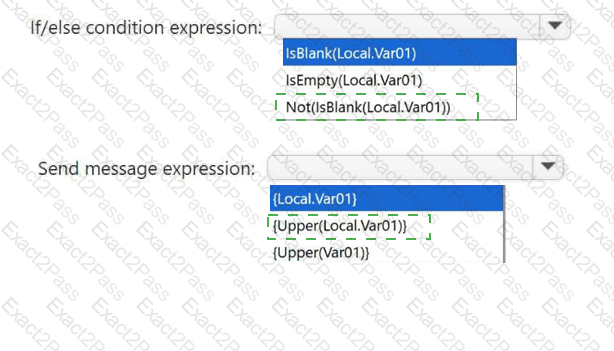
You have an Ask a question node that stores user responses in a local variable named Var01.
You need to create the following Power Fx expressions:
An if/else condition expression that ensures that Var01 contains a value
A Send message expression that returns the stored user response in uppercase
How should you configure the expressions? To answer, select the appropriate options in the answer area.
NOTE: Each correct selection is worth one point.
You have a Microsoft Foundry project that uses Azure Al Search to ground an agent in internal documentation.
After a recent content update, users report that the agent ' s answers have become less accurate.
You need to identify whether the retrieved content is negatively influencing the model ' s generated responses.
Which observability signal should you review?
Note: This section contains one or more sets of questions with the same scenario and problem. Each question presents a unique
solution to the problem. You must determine whether the solution meets the stated goals. More than one solution in the set might
solve the problem. It is also possible that none of the solutions in the set solve the problem.
After you answer a question in this section, you will NOT be able to return. As a result, these questions do not appear on the Review
Screen.
You have a multimodal Al generative model that accepts image uploads and uses extracted image text to generate responses.
You discover that users can upload unsafe images and embed hidden instructions into images to manipulate the model.
You need to implement controls to mitigate the risk.
Solution: You configure a prompt shield for user prompts.
Does this meet the goal?
You are creating an agent workflow in a Microsoft Foundry project to support natural voice interactions.
The agent must receive continuous audio input, convert the input into text for reasoning, and then return spoken responses to a
user. The workflow must meet the following requirements:
. Support turn-taking dynamics, where the agent begins to generate the speech output before the user finishes speaking.
. Operate with low latency to maintain a conversational experience.
You need to enable both speech to text and text to speech in a real-time agent interaction.
What should you do?
Note: This section contains one or more sets of questions with the same scenario and problem. Each question presents a unique
solution to the problem. You must determine whether the solution meets the stated goals. More than one solution in the set might
solve the problem. It is also possible that none of the solutions in the set solve the problem.
After you answer a question in this section, you will NOT be able to return. As a result, these questions do not appear on the Review
Screen.
You have a Microsoft Foundry project that contains an agent. The agent generates summaries from retrieved policy documents.
Users report that some responses omit required regulatory clauses, even when the clauses are present in the retrieved content.
You need to improve response completeness.
Solution: You increase the value of the temperature parameter.
Does this meet the goal?
You have a Microsoft Foundry project that contains a customer support agent built on a deployed chat model. The agent responses are validated by using an automated testing system that compares generated answers to stored expected outputs. Identical prompts must return consistent responses to prevent automated test failures. You need to reduce response variability, without modifying the prompt or reducing factual accuracy.
Note: This section contains one or more sets of questions with the same scenario and problem. Each question presents a unique
solution to the problem. You must determine whether the solution meets the stated goals. More than one solution in the set might
solve the problem. It is also possible that none of the solutions in the set solve the problem.
After you answer a question in this section, you will NOT be able to return. As a result, these questions do not appear on the Review
Screen.
You have a multimodal Al generative model that accepts image uploads and uses extracted image text to generate responses.
You discover that users can upload unsafe images and embed hidden instructions into images to manipulate the model.
You need to implement controls to mitigate the risk.
Solution: You configure a prompt shield for documents.
Does this meet the goal?
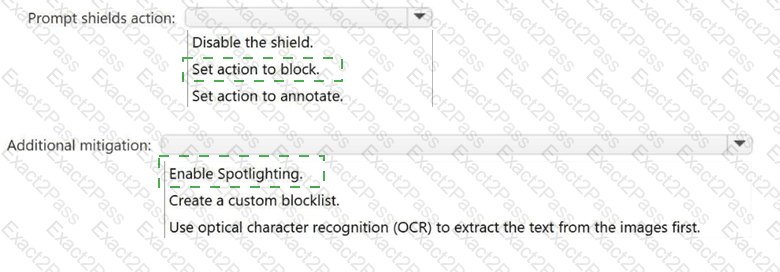
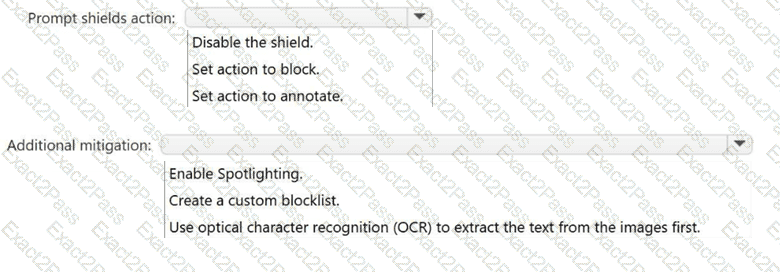
You have a Microsoft Foundry project that contains an agent.
The agent accepts user-uploaded screenshots and uses a multimodal chat model.
Some screenshots contain potentially malicious embedded text.
You need to prevent a prompt injection attack and ensure that third-party content is treated as lower trust.
How should you configure prompt shields for document attacks? To answer, select the appropriate options in the answer area.
NOTE: Each correct selection is worth one point.
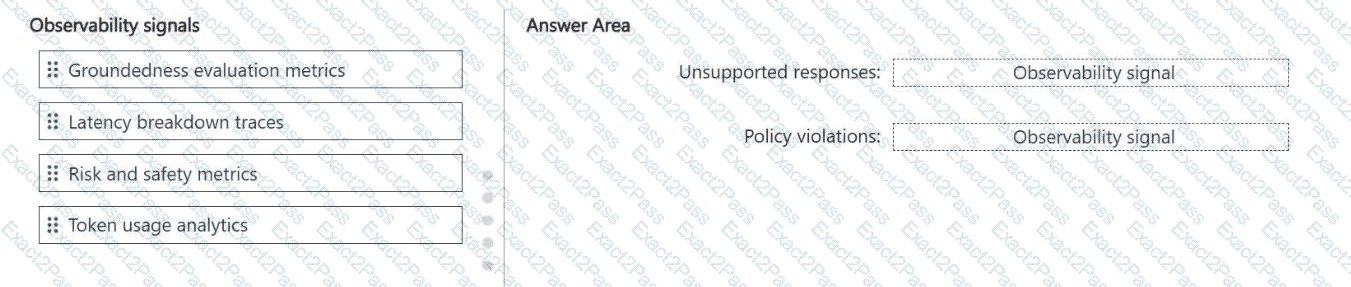
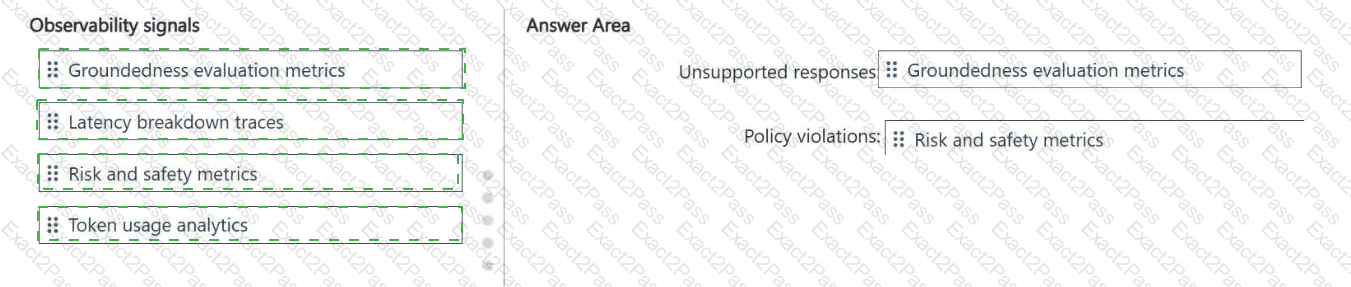
You have a Microsoft Foundry project that contains a customer support agent grounded in internal documentation.
After a recent update, users report the following issues:
• Some answers are unsupported by retrieved documents.
• A small number of responses are flagged for policy violations.
You need to evaluate each issue.
Which observability signals should you use for each issue? To answer, drag the appropriate observability signals to the correct issues. Each observability signal may be used once, more than once, or not at all. You may need to drag the split bar between panes
or scroll to view content.
NOTE: Each correct selection is worth one point.