Exact2Pass

Last Update 14 hours ago Total Questions : 240
The GED Reasoning Through Language Arts content is now fully updated, with all current exam questions added 14 hours ago. Deciding to include GED-Reading practice exam questions in your study plan goes far beyond basic test preparation.
You'll find that our GED-Reading exam questions frequently feature detailed scenarios and practical problem-solving exercises that directly mirror industry challenges. Engaging with these GED-Reading sample sets allows you to effectively manage your time and pace yourself, giving you the ability to finish any GED Reasoning Through Language Arts practice test comfortably within the allotted time.
-- Exhibit –
-- Exhibit --
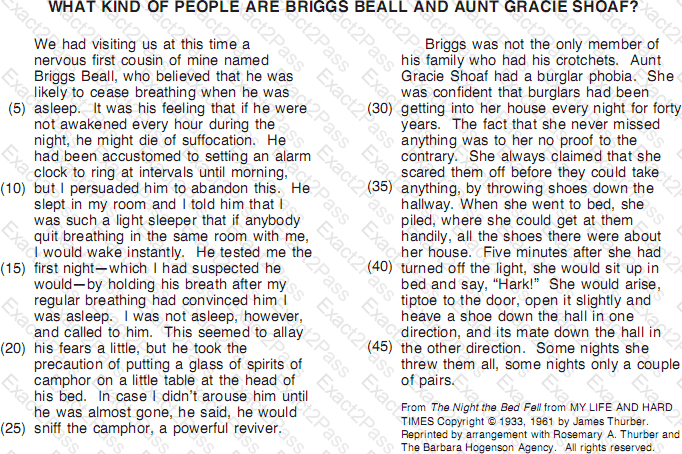
When he sets his alarm clock to ring at intervals during the night, of what does Briggs want to make certain?
-- Exhibit –
-- Exhibit --
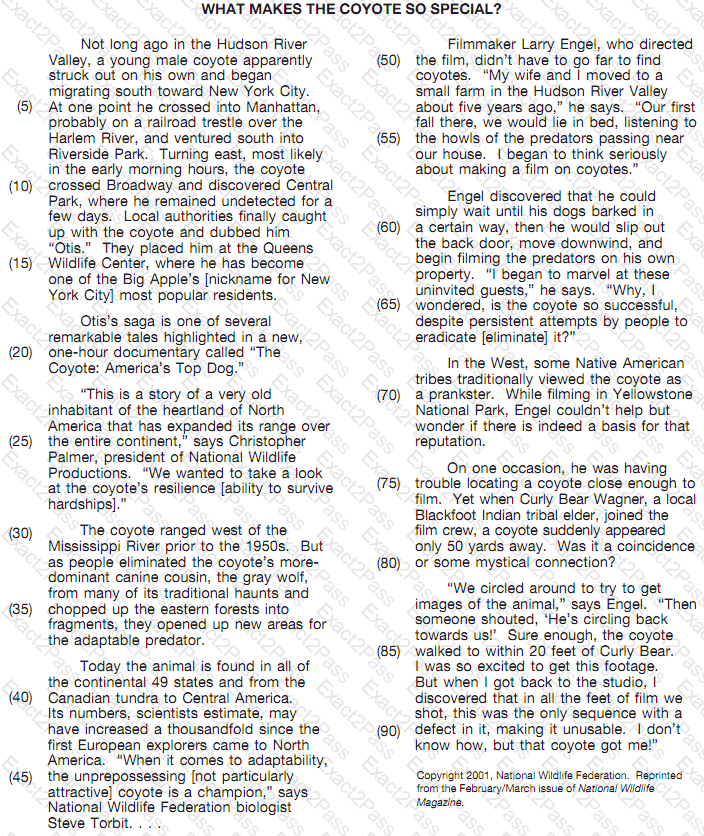
According to this article, what do some Native Americans believe about coyotes (lines 68–70)?
-- Exhibit –
-- Exhibit --
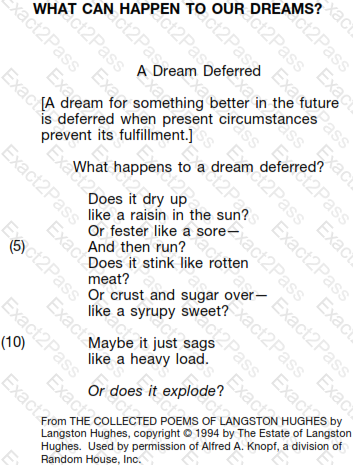
The final comparison in the poem "Or does it explode?" (line 12) is in italics and separated from the rest of the poem. What special meaning does this treatment give the last line?
-- Exhibit –
-- Exhibit --
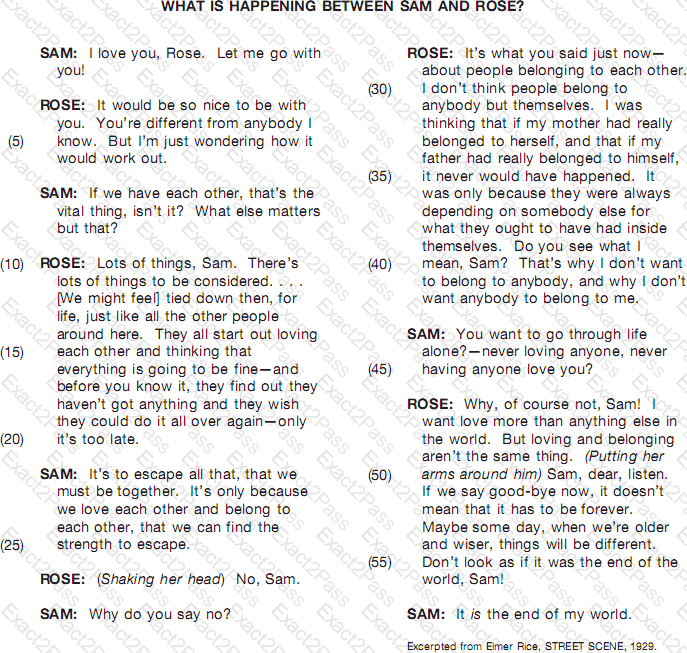
When Rose tells Sam that he is “different” from anybody she knows (lines 4–5), what is she acknowledging?
-- Exhibit –
-- Exhibit --
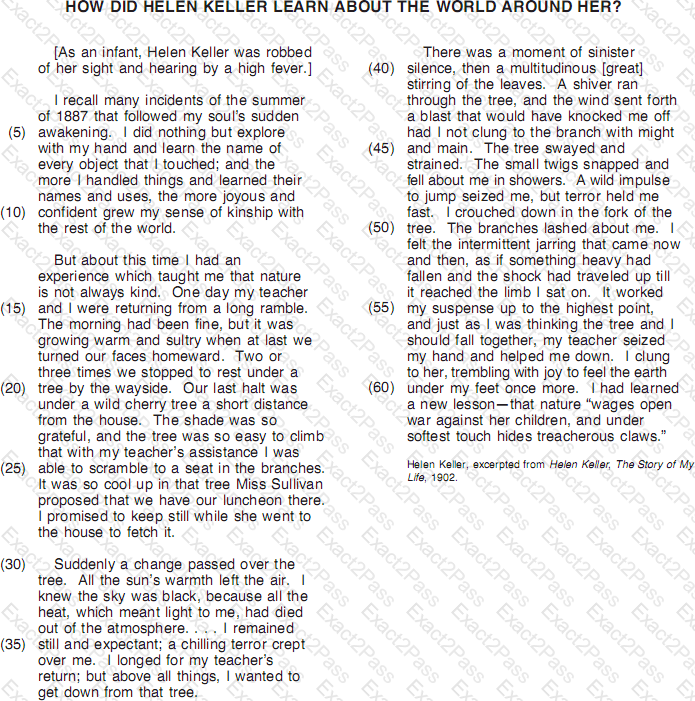
How does Helen Keller characterize herself at the beginning of the excerpt?
-- Exhibit –
-- Exhibit --
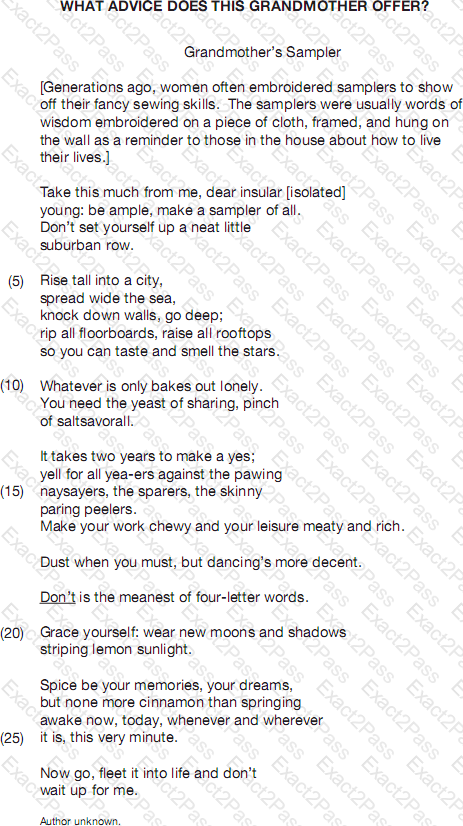
What does Grandmother mean when she says, “Don’t is the meanest of four-letter words” (line 19)?
-- Exhibit –

-- Exhibit --
What does Sancho Panza mean when he says that Don Quixote has “windmills in his head” (lines 57–58)?
-- Exhibit –
-- Exhibit --
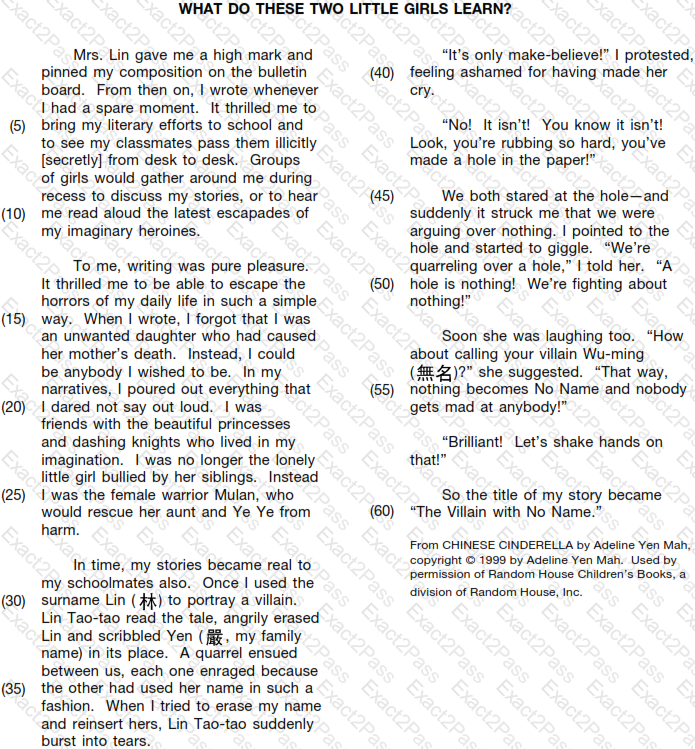
The narrator tries to appease her friend by saying, "It’s only make-believe," but her friend cries out, "No! It isn’t! You know it isn’t!" (lines 39–42). With what are the girls wrestling?
-- Exhibit –
-- Exhibit --
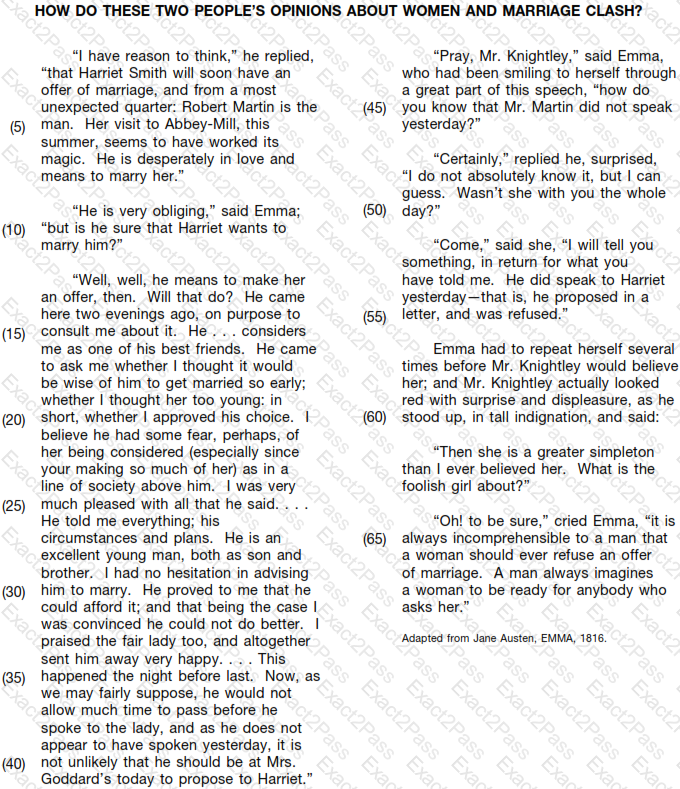
Which one of the following phrases best describes Emma’s character as revealed in this excerpt?
Exhibit:
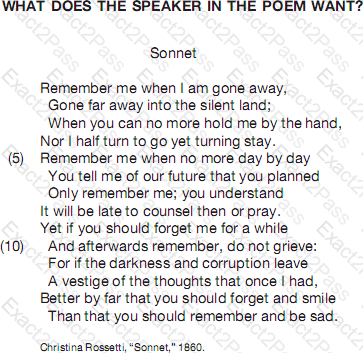
How does the speaker seem to feel about the prospect of her own death?

