Exact2Pass

Last Update 14 hours ago Total Questions : 240
The GED Reasoning Through Language Arts content is now fully updated, with all current exam questions added 14 hours ago. Deciding to include GED-Reading practice exam questions in your study plan goes far beyond basic test preparation.
You'll find that our GED-Reading exam questions frequently feature detailed scenarios and practical problem-solving exercises that directly mirror industry challenges. Engaging with these GED-Reading sample sets allows you to effectively manage your time and pace yourself, giving you the ability to finish any GED Reasoning Through Language Arts practice test comfortably within the allotted time.
Exhibit:
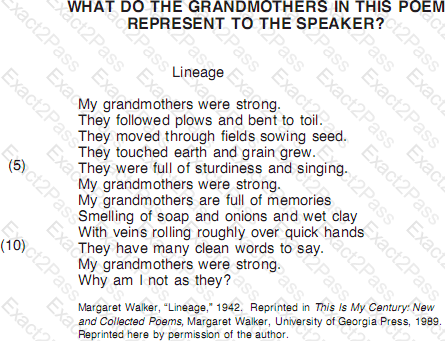
What is suggested about the grandmothers in the line “With veins rolling roughly over quick hands” (line 9)?
-- Exhibit –
-- Exhibit --
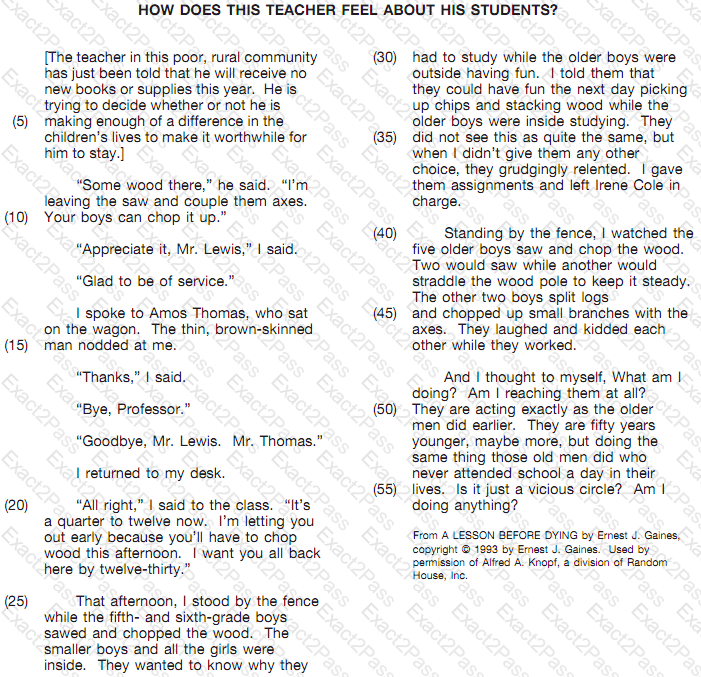
Based on the excerpt, what quality does this teacher possess that might be important for his success with his students?
-- Exhibit –
-- Exhibit --
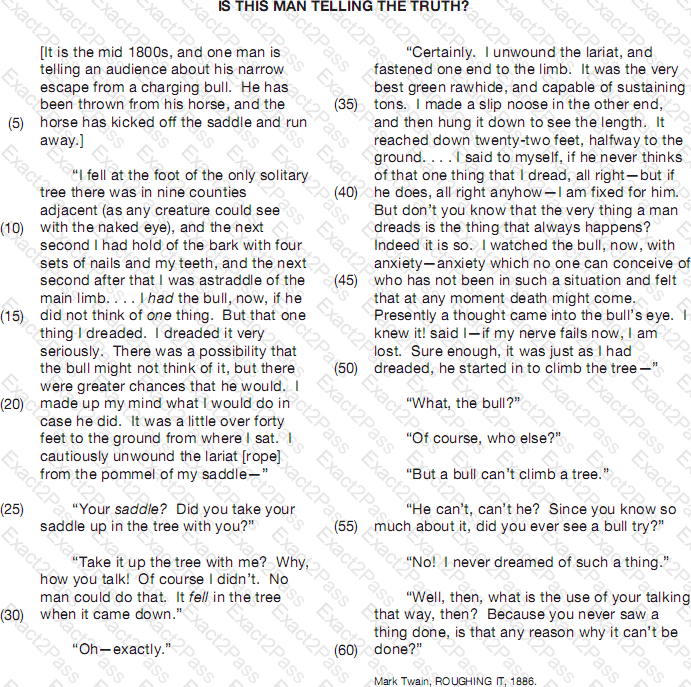
Why does the narrator wait so long to tell the audience that the one thing that he fears the bull will do is climb the tree?
-- Exhibit –

-- Exhibit --
According to Fred Ingram’s letter, which benefit is he likely to need in the near future?
-- Exhibit –

-- Exhibit --
Which statement indicates that Boy Willie realizes that Sutter’s brother is trying to swindle him?
-- Exhibit –
-- Exhibit --
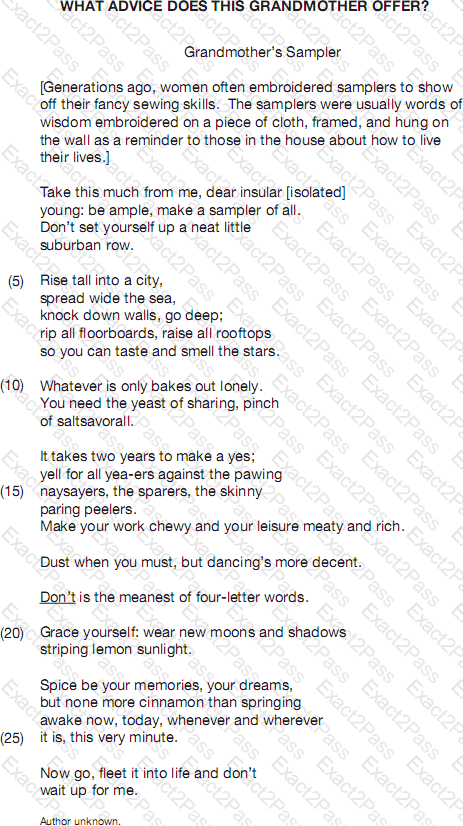
Grandmother warns not to “set yourself up a neat little / suburban row” (lines 3–4).
What is she warning against?
-- Exhibit –
-- Exhibit --
Why does the narrator include details of Theobald’s dislike of music and pictures and books?
-- Exhibit –
-- Exhibit –
How does Miss Cooper react to Sibyl’s protest that she is a freak?
-- Exhibit –
-- Exhibit --
How could our reaction to a sudden storm be similar to Helen’s?
-- Exhibit –
-- Exhibit --
In her book THE ARGUMENT OFCULTURE, the author claims that "the modern culture is far too critical—many prefer to shout down . . . the opposition points of view rather than listen to them."
Based on the information above and the information in the passage, which of the following best summarizes the author’s view about criticism?

