
Ticking Clock Black Friday Special: 75% Off! Apply coupon code below to save on all exam bundles! - Ends in 0d 00h 00m 00s - Coupon code: 75epass

Exact2Pass Menu

HCIE-Datacom-Carrier (Written) V1.0

Last Update 1 hour ago Total Questions : 60

The HCIE-Datacom-Carrier (Written) V1.0 content is now fully updated, with all current exam questions added 1 hour ago. Deciding to include H35-831 practice exam questions in your study plan goes far beyond basic test preparation.

You'll find that our H35-831 exam questions frequently feature detailed scenarios and practical problem-solving exercises that directly mirror industry challenges. Engaging with these H35-831 sample sets allows you to effectively manage your time and pace yourself, giving you the ability to finish any HCIE-Datacom-Carrier (Written) V1.0 practice test comfortably within the allotted time.

Question # 11

Which of the following statements is incorrect regarding SRv6 protection technologies?

A.

In an SRv6 TE Policy scenario, if a specified explicit node fails, TI-LFA cannot be used to restore services.

B.

TI-LFA can be used in both SRv6 BE and SRv6 TE Policy scenarios.

C.

In an SRv6 TE Policy scenario, after headend-based fault detection is configured, the device sets the segment list to down and deletes the segment list entry as long as more than two SRv6 SIDs in the segment list do not exist in the topology.

D.

In an L3VPN scenario, if traffic is carried over an SRv6 TE Policy, both egress protection and VPN FRR can protect PEs.

Question # 12

In the OSPFv3 network shown, RTD imports an external route. The AS-External-LSA details are checked on RTG. Based on the following information, what should the Originating Router be?
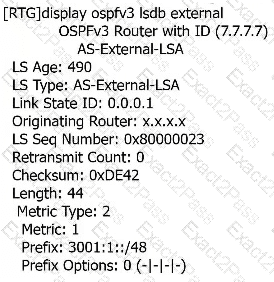
Exhibit 37.1 — Original topology/configuration figure
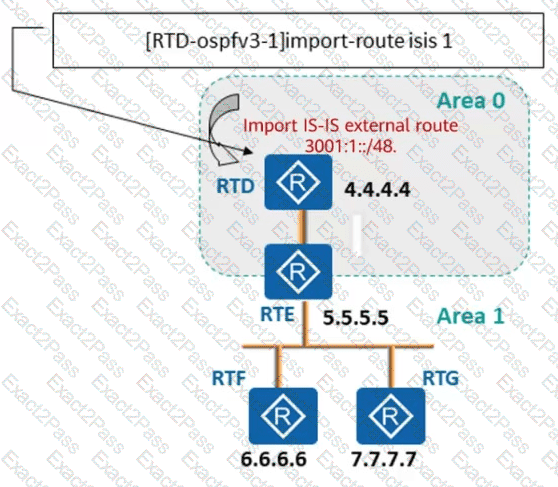
Exhibit 37.2 — Original topology/configuration figure

A.

4.4.4.4

B.

7.7.7.7

C.

5.5.5.5

D.

6.6.6.6

Question # 13

Which of the following statements regarding the telco cloud network are correct?

Select all that apply.

A.

If two DC GWs are single-homed to PEs, you are advised to adjust route preference in a way that traffic from the two DC GWs uses different PEs as next hops. Otherwise, one PE may become overloaded.

B.

If the management & storage network and service network are deployed independently, they are physically isolated. If one network is attacked, the other network continues to run as usual, ensuring overall security.

C.

The service network uses the flattened spine-leaf architecture to provide high bandwidth, elastic scalability, and flexible access.

D.

As the telco cloud network expands, some sites that use box-shaped devices as DC GWs may fail to meet the bandwidth requirements of north-south service traffic, yet carriers may not want to replace existing DC GWs with high-capacity ones. In this case, the egress bandwidth of the telco cloud network can be increased by adding more DC GWs.

Question # 14

Which of the following are applications of BFD in a 5G transport network?

Select all that apply.

A.

BFD is enabled for TE tunnels to trigger VPN FRR.

B.

BFD is enabled between IGP peers to trigger SR-BE FRR.

C.

BFD is enabled for TE LSPs to trigger TE hot standby.

D.

BFD for interface can be enabled on core devices and the core network side to trigger VRRP or active/standby route switching.

Question # 15

In the telco cloud network shown, the underlay uses IS-IS, the overlay uses EVPN to establish VXLAN tunnels, and the service layer uses BGP to advertise service routes. To ensure normal service-layer route advertisement, a static route to the VNF loopback interface is configured on the leaf node and imported into a routing protocol. In the recommended telco cloud network solution, what is the next hop of the route learned by the DC GW?
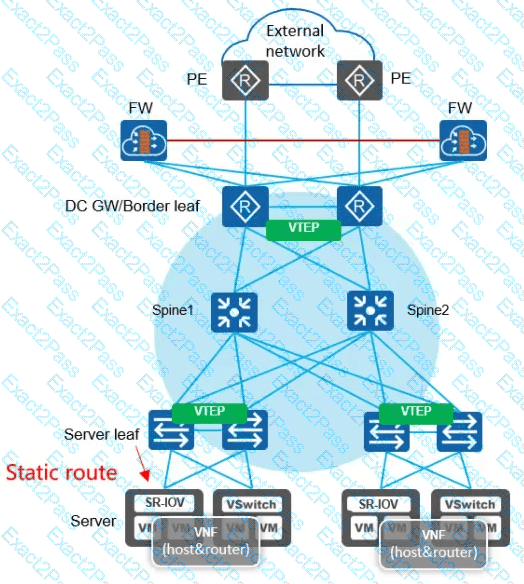
Exhibit 17.1 — Original topology/configuration figure

A.

VM

B.

Spine node's loopback interface

C.

Leaf node's loopback interface

D.

VNF's loopback interface

Question # 16

In the network shown, RT4 and RT5 function as ASBRs and import IS-IS routes into OSPF. Only OSPF is used for interworking between RT4 and RT5. The link costs are shown in the figure. The key configurations of RT4 and RT5 are as follows:
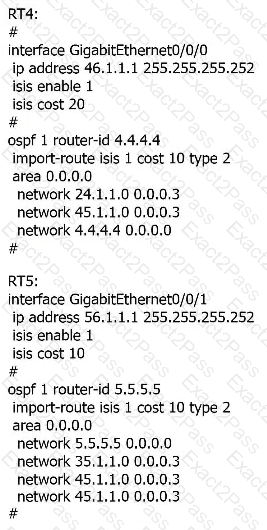
Exhibit 36.1 — Original topology/configuration figure
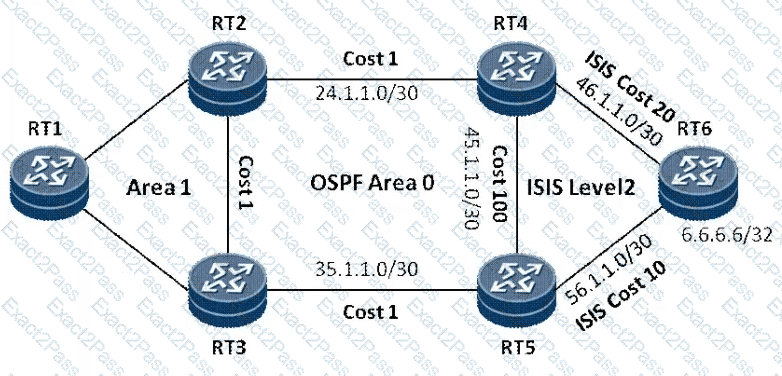
Exhibit 36.2 — Original topology/configuration figure

A.

RT1 accesses 6.6.6.6 through the RT2 - > RT4 - > RT6 path.

B.

RT1 has two routes to 6.6.6.6, and traffic is balanced between the two routes.

C.

RT1 accesses 6.6.6.6 through the RT3 - > RT5 - > RT6 path.

D.

RT1 has two routes to 6.6.6.6 and selects one of them to forward traffic.

Question # 17

Which of the following key factors must be considered when designing an IGW for an IP core network?

Select all that apply.

A.

Routing policy scale

B.

Hardware capacity of devices

C.

Route transport capability

D.

Security

Question # 18

In BGP EVPN, which of the following route types is used to advertise external routes?

A.

Type 3

B.

Type 5

C.

Type 1

D.

Type 2

E.

Type 4

Go to page: