Exact2Pass

Last Update 1 hour ago Total Questions : 60
The HCIE-Datacom-Carrier (Written) V1.0 content is now fully updated, with all current exam questions added 1 hour ago. Deciding to include H35-831 practice exam questions in your study plan goes far beyond basic test preparation.
You'll find that our H35-831 exam questions frequently feature detailed scenarios and practical problem-solving exercises that directly mirror industry challenges. Engaging with these H35-831 sample sets allows you to effectively manage your time and pace yourself, giving you the ability to finish any HCIE-Datacom-Carrier (Written) V1.0 practice test comfortably within the allotted time.
The topology shown is a typical transport-network access-layer structure. Each core-network device is dual-homed to two CEs, and the CEs and PEs are interconnected in a square-loop topology. The access layer must carry voice and signaling services. Two VPN instances must be configured on each CE to isolate voice services from signaling services and provide security and QoS. Signaling services are transmitted in active/standby mode, while voice services are transmitted in load-balancing mode. VRRP must be enabled between the two CEs to terminate signaling flows. From the perspectives of network robustness and architectural suitability, which statements about this topology are correct?
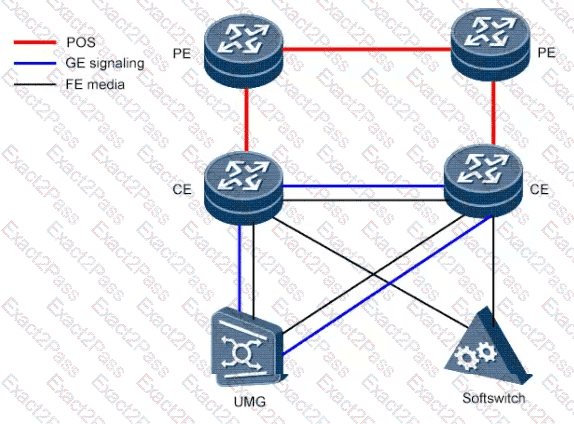
Exhibit 60.1 — Original topology/configuration figure
Select all that apply.
Which backup modes do vBRAS-UPs support?
Select all that apply.
The new metro network is built with modular, standardized components. It is designed for fixed-mobile convergence (FMC) and cloud-network integration requirements, and it enables flexible network expansion, rapid service provisioning, and network intelligence.
Which of the following statements are true regarding multicast packets in a BIERv6 multicast network?
Select all that apply.
Which statement below is incorrect regarding SRv6 networks?
In the inter-AS VPN Option B network shown, Site1 and Site2 can communicate. CE1 has a route to 10.1.1.1/24, and CE2 has learned that route. PE1, ASBR1, and ASBR2 assign VPN labels 15360, 15361, and 15362, respectively, to the route. In addition, PE1 and ASBR2 assign public-network label 3 to their own loopback interface addresses. For packets sent from CE2 to 10.1.1.1, which label pushed by PE2 is the innermost label?
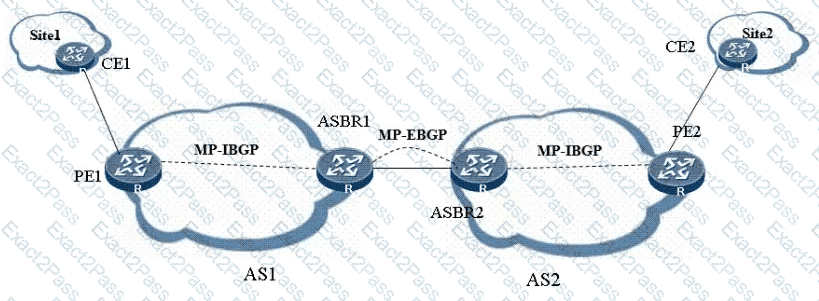
Exhibit 46.1 — Original topology/configuration figure
With sub-interface-based HQoS, only one flow queue profile may be applied to a channelized sub-interface.
The figure illustrates the fixed-broadband cloudification acceleration scenario of the intelligent cloud-network. Which statements about this network are incorrect?
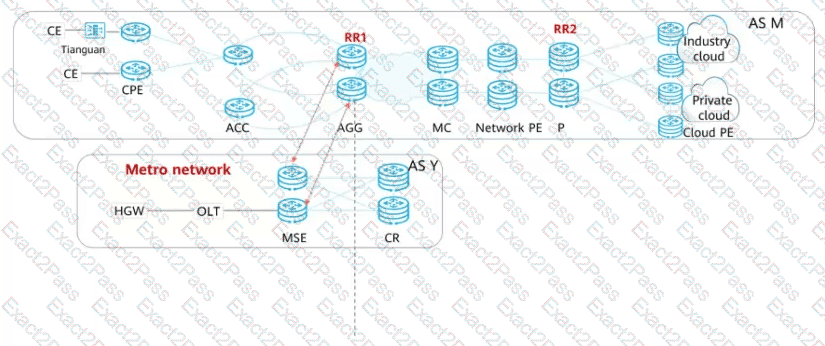
Exhibit 16.1 — Original topology/configuration figure
Select all that apply.
Which of the following statements is incorrect about the SR-TE tunnel configuration below?
[R1] interface tunnel1
[R1-Tunnel1] ip address unnumbered interface LoopBack0
[R1-Tunnel1] tunnel-protocol mpls te
[R1-Tunnel1] destination 3.3.3.3
[R1-Tunnel1] mpls te tunnel-id 1
[R1-Tunnel1] mpls te signal-protocol segment-routing
[R1-Tunnel1] mpls te pce delegate
Select all that apply.
The figure depicts an inter-AS EVPN Option B network and the EVPN configuration between ASBR2 and PE2. Which device is the next hop for the route that ASBR2 advertises to PE2?
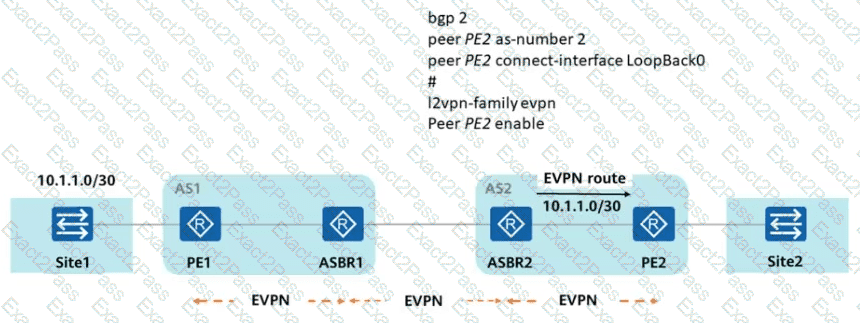
Exhibit 54.1 — Original topology/configuration figure