Exact2Pass

Last Update 6 hours ago Total Questions : 324
The HashiCorp Certified: Vault Associate (003) Exam content is now fully updated, with all current exam questions added 6 hours ago. Deciding to include HCVA0-003 practice exam questions in your study plan goes far beyond basic test preparation.
You'll find that our HCVA0-003 exam questions frequently feature detailed scenarios and practical problem-solving exercises that directly mirror industry challenges. Engaging with these HCVA0-003 sample sets allows you to effectively manage your time and pace yourself, giving you the ability to finish any HashiCorp Certified: Vault Associate (003) Exam practice test comfortably within the allotted time.
You are the primary Vault operator. During a routine audit, an auditor requested the ability to display all secrets under a specific path in Vault without seeing the actual stored data. Which policy permits the auditor to display the stored secrets without revealing their contents?
How does the instance updates feature work when using the Vault Secrets Operator?
You have enabled the Transit secrets engine and want to start encrypting data to store in Azure Blob storage. What is the next step that needs to be completed before you can encrypt data? (Select two)
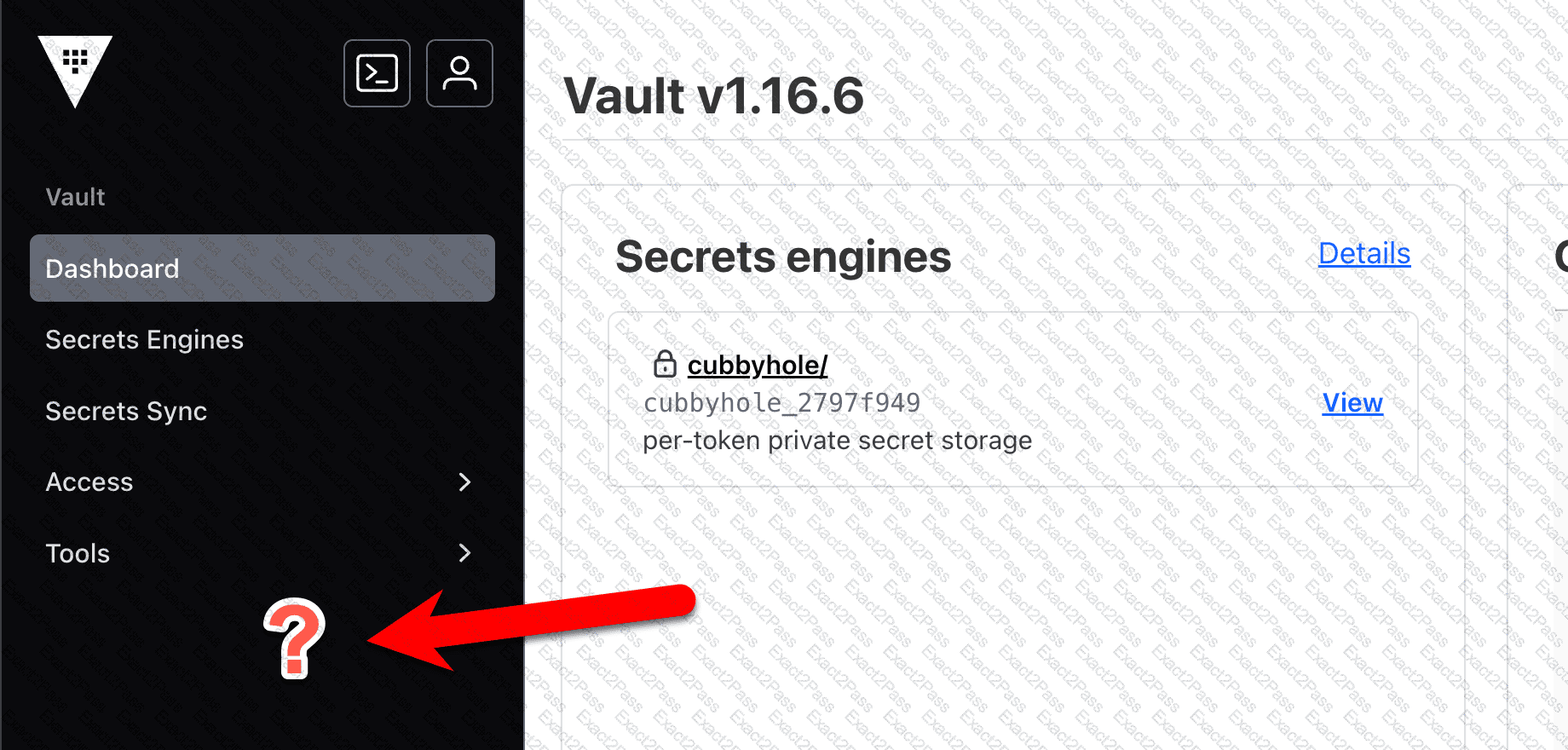
Your supervisor has requested that you log into Vault and update a policy for one of the development teams. You successfully authenticated to Vault via OIDC but do not see a way to manage the Vault policies. Why are you unable to manage policies in the Vault UI?
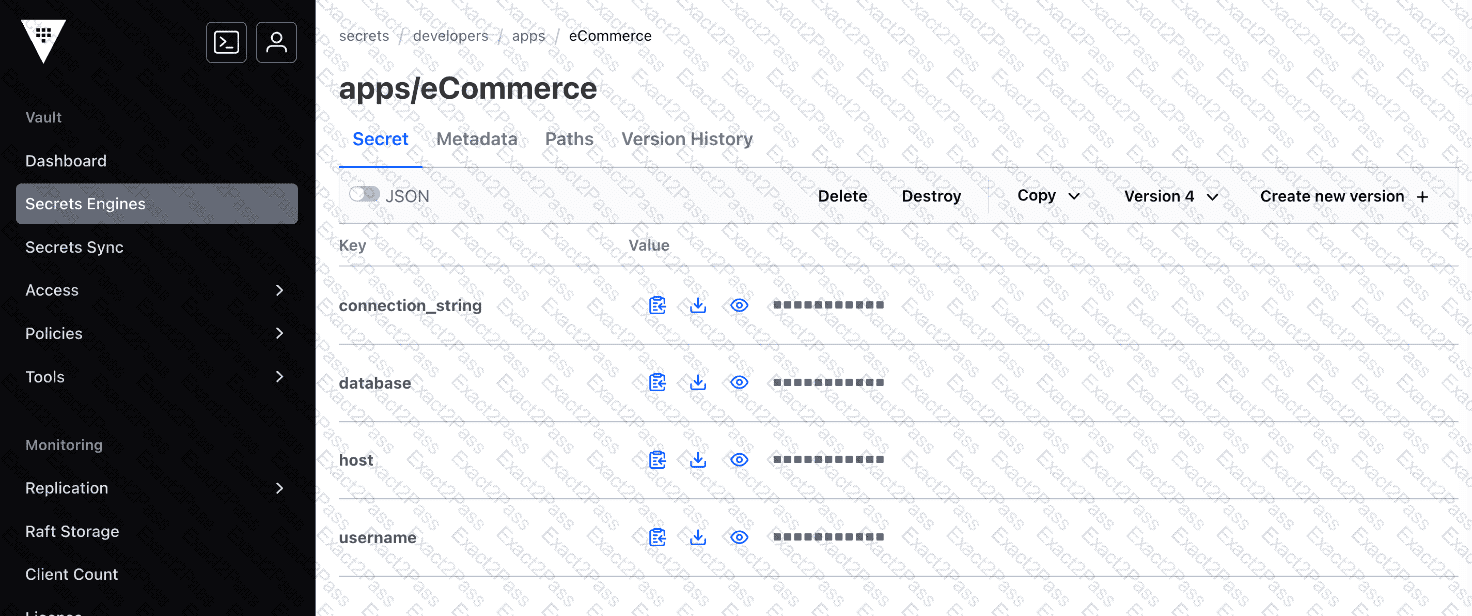
You are working on a new project and need to retrieve a secret from Vault. You log into the Vault UI and browse to the path where the secret is stored. Based on the screenshot below, what is true about the secrets stored in this path? (Select four)
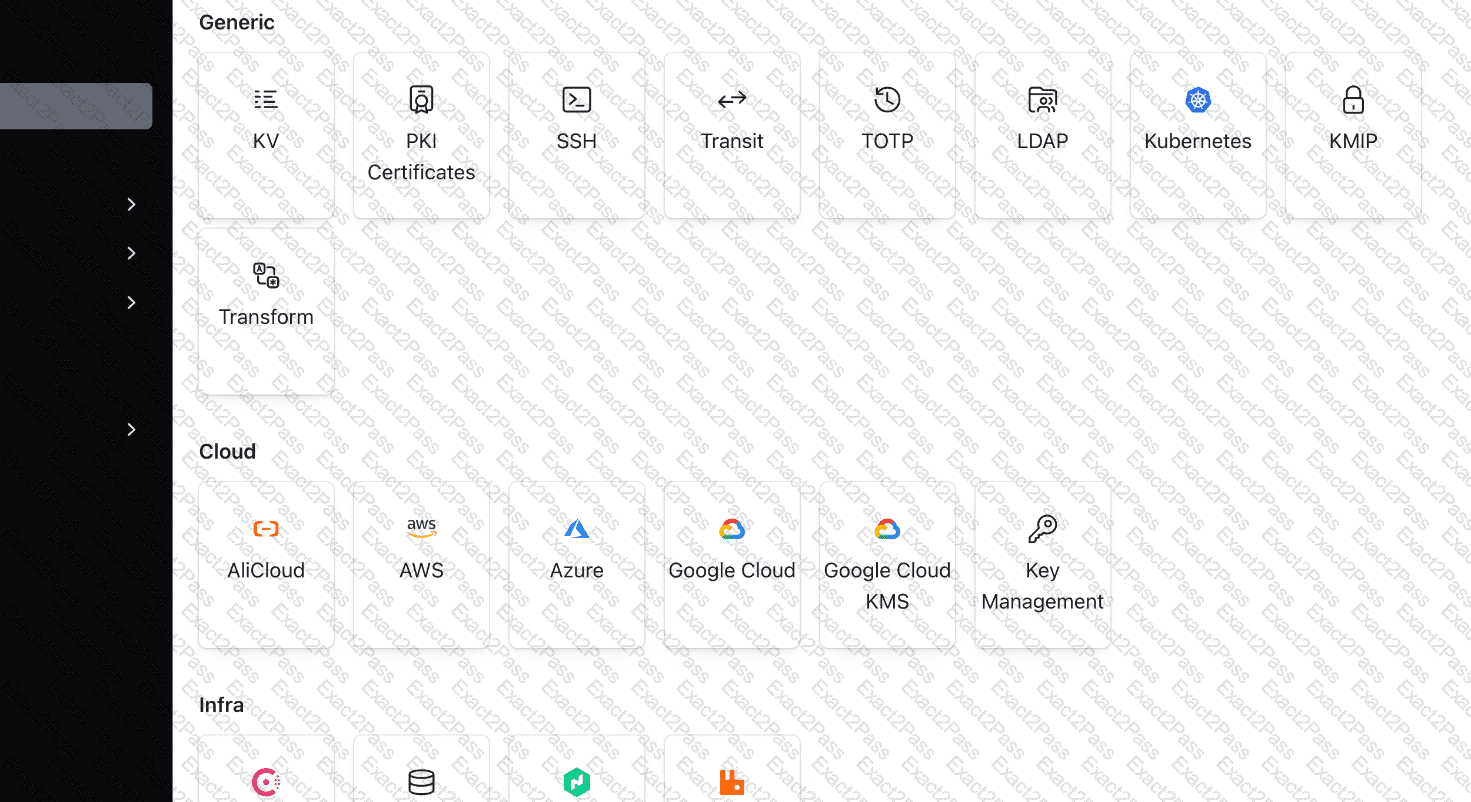
You have logged into the Vault UI and see this screen. What Vault component is being enabled in the screenshot below?
True or False? After rotating a transit encryption key, all data encrypted with the previous version must be rewrapped or re-encrypted with the new key.
After decrypting data using the Transit secrets engine, the plaintext output does not match the plaintext credit card number that you encrypted. Which of the following answers provides a solution?
$ vault write transit/decrypt/creditcard ciphertext= " vault:v1:cZNHVx+sxdMEr....... "
Key: plaintext Value: Y3JlZGl0LWNhcmQtbnVtYmVyCg==
True or False? Once you create a KV v1 secrets engine and place data in it, there is no way to modify the mount to include the features of a KV v2 secrets engine.
From the options below, select the benefits of using the PKI (x.509 certificates) secrets engine (select three):

