Exact2Pass

Last Update 19 hours ago Total Questions : 230
The Salesforce Certified MuleSoft Developer (Mule-Dev-201) content is now fully updated, with all current exam questions added 19 hours ago. Deciding to include Salesforce-MuleSoft-Developer-I practice exam questions in your study plan goes far beyond basic test preparation.
You'll find that our Salesforce-MuleSoft-Developer-I exam questions frequently feature detailed scenarios and practical problem-solving exercises that directly mirror industry challenges. Engaging with these Salesforce-MuleSoft-Developer-I sample sets allows you to effectively manage your time and pace yourself, giving you the ability to finish any Salesforce Certified MuleSoft Developer (Mule-Dev-201) practice test comfortably within the allotted time.
A flow has a JMS Publish consume operation followed by a JMS Publish operation. Both of these operations have the default configurations. Which operation is asynchronous and which one is synchronous?
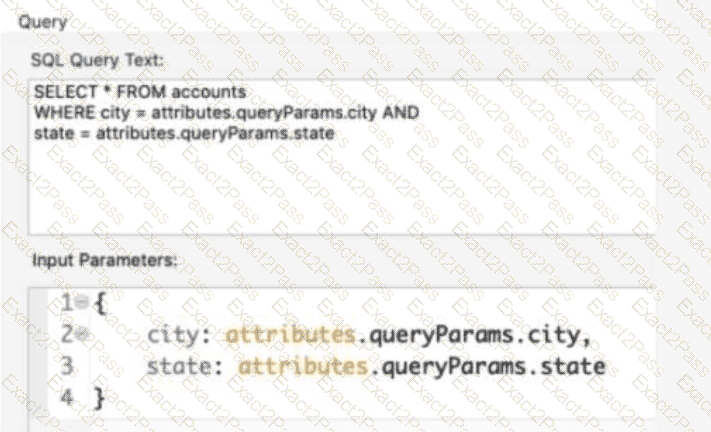
Refer to the exhibit.
How should the WHERE clause be changed to set the city and state values from the configured input parameters?
A)

B)

C)

D)

Which of the module is imported automatically in Dataweave scripts?
Does a root element required when creating a XML response using Dataweave?
Refer to the exhibit.
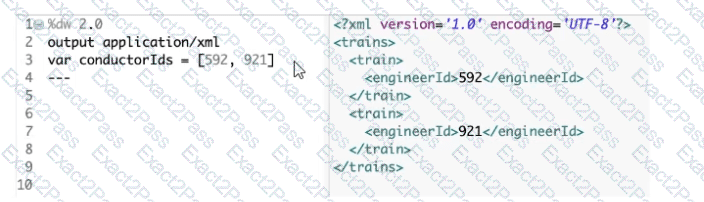
What DataWeave expression transforms the conductorlds arrayto the XML output?
A)
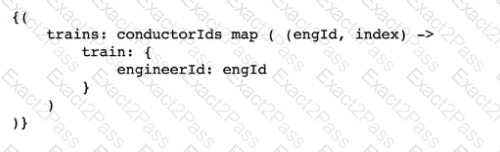
B)
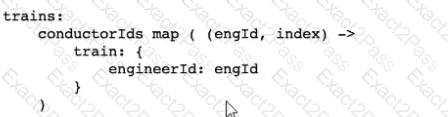
C)
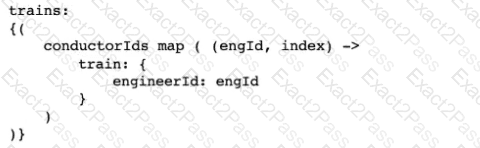
D)
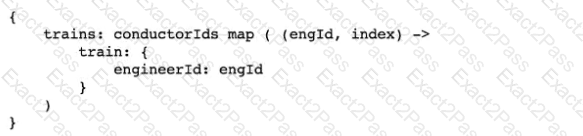
A Mule application configured with Autodiscovery implements an API.
Where is governance enforced for policies defined for this Mule application?
As a part of requirement , application property defined below needs to be accessed as dataweave expression. What is the correct expression to map it to port value?
Refer to the exhibits.
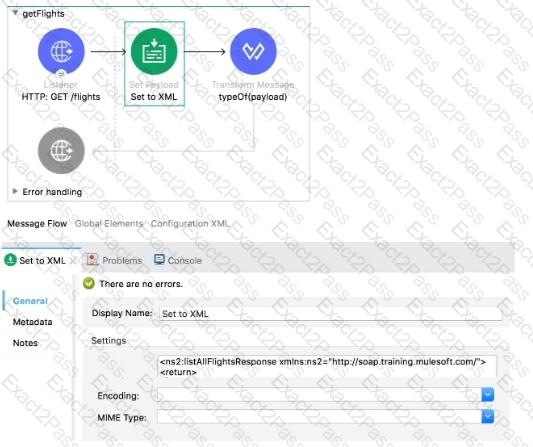
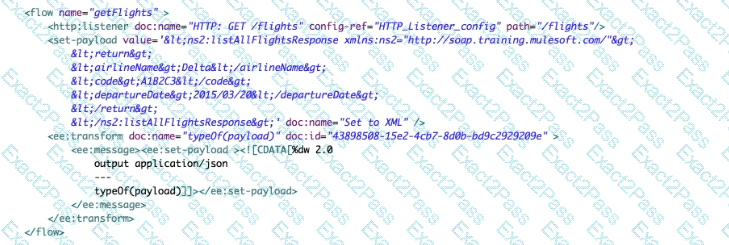
A web client submits a request to http://localhQst:8081 /flights. What is the result at the end of the flow?
Refer to the below exhibit.
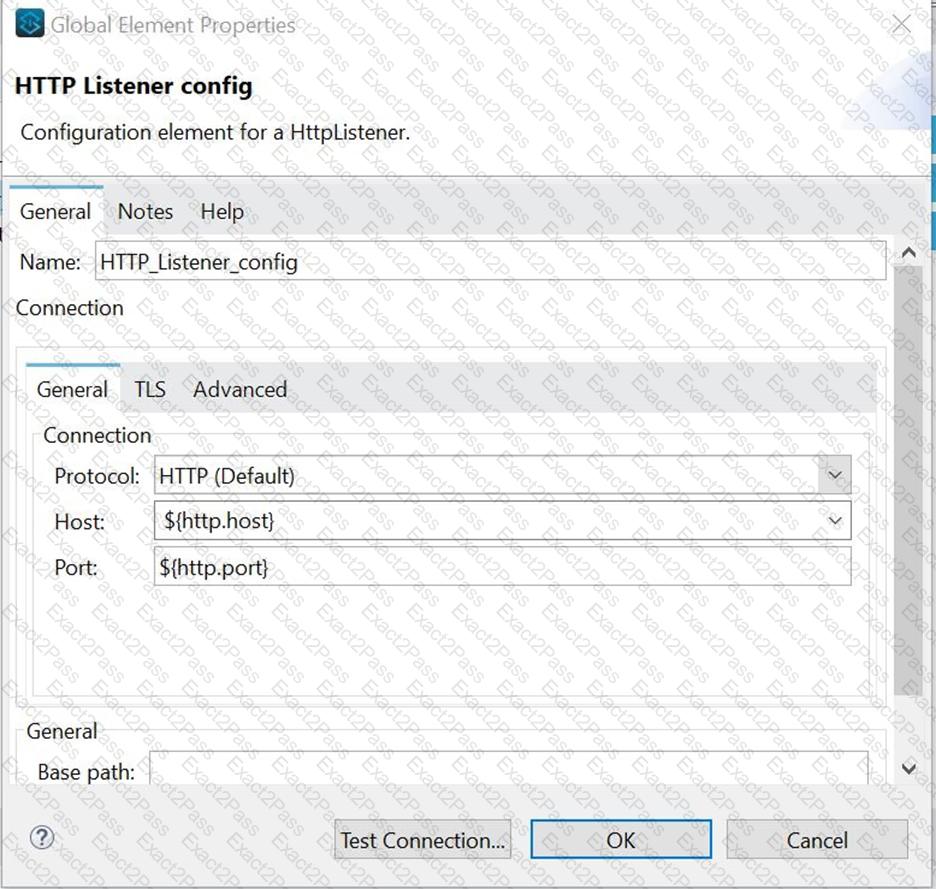
A Mule applicationconfigures a property placeholder file named config.yaml to set some property placeholders for an HTTP connector.
What is the valid properties placeholder file to set these values?
A shopping API contains a method to look up store details by department.
To get the information for a particular store, web clients will submit requests with a query parameter named departmentand uri parameter named storeId
What is valid RAML snippet that supports requests from a web client to get a data for a specific storeId and department name?

