Exact2Pass

Last Update 14 hours ago Total Questions : 150
The CCRN (Adult) - Direct Care Eligibility Pathway content is now fully updated, with all current exam questions added 14 hours ago. Deciding to include CCRN-Adult practice exam questions in your study plan goes far beyond basic test preparation.
You'll find that our CCRN-Adult exam questions frequently feature detailed scenarios and practical problem-solving exercises that directly mirror industry challenges. Engaging with these CCRN-Adult sample sets allows you to effectively manage your time and pace yourself, giving you the ability to finish any CCRN (Adult) - Direct Care Eligibility Pathway practice test comfortably within the allotted time.
Assessment of a patient with a head injury reveals increased muscle tone and contractured positioning of the upper extremities. A nurse should
A patient post-surgical externalized ventricular drain placement has treatment orders that include continuous cerebrospinal fluid (CSF) drainage at 10 mm
Hg. Which of the following should the nurse anticipate with an increase in the ICP above 25 mm Hg?
The intended effects of medications for a patient in acute CHF are to
A patient who sustained a C4 fracture requests to be taken off the ventilator 3 days after the initial injury, indicating, " I can ' t live hooked to this
machine. " The nurse ' s best response to this patient would be,
Which of the following is a sign of splenic injury and diaphragmatic irritation?
The nurse who is caring for a patient following an esophagectomy notes new subcutaneous emphysema in the upper chest and neck. The nurse should expect an order for
The goal of PEEP therapy in acute lung injury (ALI) is to
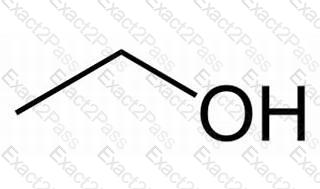
A patient is admitted with Gl bleeding. During the assessment, the nurse notes the patient to be tremulous, anxious, and startles every time he is touched by the nurse. Which of the following is the most pertinent part of the patient ' s history to obtain?
A patient reported to have smoked crack cocaine is brought to the hospital by paramedics and admitted in an agitated state. On the way to the hospital, the patient had a generalized seizure. The toxicology screen is positive for cocaine. Which of the following is most appropriate to administer?
A patient is admitted with hypotension, tachycardia, and intermittent confusion. Upon arrival, the patient asks to walk to the bathroom. Which of the
following is a nurse ' s best action?


 Alcohol withdrawal syndrome