Exact2Pass

Last Update 14 hours ago Total Questions : 150
The CCRN (Adult) - Direct Care Eligibility Pathway content is now fully updated, with all current exam questions added 14 hours ago. Deciding to include CCRN-Adult practice exam questions in your study plan goes far beyond basic test preparation.
You'll find that our CCRN-Adult exam questions frequently feature detailed scenarios and practical problem-solving exercises that directly mirror industry challenges. Engaging with these CCRN-Adult sample sets allows you to effectively manage your time and pace yourself, giving you the ability to finish any CCRN (Adult) - Direct Care Eligibility Pathway practice test comfortably within the allotted time.
In a patient with a chest tube, an air leak in the pleural space is indicated by which of the following conditions in the water-seal chamber?
Which of the following suggests acute peripheral arterial insufficiency?
A patient with unilateral facial droop and slurred speech has a history of hyperlipidemia and hypertension. The nurse should anticipate an order for a
A patient with a spinal cord injury at T7 tells the nurse that they now have a pounding headache. The nurse should
A patient with an acute anterior wall MI presents with an S3 gallop and the following values:
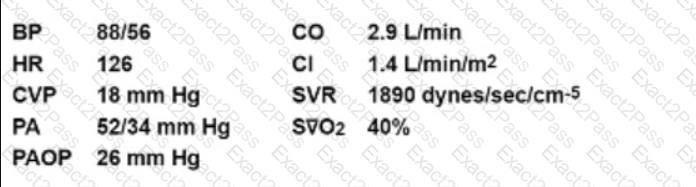
Which drug therapy would be most appropriate for this patient?
A patient with cardiogenic shock for several days has been managed aggressively with vasopressor and inotrope therapies. Which of the following indicates organ dysfunction from hypoperfusion?
The family of a patient requests permission to administer traditional herbs to the patient. Which of the following should be the nurse ' s first action?
A nurse is performing medication reconciliation during a patient ' s admission. To determine the patient ' s current understanding of the medication furosemide (Lasix), which of the following is the best statement by the nurse?
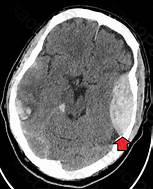
A patient who sustained acute head trauma exhibited intermittent unconsciousness prior to admission. The patient is disoriented initially and exhibits rapid deterioration in neurological status shortly after admission. X-rays reveal a right temporal bone fracture, and a diagnosis of epidural hematoma is made. The deterioration in the patient ' s condition is most likely associated with
A patient who had a liver resection now has a copious amount of serous drainage from the surgical incision. Which of the following should a nurse anticipate when caring for this patient?


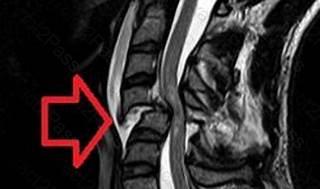 Spinal cord injury
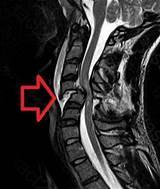 An x-ray of a spine
Description automatically generated
An x-ray of a spine
Description automatically generated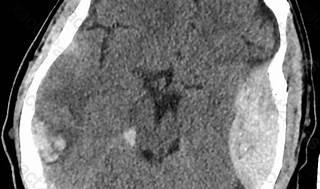 Epidural hematoma