Exact2Pass

Last Update 18 hours ago Total Questions : 125
The Certified - Electronic Fetal Monitoring content is now fully updated, with all current exam questions added 18 hours ago. Deciding to include EFM practice exam questions in your study plan goes far beyond basic test preparation.
You'll find that our EFM exam questions frequently feature detailed scenarios and practical problem-solving exercises that directly mirror industry challenges. Engaging with these EFM sample sets allows you to effectively manage your time and pace yourself, giving you the ability to finish any Certified - Electronic Fetal Monitoring practice test comfortably within the allotted time.
A woman at 34-weeks gestation is in active labor after spontaneous rupture of membranes. Accelerations should be documented as
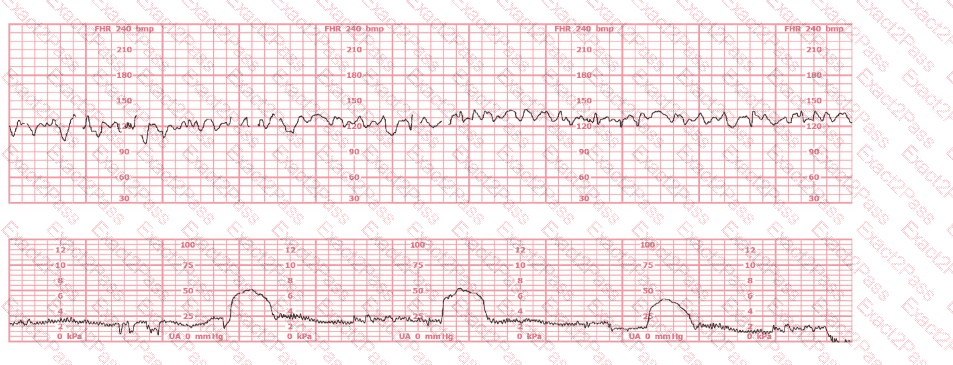
A woman at 39-weeks gestation is in early labor, 2–3 cm dilated, 85% effaced, and –2 station. Based on the fetal heart rate tracing shown, what is the most appropriate first intervention?
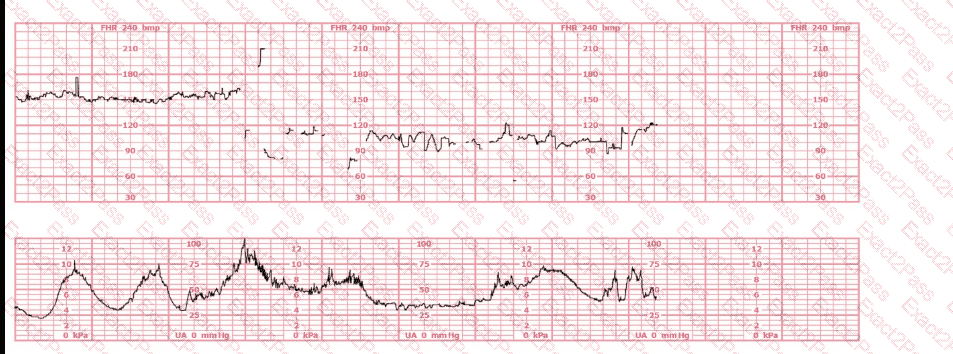
This fetal heart rate tracing is obtained upon the woman ' s admission to labor and delivery. This tracing is most reflective of:
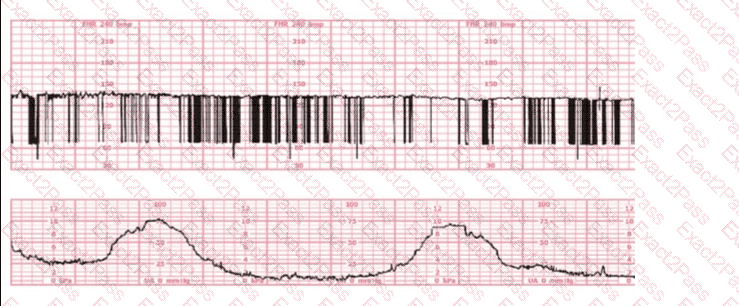
This is a fetal heart rate tracing of a multiparous woman whose cervix is 7 cm dilated on admission. The most likely cause for this pattern is:
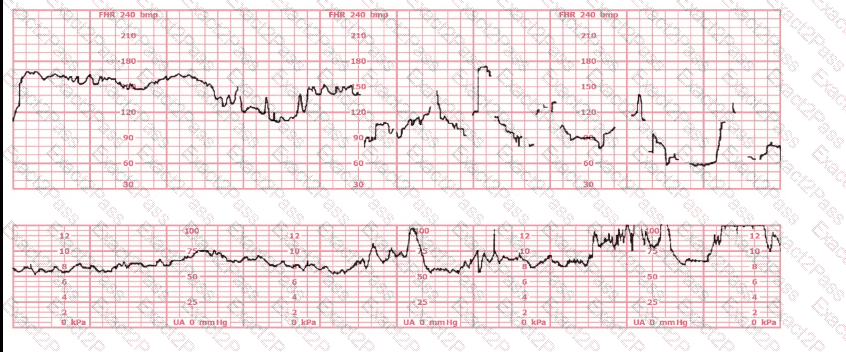
When monitoring monochorionic-monoamniotic twins, which of the following fetal heart rate patterns would be anticipated?
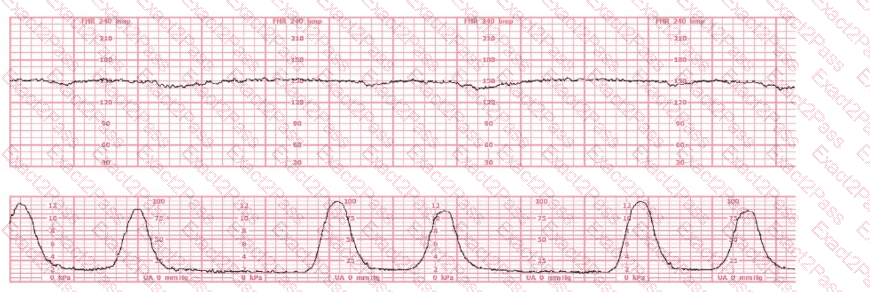
A woman is being induced with oxytocin. The tracing shown is representative of 20 minutes. Based on this tracing, the next step would be to:
The most highly oxygenated blood in the fetal circulation is found in the
During the second stage of labor, a period of bradycardia develops. The fetal heart rate baseline variability is moderate. The most likely cause of this bradycardia is:
This tracing has lasted for 20 minutes in a woman who is 6 cm dilated. The most appropriate intervention is:
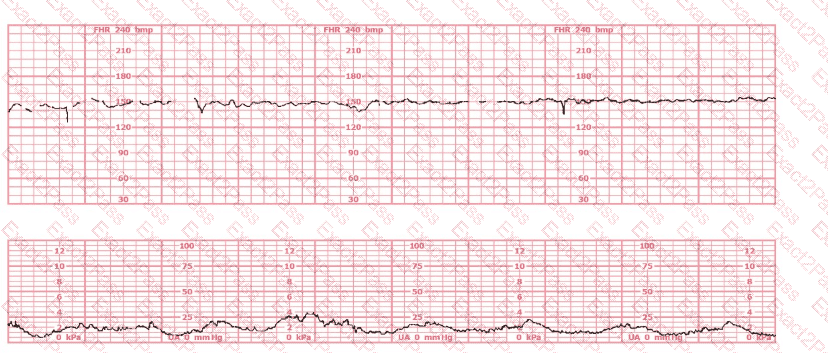
A woman at 36-weeks gestation comes in because of uterine contractions radiating to the back. She has no insurance. In accordance with the Emergency Medical Treatment and Active Labor Act (EMTALA), she is obligated to be:

