Exact2Pass

Last Update 17 hours ago Total Questions : 125
The Certified - Electronic Fetal Monitoring content is now fully updated, with all current exam questions added 17 hours ago. Deciding to include EFM practice exam questions in your study plan goes far beyond basic test preparation.
You'll find that our EFM exam questions frequently feature detailed scenarios and practical problem-solving exercises that directly mirror industry challenges. Engaging with these EFM sample sets allows you to effectively manage your time and pace yourself, giving you the ability to finish any Certified - Electronic Fetal Monitoring practice test comfortably within the allotted time.
A fetal heart rate tracing is abnormal. A change in maternal position and oxygen administration do not correct the pattern. Following birth, a fetal cord blood sample is taken:
pH = 7.25
PaCO₂ = 46 mm Hg
PaO₂ = 20 mm Hg
HCO₃ = 22 mEq/L
Base deficit = –4 mEq/L
These results are best interpreted as:
What is the appropriate interpretation of this tracing?
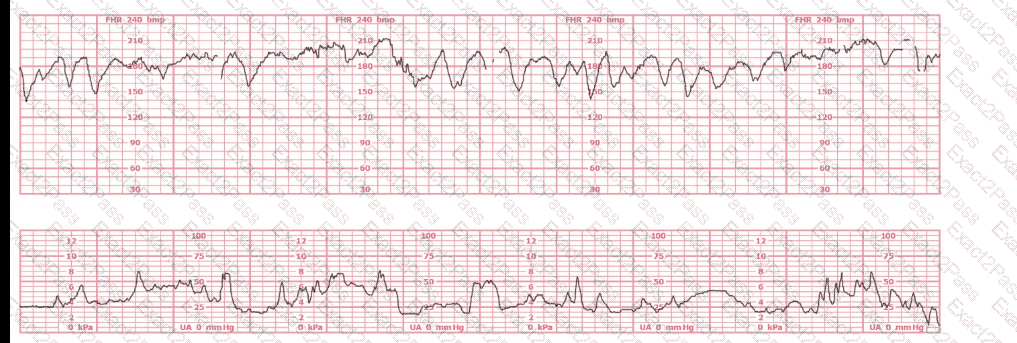
The main reason intrauterine pressure catheters are placed is to:
A fetal heart rate pattern characteristic of fetal neurological injury and impending intrapartum fetal demise is:
A fetal heart rate deceleration that is episodic is a/an:
A woman (G1P0) arrives in triage with a pain score of 4/10 at 39-weeks gestation. The fetal heart rate tracing shown is obtained. The best intervention is to:
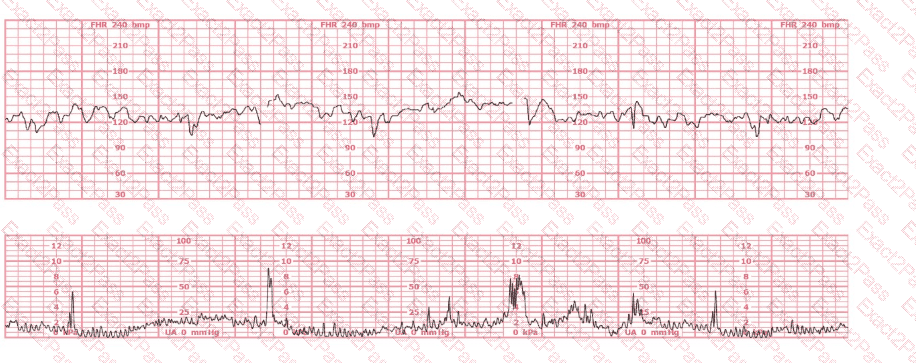
The fetal heart rate tracing shown demonstrates:
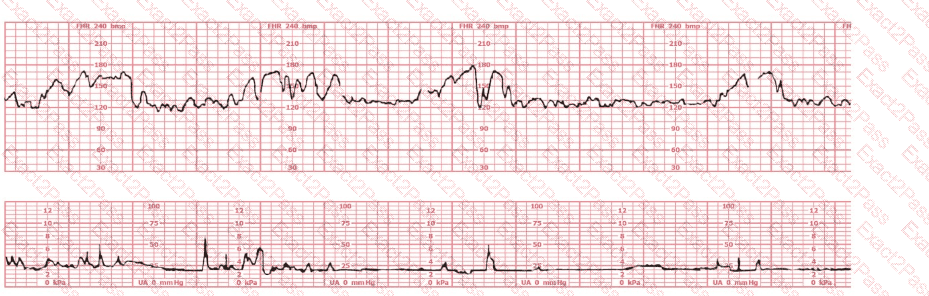
The success of interventions to treat fetal hypoxia first depends on:
The duration of a contraction is best represented by which colored arrow?

The presence of fetal breathing movements on a biophysical profile reflects adequate:

