Exact2Pass

Last Update 18 hours ago Total Questions : 125
The Certified - Electronic Fetal Monitoring content is now fully updated, with all current exam questions added 18 hours ago. Deciding to include EFM practice exam questions in your study plan goes far beyond basic test preparation.
You'll find that our EFM exam questions frequently feature detailed scenarios and practical problem-solving exercises that directly mirror industry challenges. Engaging with these EFM sample sets allows you to effectively manage your time and pace yourself, giving you the ability to finish any Certified - Electronic Fetal Monitoring practice test comfortably within the allotted time.
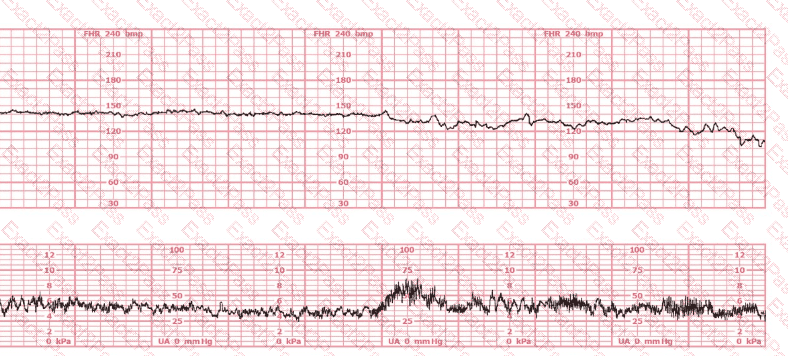
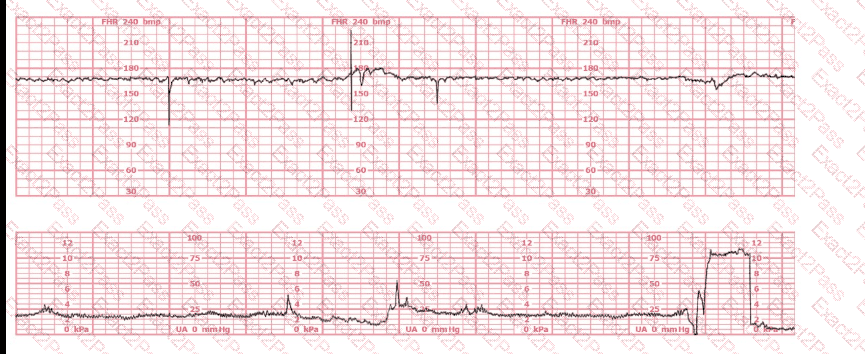
This external tracing is from a 19-year-old (G1P0) at 39-weeks gestation. She is 6 cm dilated, 100% effaced, and –2 station. The fetus is in an occiput posterior position. She rates her pain as 8. She reports being lightheaded. She is most likely at risk for respiratory:
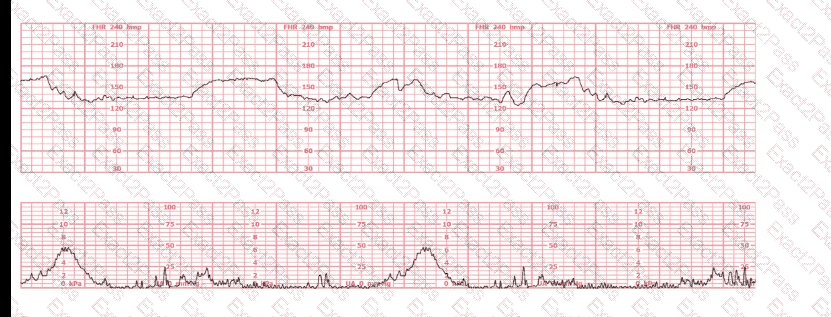
Intrapartum asphyxia can be determined by:
Based on the fetal heart rate tracing shown, the expected fetal pH would be:
When R-R intervals are short, the fetal heart rate is
When accelerations precede a variable deceleration pattern, this is caused by
(Full question statement)
Interobserver reliability in interpretation of fetal heart rate tracings is greatest when the tracing is:
A woman is admitted to labor and delivery with vaginal bleeding. This tracing is obtained. This is most consistent with:
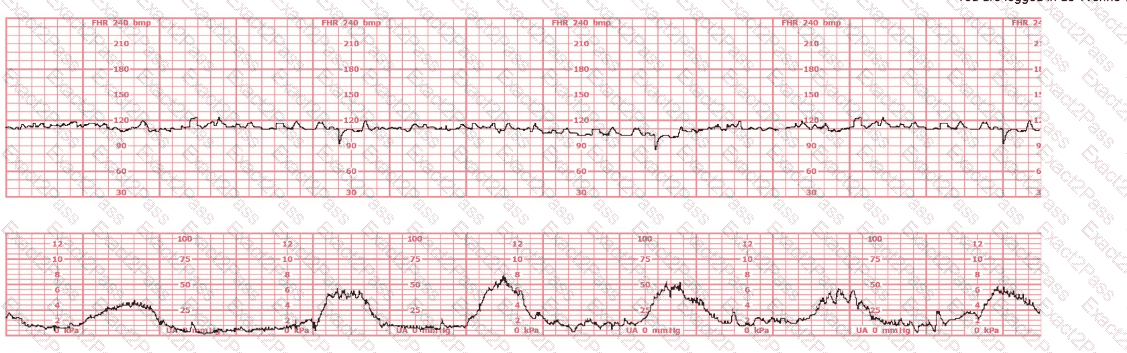
The most probable underlying fetal physiologic cause for this tracing would be:
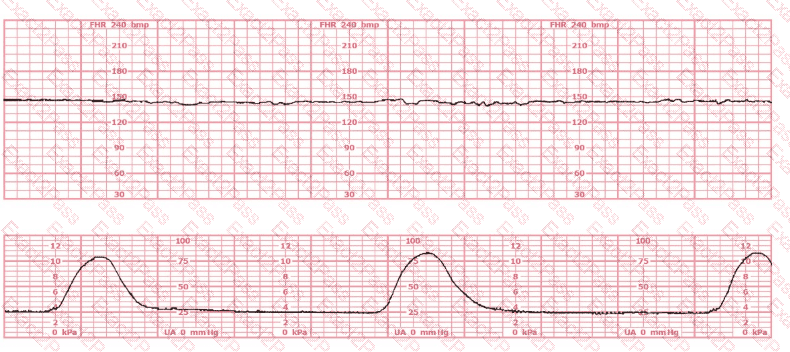
Based on the tracing shown, the first action should be to
When fetal arterial blood pressure increases, the baroreceptors send impulses to the vagus nerve resulting in:

