Exact2Pass

Last Update 21 hours ago Total Questions : 40
The Strategic Ethical Leadership content is now fully updated, with all current exam questions added 21 hours ago. Deciding to include L6M1 practice exam questions in your study plan goes far beyond basic test preparation.
You'll find that our L6M1 exam questions frequently feature detailed scenarios and practical problem-solving exercises that directly mirror industry challenges. Engaging with these L6M1 sample sets allows you to effectively manage your time and pace yourself, giving you the ability to finish any Strategic Ethical Leadership practice test comfortably within the allotted time.
Discuss the following strategies for resolving conflict: prevention, conflict management and conflict resolution. Provide examples of where these strategies may be appropriate, giving advantages and disadvantages to each (25 points)
See the Answer is the explanation.
Overall explanation
Below you will find how you can plan and draft the essay. Remember this is an example of one way you could approach the question. At Level 6 the questions are much more open so your response may be completely different and that's okay.
Essay plan
Intro – conflict is part of human nature
P1 – prevention, example, advantages, disadvantages
P2 – conflict management, example, advantages, disadvantages
P3 – conflict resolution, example, advantages, disadvantages
Conclusion – which one depends on people involved, nature of conflict and severity.
Example Essay
Conflict is a natural part of human interaction and can occur in various contexts, including personal relationships, workplaces, and communities. To address conflicts in the workplace effectively, organizations often employ three primary strategies: prevention, conflict management, and conflict resolution. Each strategy has its advantages and disadvantages, and their appropriateness depends on the specific situation and the parties involved.
Conflict Prevention: Conflict prevention involves proactively identifying potential sources of conflict and taking measures to prevent them from escalating into disputes. For example an organization implements clear communication channels and policies to address employee grievances promptly, reducing the likelihood of conflicts stemming from miscommunication. Another example may be a line manager and new employee discussing their expectations and boundaries early in their relationship to avoid misunderstandings that could lead to conflicts later.
Advantages:
- Cost-effective: Preventing conflicts is often more cost-effective than dealing with their consequences.
- Preserves relationships: It helps maintain positive relationships by avoiding unnecessary tension and hostility.
- Promotes productivity: In a workplace, conflict prevention can lead to a more harmonious and productive environment. People feel more comfortable and less stressed when they know where they stand.
Disadvantages:
- Not always possible: Some conflicts are inevitable, and prevention may not address deeply rooted issues. It’s also not possible to predict every conflict. Prevention only works if you foresee issues.
- Time-consuming: Implementing preventive measures can require time and effort. Especially if it’s not known whether a conflict will arise or not.
Conflict Management: Conflict management focuses on addressing conflicts as they arise, with the aim of minimizing their negative effects and finding mutually acceptable solutions. People openly discuss the conflict with the aim of reaching a mutual understanding of the disagreement. This approach requires a supportive leader trained in group skills and is usually used to try and prevent, or at least minimise, conflicts as they arise. For example, in a workplace two colleagues disagree about the best way to approach a task – they take the discussion to a meeting room with their supervisor and reach an agreeable outcome by finding common ground such as splitting the task into two parts, and each taking responsibility for their part.
Advantages:
- Addresses issues directly: Conflict management acknowledges the problem and attempts to find solutions.
- Preserves relationships: When managed well, conflicts can strengthen relationships by fostering understanding and compromise.
- Opportunity for growth: It can lead to personal and organizational growth by addressing underlying issues.
Disadvantages:
- Time and energy-consuming: Conflict management can be emotionally draining and time-consuming.
- Risk of escalation: If not handled properly, conflicts can escalate and get worse, causing more harm in the long term.
- No guarantee of resolution: Some conflicts may not have easily achievable solutions.
Conflict Resolution. Conflict resolution is the process of finding a definitive solution to a conflict, often resulting in a formal agreement that satisfies all parties. It is used after conflict has already broken out and sometimes when conflict management has already failed. A 3rd party such as a Liaison Officer mediates a resolution meeting, setting rules and procedures on behaviour conduct. An example of this is a dispute between buyer and supplier over a contract term which is taken to alternative dispute resolution such as arbitration. Another example may be a dispute between two employees which is taken to HR and each employee has a representative/ witness present.
Advantages:
- Permanent solution: Conflict resolution aims to resolve the issue once and for all. Unlike the other two approaches, the decision is final and cannot be undone.
- Legal and formal: It can be legally binding and provide a clear framework for compliance, unlike the other two options.
Disadvantages:
- Time-consuming: Conflict resolution can take a significant amount of time, especially if legal proceedings are involved.
- Costly: It can be expensive, particularly when legal or professional mediation services are required such as contract disputes between buyers and sellers.
- May not satisfy all parties: Some parties may feel they've lost or been unfairly treated, which can lead to lingering resentment.
In practice, the choice of strategy depends on the nature and severity of the conflict, the parties involved, and the desired outcomes. Often, a combination of these strategies may be employed to effectively address conflicts in various situations. Effective conflict management requires adaptability and a careful assessment of the specific circumstances to determine the most appropriate approach.
Tutor Notes
- there are so many parts to this question. I recommend doing a quick plan at the start like I've done. You can then flick back to this once you've finished your essay to check you've included all the points. For example, did you write the disadvantage of conflict management? Did you include an example of conflict resolution? There's so many things you could accidentally miss out here so do double check your work at the end.
- Students often get conflict management and conflict resolution mixed-up. Hopefully the above essay helps clear this up if you weren’t sure before.
- Some quotes on conflict management which you could use in your essay:
"In the middle of every difficulty lies opportunity." — Albert Einstein
"If you want to resolve a conflict, you must be willing to compromise." — John Hume
- Study guide p. 254
Tom is a Supply Chain manager working in the automobile manufacturing industry in the UK. He has recently completed an analysis of his supply chain and is considering implementing strategies to encourage supply chain diversity, particularly around inclusivity of SMEs (small to medium sized enterprises).
Discuss a variety of strategies that Tom could employ to achieve supply chain diversity. (25 points)
See the Answer is the explanation.
Overall explanation
Below you will find how you can plan and draft the essay. Remember this is an example of one way you could approach the question. At Level 6 the questions are much more open so your response may be completely different and that's okay.
Essay Plan
Intro – what is supply chain diversity?
1. Supplier diversity program and targets
2. Help SMEs build capacity to work with Tom
3. Collaboration and networking
4. Provide financial help
5. Uncomplicate procurement processes to allow SMEs to bid easier
Conclusion – supply chain diversity benefits the industry as a whole
Example Essay
Supply chain diversity refers to the practice of intentionally including a variety of suppliers from different backgrounds, ownership structures, and demographics in a company's supply chain. It is a win-win approach to supply chain management. The primary goal of supply chain diversity is to promote fairness, equality, and inclusivity within the supply chain, while also reaping the benefits of a diverse supplier base. Tom, as a Supply Chain manager, can employ several strategies to encourage supply chain diversity, with a specific focus on inclusivity for SMEs:
Supplier Diversity Programmes and Targets : Implementing a supplier diversity program is a proactive step to encourage SME participation in the supply chain. Tom can establish clear goals and guidelines for procurement such as encouraging bids from diverse suppliers, including SMEs, minority-owned, women-owned, and disabled-owned businesses. These programs can set targets and track progress to ensure inclusivity. One example would be to set a target of X number of suppliers being SMEs.
Capacity Building and Training : Tom can work with SMEs to build their capacity and capabilities to meet the requirements of the automobile manufacturing industry. This could involve providing training, mentorship, and resources to help SMEs meet quality, safety, and compliance standards. By investing in their development, SMEs can become more competitive suppliers.
Supplier Collaboration and Networking : Encouraging collaboration and networking among suppliers can create a supportive ecosystem for SMEs. Tom can organize events, workshops, and forums where SMEs can connect with larger suppliers and industry experts. Building these relationships can lead to partnerships and subcontracting opportunities, enabling SMEs to enter the supply chain.
Supplier Development Funds : Allocating funds specifically for supplier development can be a powerful incentive. Tom can establish a fund to help SMEs invest in equipment, technology, and process improvements necessary to meet the manufacturing industry's demands. These funds can be offered as grants, low-interest loans, or equity investments.
Streamlined Procurement Processes : Simplifying and streamlining the procurement process can make it easier for SMEs to participate in tendering opportunities. Tom can reduce bureaucratic hurdles and provide clear guidelines for SMEs to bid for contracts. In the automotive industry, suppliers are often required to have a certain cash flow and metrics such as gearing ratios. By reducing the financial requirements to bid for a contract, this would allow more SMEs to apply to work with Tom’s company. Moreover digitizing procurement processes can also enhance accessibility and transparency, making it more SME-friendly.
In addition to these strategies, Tom should ensure that diversity and inclusivity considerations are integrated into the organization's overall supply chain strategy and corporate culture. This includes regular monitoring and reporting on diversity metrics, encouraging supplier diversity as a key performance indicator, and promoting awareness and education on diversity and inclusivity among employees and suppliers. By implementing supplier diversity strategies, Tom can foster a more inclusive and diverse supply chain in the UK's automobile manufacturing industry, benefiting not only SMEs but also the industry as a whole through enhanced innovation, competitiveness, and sustainability.
Tutor Notes
- I don’t think the study guide covers supply chain diversity as well as it could. This question is taken from p. 204. Other options they mention in the book include; changing the organisational culture, getting commitment from senior leaders, integrating diversity into the corporate vision and joint ventures with SMEs.
- However there are a lot of really interesting online resources about supply chain diversity and the benefits. And some really good case stories about it. I’d recommend reading: Increasing SME Participation in Supply Chains — Deecon Consulting and looking at the Federation of Small Businesses FSB | The Federation of Small Businesses | FSB, The Federation of Small Businesses also this initiative is really innovative: Support your SME supply chain - Heart of the City (theheartofthecity.com)
Explain how a procurement professional can ‘Manage in 4 Directions’ (15 points) How can they use Active Listening to assist with this? (10 points)
See the Answer is the explanation.
Managing in Four Directions as a Procurement Professional and the Role of Active Listening
In procurement, leadership is not limited to managing subordinates; it extends to managing in four directions : managing upward (superiors), managing downward (subordinates), managing laterally (peers), and managing externally (suppliers and stakeholders) . Each direction presents unique challenges and requires tailored strategies. Additionally, active listening plays a crucial role in effective management, fostering better communication, trust, and decision-making.
Managing in Four Directions (15 Points)
1. Managing Upward (Superiors)
Procurement professionals must manage relationships with senior executives, such as Chief Procurement Officers (CPOs), Chief Financial Officers (CFOs), and CEOs , who set strategic goals and approve procurement budgets.
Key Strategies:
Aligning procurement goals with company objectives (e.g., cost savings, sustainability).
Providing data-driven insights to justify procurement decisions (e.g., total cost of ownership, supplier risk analysis).
Proactively communicating challenges and offering solutions (e.g., supply chain disruptions).
Example: A procurement manager presents a business case for supplier diversification to mitigate risks, using data to persuade the CFO.
2. Managing Downward (Subordinates)
Procurement leaders must guide, motivate, and support their teams of buyers, category managers, and procurement assistants.
Key Strategies:
Setting clear objectives and expectations for procurement activities.
Providing mentorship and training on best practices, such as ethical sourcing.
Encouraging a culture of innovation and accountability in supplier negotiations.
Example: A procurement manager empowers a junior buyer by delegating responsibility for a small contract, guiding them through the process, and offering feedback.
3. Managing Laterally (Peers and Colleagues)
Collaboration with other departments such as finance, operations, legal, and marketing ensures procurement aligns with business needs.
Key Strategies:
Building cross-functional relationships to enhance collaboration.
Working closely with finance teams to ensure cost-effectiveness.
Ensuring legal compliance by working with legal teams on contract terms.
Example: A procurement professional partners with the R & D department to source sustainable materials for a new product, balancing cost, quality, and ethical sourcing .
4. Managing Externally (Suppliers & Stakeholders)
Suppliers, regulatory bodies, and other external stakeholders require strong relationship management.
Key Strategies:
Negotiating contracts that balance cost efficiency, quality, and supplier sustainability.
Ensuring ethical procurement by evaluating suppliers for compliance with human rights and environmental standards.
Managing supplier relationships through collaboration and risk assessment.
Example: A procurement professional develops long-term partnerships with ethical suppliers, securing better pricing and reducing supply chain risks.
The Role of Active Listening in Managing in Four Directions (10 Points)
Active listening is a critical skill that enhances management effectiveness in all four directions. It involves fully concentrating, understanding, responding, and remembering what others say.
How Active Listening Supports Each Direction:
Managing Upward: Helps procurement professionals understand leadership priorities and present solutions that align with strategic objectives.
Example: Listening to the CFO’s concerns about cost overruns and adjusting procurement strategies accordingly.
Managing Downward: Builds trust and engagement with procurement teams by valuing their ideas and addressing concerns .
Example: Actively listening to a procurement assistant’s struggles with a new system and providing additional training.
Managing Laterally: Improves collaboration with other departments by understanding their needs and constraints .
Example: Listening to the operations team’s challenges with supplier delivery delays and adjusting procurement plans.
Managing Externally: Strengthens supplier relationships by showing respect, understanding concerns, and negotiating effectively .
Example: Listening to a supplier’s logistics challenges and working together to find a solution.
Conclusion
Managing in four directions requires a combination of leadership, communication, and strategic thinking . By managing upward, downward, laterally, and externally , procurement professionals align their activities with business goals while fostering collaboration. Active listening enhances these management skills, ensuring clarity, reducing misunderstandings, and building trust across all levels of engagement.
What is situational leadership? (5 points) Discuss and evaluate how this approach may be used in supply chain management (20 points)
See the Answer is the explanation.
Introduction
Leadership effectiveness depends on how well a leader adapts to changing situations, team capabilities, and organizational needs. Situational Leadership , developed by Paul Hersey and Ken Blanchard , is a flexible leadership model that suggests no single leadership style is best in all situations . Instead, leaders must adapt their approach based on the maturity, competence, and motivation of their team members .
In the context of supply chain management , where conditions are constantly evolving due to market dynamics, supplier relationships, technological changes, and risk factors , situational leadership is a highly relevant approach .
1. What is Situational Leadership? (5 Points)
Definition
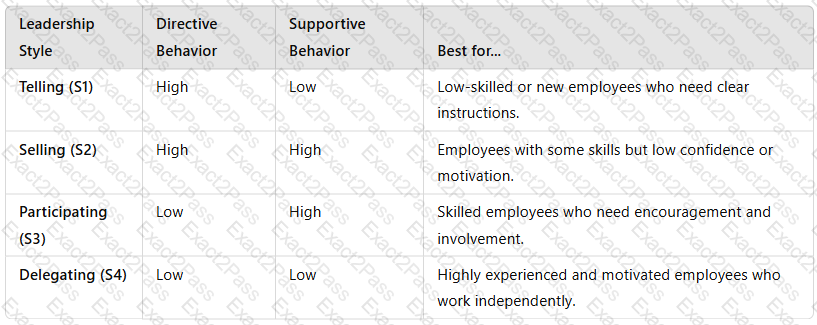
Situational Leadership is a contingency-based leadership model that suggests leaders should adjust their leadership style based on the specific situation and the readiness level of their team members .
Key Concept: Leadership Styles Based on Team Readiness
The Situational Leadership Model identifies four leadership styles , which are determined by a combination of directive (task-oriented) and supportive (relationship-oriented) behaviors :
 A screenshot of a computer
AI-generated content may be incorrect.
A screenshot of a computer
AI-generated content may be incorrect.
Why Situational Leadership is Important?
Encourages flexibility in leadership.
Helps develop employees’ skills and confidence .
Ensures effective leadership in changing environments like supply chain management.
2. How Situational Leadership Applies to Supply Chain Management (20 Points)
Supply Chain Management Overview
Supply chain management (SCM) involves planning, procurement, logistics, inventory management, risk assessment, and supplier relationships . Given the fast-changing nature of supply chains , managers must adapt their leadership style based on team capabilities, supplier maturity, and operational challenges .
Situational Leadership Applied to Supply Chain Functions
1. Telling (S1) – Directive Leadership for New or Inexperienced Teams
???? Application in Supply Chain:
Best for new supply chain employees who need strict guidance on procurement, contract management, and compliance.
Works well in structured environments , such as warehouse management and logistics operations , where standard operating procedures (SOPs) must be followed .
???? Example: A newly hired procurement officer struggling with contract negotiation may need step-by-step instructions from a senior manager to ensure compliance with procurement regulations.
2. Selling (S2) – Coaching Approach for Semi-Skilled Supply Chain Teams
???? Application in Supply Chain:
Used when employees have some knowledge but need motivation and guidance .
Effective in supplier relationship management , where procurement staff need training on negotiation techniques and ethical sourcing .
Helps employees understand the bigger picture and improve decision-making skills .
???? Example: A procurement team transitioning to a digital procurement system may need training, encouragement, and strategic direction to adopt new technologies.
3. Participating (S3) – Collaboration in Strategic Supply Chain Decisions
???? Application in Supply Chain:
Works best for experienced supply chain professionals who need empowerment and involvement in decision-making .
Encourages team input on strategic decisions , such as risk management, cost optimization, and sustainability initiatives .
Best for cross-functional collaboration , where procurement, logistics, and finance teams work together .
???? Example: A supply chain manager engaging with senior procurement professionals to co-develop a supplier diversification strategy to reduce dependency on a single supplier.
4. Delegating (S4) – Empowering High-Performing Supply Chain Teams
???? Application in Supply Chain:
Best for highly experienced and autonomous supply chain professionals who require minimal supervision .
Used in global supply chain operations , where regional managers handle logistics, procurement, and supplier engagement independently .
Encourages innovation , allowing supply chain teams to optimize processes using AI, automation, and data analytics .
???? Example: A senior procurement manager overseeing global supplier contracts operates with full autonomy and implements a digital supplier performance dashboard without needing daily oversight.
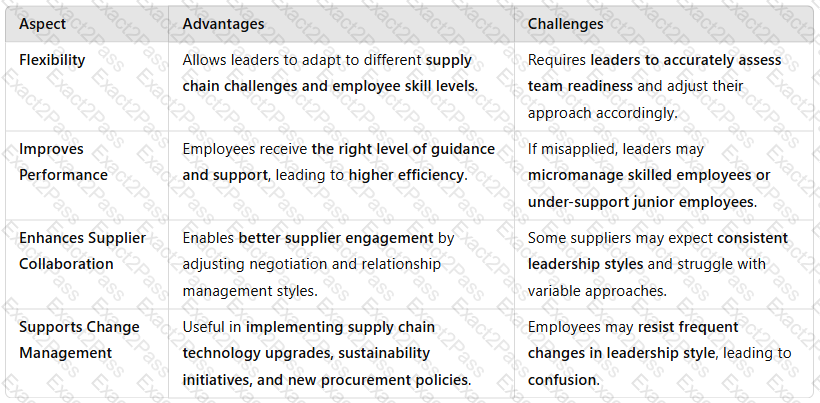
3. Advantages and Challenges of Situational Leadership in SCM
 A screenshot of a computer
AI-generated content may be incorrect.
A screenshot of a computer
AI-generated content may be incorrect.
Conclusion
Situational leadership is a highly effective approach for supply chain management , where dynamic conditions require flexible leadership styles . By adjusting leadership approaches based on team competency, motivation, and operational needs, supply chain leaders can optimize procurement, logistics, and supplier relationship management .
The most effective supply chain leaders use all four styles , applying:
Telling (S1) for new procurement staff ,
Selling (S2) for skill-building in supplier management ,
Participating (S3) for strategic decision-making , and
Delegating (S4) for experienced global supply chain teams .
By mastering situational leadership , procurement and supply chain managers can increase efficiency, reduce risks, and improve supplier partnerships , ultimately enhancing organizational success .
Explain how Modern Slavery is a risk to a supply chain and possible ways a Supply Chain Manager can mitigate this risk (25 points)
See the Answer is the explanation.
Overall explanation
Below you will find how you can plan and draft the essay. Remember this is an example of one way you could approach the question. At Level 6 the questions are much more open so your response may be completely different and that's okay.
Essay Plan
Introduction – modern slavery is an issue due to complex international supply chains
P1 – risk – subcontracting or outsourcing
P2 – risk – lack of visibility
P3 - risk - other countries not having strong laws against it
P4 – mitigate – supplier due diligence
P5 – mitigate – traceability e.g. blockchain
P6 – mitigate – training
P7 – mitigate – collaboration and reporting
P8 – example – DJ Houghton
Conclusion – modern slavery is risk legally and ethically and also to business reputation
Example Essay
Modern slavery, a grave violation of human rights, poses a significant risk to supply chains across the globe. As organizations increasingly rely on complex and globalized supply networks, the risk of unwittingly engaging with suppliers that exploit forced labour and human trafficking becomes ever more concerning. This essay explores the risks associated with modern slavery in the supply chain and suggests possible mitigation strategies for supply chain managers. To illustrate the real-world implications of these risks, I will reference the legal case of Antuzis & Ors v DJ Houghton Ltd.
Modern slavery, which includes practices like forced labour and human trafficking, can infiltrate supply chains in various ways. One significant entry point is through subcontracting and outsourcing. As supply chains become increasingly complex, organizations often rely on subcontractors and suppliers further down the chain. Unfortunately, these lower-tier suppliers may engage in exploitative labour practices to cut costs, which can go unnoticed by the primary organization.
Moreover, the lack of transparency within supply chains poses a considerable risk. Limited visibility into sub-tier suppliers and subcontractors makes it challenging to assess their labour practices. This lack of transparency creates opportunities for modern slavery to thrive undetected, posing a significant risk to organizations and their stakeholders.
Additionally, globalization plays a role in the risk equation. Sourcing materials and products internationally increases the risk of encountering suppliers operating in regions with weaker labour protections and lax enforcement of anti-slavery laws. This is particularly true in countries with less stringent child working laws such as in South East Asia.
Supply chain managers play a crucial role in identifying and mitigating the risk of modern slavery in the supply chain. Several strategies can be employed to address this risk effectively:
Firstly, comprehensive supplier due diligence is paramount. This involves conducting thorough assessments of suppliers, including lower-tier suppliers, to evaluate their labour practices, compliance with anti-slavery laws, and adherence to ethical standards. It also entails implementing regular audits and inspections of suppliers to ensure compliance with labour laws and ethical standards. An organisation can employ a third party to conduct these audits, to ensure that the results are authentic.
Secondly, establishing transparency and traceability within the supply chain is essential. This can be achieved by meticulously mapping the supply chain, identifying potential risks, and ensuring visibility into lower-tier suppliers. Modern technology, such as blockchain and supply chain management software, can be instrumental in tracking and tracing the origins of products and materials.
Thirdly, organizations should develop and communicate a robust supplier code of conduct that explicitly prohibits modern slavery and outlines the consequences for non-compliance. Encouraging suppliers to adopt similar codes of conduct within their own operations can help create a network of ethical supply chain partners.
Moreover, regular risk assessments and impact analyses are critical. These assessments should consider geographical, industry-specific, and supplier-specific factors and help organizations understand the potential consequences of modern slavery-related risks on their reputation and bottom line.
Training and education are also essential components of mitigation strategies. Employees and suppliers should be educated on identifying and reporting instances of modern slavery, and awareness should be raised about the legal and ethical obligations surrounding this issue.
Lastly, collaboration and reporting are crucial. Organizations should collaborate with industry associations, NGOs, and government bodies to share best practices and improve industry-wide efforts against modern slavery. Transparent reporting on efforts to mitigate modern slavery risks demonstrates a commitment to addressing the issue and fosters trust with stakeholders.
The case of Antuzis & Ors v DJ Houghton Ltd serves as a stark reminder of the potential legal consequences of failing to address modern slavery in the supply chain. In this case, the court found that the company, DJ Houghton Ltd, had subjected workers to deplorable working conditions, effectively amounting to modern slavery. What sets this case apart is that the court held the directors personally liable for breaches of their duty of care to the workers. This case underscores the legal liabilities and reputational damage that organizations and their leadership can face if they neglect their responsibilities in the supply chain.
In Conclusion, modern slavery poses a significant risk to supply chains, jeopardizing ethical values, legal compliance, and corporate reputations. Supply chain managers have a crucial role in identifying and mitigating this risk by implementing due diligence, transparency measures, and ethical standards. By taking proactive steps to combat modern slavery, supply chain managers can protect their organizations and uphold their moral and legal obligations in an increasingly interconnected global economy. The case of Antuzis & Ors v DJ Houghton Ltd serves as a compelling reminder of the real-world consequences of failing to address this critical issue
Tutor Notes
- The case study mentioned above is an excellent one to use in an essay about Modern Slavery. DJ Houghton Ltd was charged £1m in 2016 for trafficking migrant workers from Lithuania to various egg farms in the UK. They were subjected to inhumane conditions, income below minimum wage, they failed to provide adequate facilities to eat, wash and rest, and threatened workers with fighting dogs. The company’s Gangmaster Licence was also revoked. Antuzis & Ors v DJ Houghton Ltd | Addleshaw Goddard LLP
- Your answer may also make reference to ethical standards and accreditations such as Fair Trade, using the CIPS Code of Conduct, Modern Slavery Act, having a strong CSR policy, appointing an ethical Ombudsman, ILO Conventions and the 2018 Decent Work Agenda, SA8000. Mentioning these extra bits would likely get you a distinction.
Explain, with examples, how a Procurement Professional can apply the CIPS Code of Conduct in relation to ethical business practices (25 points).
See the Answer is the explanation.
Overall explanation
Below you will find how you can plan and draft the essay. Remember this is an example of one way you could approach the question. At Level 6 the questions are much more open so your response may be completely different and that's okay.
Essay Plan
Introduction – what is it?
Paragraph 1 – standing
Paragraph 2- integrity
Paragraph 3 – promote
Paragraph 4 – proficiency
paragraph 5 – regulations
Conclusion – it’s super important
Example Essay
The CIPS (Chartered Institute of Procurement & Supply) Code of Conduct serves as a guiding framework for procurement and supply chain professionals to maintain ethical standards and professional integrity in their work. This essay will explore how procurement professionals can apply various aspects of the CIPS Code of Conduct to ensure ethical business practices. It will address each of the five core principles outlined in the Code of Conduct: Standing, Integrity, Promotion, Proficiency, and Regulations, providing relevant examples for each.
Standing:
One of the key principles of the CIPS Code of Conduct is to enhance and protect the standing of the profession. Procurement professionals can apply this by avoiding conduct that would bring the profession or CIPS into disrepute. For example, if a procurement manager discovers evidence of bid rigging among potential suppliers, adhering to this principle would involve promptly reporting the suspicious activity to their organization's compliance department. By doing so, they not only uphold professional standards, but also safeguard the organization's reputation.
Integrity:
Maintaining personal and professional integrity is fundamental to ethical business practices. The Code of Conduct emphasizes that procurement professionals should never engage in conduct, either professional or personal, that would bring the profession or CIPS into disrepute. For instance, if a supply chain manager is offered an extravagant gift by a vendor during negotiations, they should decline the gift and report the offer to their supervisor or compliance department. This action upholds personal and professional integrity, ensuring impartiality in supplier selection.
Promotion:
Procurement professionals can actively promote ethical practices within their organizations and supply chains, aligning with the Code of Conduct. For example, they can advocate for sustainable and ethical sourcing practices. If a procurement manager selects suppliers who adhere to fair labour standards and environmentally responsible practices, they set an example that encourages others to prioritize ethical practices. By actively promoting these principles, they contribute to a culture of integrity and social responsibility.
Proficiency:
Enhancing and protecting the standing of the profession also involves a commitment to proficiency. Procurement professionals can apply this principle by continually developing and maintaining their professional skills and competencies. For instance, attending training programs and industry conferences regularly can help them stay updated on the latest ethical standards and best practices. Pursuing certifications related to ethical sourcing, such as sustainable supply chain management credentials, further demonstrates their commitment to proficiency.
Regulations:
The CIPS Code of Conduct underscores the importance of compliance with relevant laws and regulations in procurement and supply chain management. Procurement professionals should ensure that all sourcing activities align with legal requirements. For example, they can conduct due diligence to confirm that suppliers adhere to anti-corruption laws, trade restrictions, and environmental regulations. This not only minimizes legal and ethical risks but also ensures ethical conduct within the supply chain.
Conclusion:
In conclusion, procurement professionals play a crucial role in maintaining ethical business practices by applying the principles outlined in the CIPS Code of Conduct. By adhering to these principles related to Standing, Integrity, Promotion, Proficiency, and Regulations, they contribute to the ethical and responsible functioning of their organizations and the broader supply chain industry. Upholding ethical standards not only safeguards professional integrity but also fosters trust and transparency in procurement and supply chain management.
Tutor Notes
- The CIPS code of conduct has come up as a 25 point question in Level 4 and Level 5 exams, so there is no reason to believe it couldn’t come up at Level 6. Nothing has changed in terms of content, but at this Level be prepared to give more examples of it being applied in practice.
- Another way this could be asked is in relation to a case study. E.g. Mark is a procurement professional and X and Y are going on at his organisation. Using the CIPS Code of Conduct, what should he do about X and Y?
Explain the following types of dismissal: fair dismissal, unfair dismissal, summary dismissal, constructive dismissal and redundancy (15 points) How should an employee respond if they believe they believe that they have been let go by their employer unfairly? (10 points).
See the Answer is the explanation.
Overall explanation
Below you will find how you can plan and draft the essay. Remember this is an example of one way you could approach the question. At Level 6 the questions are much more open so your response may be completely different and that's okay.
Essay Plan
Introduction – complex area of law
Section 1 – each type of dismissal, explain and example
Section 2- what they should do; use internal channels first, seek advice (union / Citizens Advice), mediation, litigation via Employment Tribunal.
Example Essay
Employment termination is a complex area of employment law, and different types of dismissal carry distinct legal implications. In the United Kingdom, where employment law is well-established, employees are entitled to certain rights and protections when facing dismissal. This essay explores various types of dismissal, including fair dismissal, unfair dismissal, summary dismissal, constructive dismissal, and redundancy. It also discusses how employees should respond if they believe they have been unfairly dismissed.
Types of Dismissal:
Fair Dismissal: Fair dismissal occurs when an employer terminates an employee's contract with valid reasons that are recognized by law. Common grounds for fair dismissal include misconduct, lack of capability and statutory reasons. For example, an employee consistently failing to perform their job despite adequate training and support may be fairly dismissed for capability.
Unfair Dismissal: Unfair dismissal, on the other hand, happens when an employee is terminated without valid reasons or if the employer fails to follow the correct dismissal procedures. Employees with at least two years of continuous service have protection against unfair dismissal. For example if XYZ Ltd fire Employee X who has worked at the company for 5 years because there is a personality clash between them and the management, Employee X could claim unfair dismissal (personality clash is not a valid reason for dismissal).
Summary Dismissal: Summary dismissal, often referred to as instant or gross misconduct dismissal, occurs when an employer terminates an employee's contract without notice due to severe misconduct. It typically involves serious breaches of workplace rules or the law. For example if an employee is caught stealing, they may be fired on the spot without notice.
Constructive Dismissal: Constructive dismissal occurs when an employee resigns from their position due to an employer's fundamental breach of the employment contract, creating an unbearable working environment. An example of this is if the employer fails to provide the worker with the correct PPE to complete the work (for example in the Construction industry). Because the employee is unable to complete the work safely, they resign. In this instance, the ‘blame’ is put firmly on the fault of the employer for ‘making’ the employee resign.
Redundancy: Redundancy takes place when an employer dismisses an employee because the job role they held no longer exists, or the employer's business needs to reduce its workforce. Redundancy dismissals must adhere to specific procedures and fair selection criteria. In the UK this is referred to as TUPE.
If an employee believes that they are being fired unfairly they can claim unfair dismissal. Firstly, they should initially consider raising their concerns internally through the company's grievance procedure. This allows for a formal process where grievances can be investigated and addressed. This is particularly useful in large organisations where workers may be fired by middle-managers who are not properly trained or aware of the legislation regarding this area. By raising a concern through a grievance policy, it allows the right people in the company such as HR or the senior leadership team, to fully assess the situation.
Secondly, the employee should seek advice from an organisation such as Citizen’s Advice or their workers' union. They will be able to advise if the situation does amount to unfair dismissal. Getting a third party involved can help to bring in a new perspective and keep discussions positive and moving forward.
If it is believed that the unfair dismissal has merit, employees can contact ACAS (Advisory, Conciliation, and Arbitration Service) for early conciliation. ACAS may facilitate settlement discussions between the employee and employer to avoid legal proceedings. If internal processes and ACAS conciliation do not resolve the matter, employees can file a claim with the Employment Tribunal within specified time limits, asserting unfair dismissal. The time limit to claim is currently 3 months minus a day from the date you were dismissed. Employees may seek legal advice and representation during Employment Tribunal proceedings to ensure their rights are protected and they receive appropriate compensation if the claim is successful.
In conclusion, various types of dismissal exist, each with distinct legal implications. Employees should be aware of their rights and protections under UK employment law, particularly concerning unfair dismissal. It is important to remember that ‘employment rights’ in the UK are only granted after 2 years of service, and this is often a big factor when looking at this area of law. It is important for all employees in the UK to understand these types of dismissal as having appropriate responses empowers employees to seek redress when faced with unjust termination.
Discuss supplier due diligence in relation to the case study below. How and why should it be implemented? (25 points)
Delicious Ltd is a cake manufacturing organisation with complex supply chains. They are based in the UK and source raw ingredients such as sugar and flour internationally. They use over 20 different suppliers, many of whom are in the commodities industry and some from low-cost countries.
See the Answer is the explanation.
Overall explanation
Below you will find how you can plan and draft the essay. Remember this is an example of one way you could approach the question. At Level 6 the questions are much more open so your response may be completely different and that's okay.
Essay Plan
Introduction- what is due diligence – assessing and evaluating suppliers.
Section 1 – how to do due diligence: risk assessments, supplier selection, audits, contracts, continuous processes, communication
Section 1 – why – quality issues, risk to business continuity, ethical reasons, customer/ stakeholder requirements
Conclusion: it’s essential for Delicious Ltd (relate back to case study).
Example Essay
Supplier due diligence is a critical process for organizations like Delicious Ltd, which rely on complex international supply chains to source commodity items. Due diligence involves assessing and evaluating the performance, reliability, and ethical practices of suppliers to ensure they meet the company's standards and requirements.
Here's how supplier due diligence can be implemented:
Risk Assessment: Begin by identifying the potential risks within the supply chain. This may include geopolitical risks, natural disasters, economic instability, and even supplier-specific risks like production delays or quality issues. It should also look at ethical considerations such as the use of forced or child labour in the supply chain and the working conditions of those employed by suppliers.
Supplier Selection: Carefully select suppliers based on criteria such as their track record, reputation, financial stability, quality control processes, and ethical practices. Delicious Ltd should consider multiple sources for critical raw materials such as sugar and flour to diversify risk. This means if one supplier goes bust, or is unable to provide the required quantities, Delicious Ltd can source materials elsewhere. The Kraljic Matrix would be a useful tool here.
Audits and Inspections: Delicious Ltd can conduct regular audits and inspections of suppliers' facilities and practices to ensure they meet the company's standards. These audits can include quality checks, ethical compliance checks, and supply chain continuity assessments. They can use an independent 3rd party to do this.
Contractual Agreements: Delicious Ltd should define clear terms and conditions in supplier contracts, specifying quality requirements, delivery schedules, pricing structures, and dispute resolution mechanisms. These contracts should reflect the results of due diligence assessments.
Continuous Monitoring: Establish a system for ongoing monitoring of suppliers' performance. This includes regular communication, feedback mechanisms, and performance reviews to ensure suppliers maintain the desired standards. Delicious Ltd could use the Demming Plan Do Check Act cycle here.
Contingency Planning: Develop contingency plans for potential supply chain disruptions. This could involve identifying alternative suppliers or establishing safety stock levels for critical raw materials. For example, by holding a surplus stock of flour in it’s own warehouse, Delicious Ltd mitigates the risk of late deliveries interrupting production.
Transparency and Reporting: Delicious Ltd should be transparent about supplier due diligence efforts with stakeholders, including customers, investors, and regulatory bodies. They should regularly report on compliance with ethical and sustainability standards and can publish findings on their website.
For Delicious Ltd, implementing supplier due diligence is essential for several reasons:
Quality Assurance: Ensuring the quality of raw ingredients is crucial for a cake manufacturing organization like Delicious Ltd. By conducting due diligence, the company can verify that suppliers meet specific quality standards, which is essential for producing consistent and high-quality products. If an ingredient such as flour was contaminated, this may result in Delicious Ltd’s customers falling ill. This is a risk that needs to be eliminated.
Supply Chain Reliability: International supply chains can be susceptible to disruptions, such as natural disasters, political instability, or economic fluctuations. Supplier due diligence helps identify potential risks within the supply chain and allows the company to develop contingency plans to minimize disruptions.
Ethical Sourcing: Customers and stakeholders increasingly demand transparency and ethical sourcing practices. Due diligence enables Delicious Ltd to assess whether suppliers adhere to ethical standards, such as fair labour practices and environmental sustainability, which can protect the company's reputation and market position. Delicious Ltd risk losing customers, and thus profit, if they fail to conduct due diligence.
Cost Control: By evaluating suppliers' financial stability and pricing structures, the company can negotiate better deals, optimize costs, and avoid unexpected price hikes or financial risks associated with supplier instability.
In conclusion, implementing supplier due diligence is essential for Delicious Ltd due to its complex international supply chains. It helps ensure quality, reliability, and ethical practices among suppliers, while also mitigating risks associated with the supply chain. By effectively implementing due diligence processes, the company can enhance its reputation, protect against disruptions, and maintain cost control.
Tutor Notes
- Remember that due diligence isn't just about ethics. That's a big part of it (checking supply chains for modern day slavery etc). Due diligence is about getting the 5 Rights of Procurement (remember this from Level 4?), it's about ensuring supply chain security and continuity, and about risk aversion too.
- To improve on the essay above you could talk more in detail about where you can get information on suppliers, such as D & B and Companies House for financial information, customer references and checking registrations such as ISO14001. Some of these are specific to the UK, so Delicious Ltd may need to look at international equivalents. You don’t have to know what these are for the exam though so don’t worry!
- How deep you conduct supplier due diligence depends on how important the supplier is to you. You could mention this in your conclusion and bring it back to Delicious Ltd – the flour supplier is probably very important, but the supplier of stationary for the workers in the office is probably less so. So Delicious need to do thorough due diligence on the flour supplier and less on the stationary guys. Kraljic is the tool for this.
- Because this is a case study question, you don’t have to bring in any real life examples. But if the question was more open e.g. discuss how a procurement manager can do Due Diligence, you could talk about a real life example, so have one in your back pocket for the exam
- For a really high score you could mention this: Home - KnowTheChain
Discuss the 5 approaches to management of the Blake Mouton Managerial Grid. How can this be applied to the role of a procurement manager? (25 points)
See the Answer is the explanation.
Introduction
Management effectiveness is critical for organizational success , particularly in functions like procurement , where balancing cost efficiency, supplier relationships, and operational effectiveness is key. The Blake Mouton Managerial Grid provides a framework for evaluating leadership styles based on a manager's concern for people (team members, stakeholders, suppliers) versus concern for production (task completion, efficiency, and profitability).
This essay will discuss the five approaches to management outlined in the Blake Mouton Managerial Grid and explore how procurement managers can apply them to enhance procurement performance.
Understanding the Blake Mouton Managerial Grid
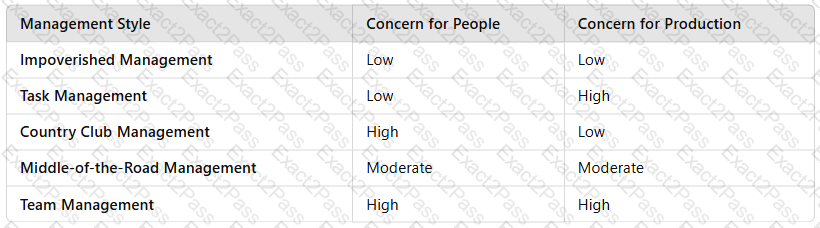
The Blake Mouton Managerial Grid (1964) classifies management styles based on two axes:
Concern for People – The degree to which a leader considers employee motivation, satisfaction, and well-being .
Concern for Production (or Task) – The extent to which a leader focuses on achieving organizational goals, efficiency, and productivity .
This results in five distinct leadership styles , each with its strengths and weaknesses.
The Five Approaches to Management in the Blake Mouton Grid
 A screenshot of a computer
AI-generated content may be incorrect.
A screenshot of a computer
AI-generated content may be incorrect.
1. Impoverished Management (Low Concern for People, Low Concern for Production)
Description:
Leaders with an impoverished management style exert minimal effort to manage people or production.
They often avoid decision-making , fail to motivate employees , and show little interest in organizational goals .
This approach leads to low productivity, disengaged employees, and poor procurement outcomes .
Impact on Procurement Management:
❌ Weak supplier management – Poor relationships with suppliers may lead to delivery delays and contract failures . ❌ No cost control – Procurement teams may fail to negotiate favorable pricing due to lack of leadership. ❌ Lack of strategic alignment – Procurement fails to support organizational goals , resulting in inefficiencies.
Example:
A procurement manager who ignores supplier performance reviews, does not enforce contract terms, and fails to manage procurement risks would be practicing an impoverished management style.
2. Task Management (High Concern for Production, Low Concern for People)
Description:
Task-oriented managers focus solely on efficiency, cost-cutting, and productivity , while neglecting employee well-being and engagement .
This style is highly authoritative and focuses on strict rules, efficiency, and results-driven processes .
Impact on Procurement Management:
✅ Strict cost control – The procurement team will focus on cutting costs and maximizing efficiency . ✅ Strong compliance enforcement – Ensures strict adherence to procurement policies and regulations . ❌ Supplier dissatisfaction – Overly aggressive cost-cutting and negotiation tactics may harm supplier relationships . ❌ Low employee morale – Procurement assistants may feel undervalued , leading to high staff turnover .
Example:
A procurement manager who focuses only on cost reduction and efficiency , without considering supplier relationships or team well-being, would fit this style.
3. Country Club Management (High Concern for People, Low Concern for Production)
Description:
A country club manager prioritizes employee satisfaction and relationships but neglects productivity and performance .
This results in a friendly, low-pressure environment , but with low accountability and inefficiency .
Impact on Procurement Management:
✅ Strong supplier and stakeholder relationships – Procurement teams collaborate well with suppliers but may overpay due to a lack of tough negotiations. ✅ High team morale – Employees feel valued and motivated . ❌ Lack of cost efficiency – Over-prioritizing relationships may result in weak cost controls . ❌ Ineffective risk management – Procurement managers may fail to enforce strict supplier performance criteria .
Example:
A procurement manager who develops strong relationships with suppliers but fails to hold them accountable for poor performance is practicing country club management.
4. Middle-of-the-Road Management (Moderate Concern for People, Moderate Concern for Production)
Description:
Balances both people and task concerns , but does not excel in either .
Ensures some level of efficiency and employee satisfaction , but lacks a strong strategic direction .
Impact on Procurement Management:
✅ Balanced supplier relationships – Ensures cost efficiency while maintaining supplier goodwill . ✅ Moderate employee engagement – The team feels reasonably motivated , but lacks innovation and strong leadership . ❌ Missed cost-saving opportunities – Procurement might fail to maximize value due to a lack of strategic focus. ❌ Lack of strong risk mitigation – The procurement manager may not aggressively manage risks , leading to supply chain disruptions.
Example:
A procurement manager who performs adequately but does not drive significant improvements or cost savings fits this style.
5. Team Management (High Concern for People, High Concern for Production)
Description:
The most effective leadership style , where the manager prioritizes both team well-being and achieving high performance .
Encourages collaboration, innovation, and accountability .
Focuses on both supplier relationships and cost efficiency .
Impact on Procurement Management:
✅ Optimized supplier performance – Ensures strong contract management, strategic sourcing, and supplier collaboration . ✅ High employee morale and performance – Employees are engaged, trained, and motivated to drive procurement success. ✅ Balanced cost and quality approach – Focuses on achieving cost efficiency while maintaining quality standards . ✅ Encourages innovation in procurement – Uses data analytics, AI, and technology to improve procurement processes.
Example:
A procurement manager who mentors their team, fosters supplier partnerships, and ensures cost savings while maintaining ethical procurement practices follows a team management approach.
Application of the Blake Mouton Grid to Procurement Management
The Blake Mouton Grid helps procurement managers identify their leadership style and improve team performance and supplier management . Here’s how:
Developing High-Performance Procurement Teams – Procurement managers should strive for a team management approach , ensuring both efficiency and employee engagement .
Enhancing Supplier Relationship Management – A balanced approach ensures fair negotiations, long-term partnerships, and cost efficiency .
Strategic Cost Management – Managers should avoid being overly task-focused (cost-cutting) or too lenient on supplier pricing .
Improving Risk Management – Ensuring strong governance and compliance while maintaining good supplier relationships.
Continuous Improvement – Encouraging innovation, sustainability, and procurement technology adoption .
Conclusion
The Blake Mouton Managerial Grid provides valuable insights into leadership effectiveness in procurement management . Among the five approaches:
Team Management is the most effective style for procurement managers, balancing supplier relationships, cost efficiency, and employee engagement .
Task Management may be useful in cost-control situations , but must be balanced with ethical supplier management .
Country Club, Middle-of-the-Road, and Impoverished Management styles are less effective , as they fail to balance procurement efficiency and supplier relationships .
By adopting a "Team Management" approach , procurement managers can drive strategic value, optimize supplier performance, and enhance procurement team capabilities , ultimately contributing to long-term business success
Discuss internal and external sources of change (10 points). What is a Forcefield Analysis and how can this help a leader plan for change? (15 points)
See the Answer is the explanation.
Overall explanation
Below you will find how you can plan and draft the essay. Remember this is an example of one way you could approach the question. At Level 6 the questions are much more open so your response may be completely different and that's okay.
Essay Plan
Divide into two separate answers
1) Internal changes; personnel, systems, structure. External changes; STEEPLED and Porter – legislation, economy, technology, competitors.
2) Intro: what is a forcefield analysis? Explain how to do one. Then How can it help? Define objectives, impact on communication strategy
Example Essay
Change is a constant in the business world, and organizations must adapt to various internal and external forces to remain competitive and relevant. Understanding the sources of change is crucial for managing transformations effectively. In this essay, we will explore the distinction between internal and external sources of change and discuss how they impact personnel, processes, and company structure.
Sources of Internal Change within a Business:
People Changes : Changes in personnel, such as hiring, firing, promotions, and retirements, can have a profound impact on an organization. New hires may require training and onboarding, potentially affecting productivity during the transition. Terminations or layoffs may lead to temporary disruptions and workload adjustments for remaining employees. Moreover personnel changes can influence the organization's culture. New employees may bring different values and perspectives, while the loss of experienced employees can result in a shift in the workplace culture. Promotions and changes in leadership positions can influence decision-making, team dynamics, and the overall direction of the organization.
Systems Changes : Implementing or modifying systems, including software, technology, or operational procedures, can significantly affect how an organization operates. Well-planned systems changes can lead to increased operational efficiency, reduced errors, and improved decision-making, but employees may need time to adapt to new systems, potentially causing a temporary decrease in productivity. Moreover, systems changes can impact data storage, retrieval, and analysis, influencing how information is utilized within the organization.
Company Structure Changes : Altering the organization's structure, including hierarchies, departments, or reporting lines, can reshape how work is organized and executed. Employees who experience shifts in job roles, responsibilities, or reporting relationships, can affect job satisfaction and performance. It may also require adjustments in communication processes, potentially impacting the flow of information within the organization. A well-designed company structure can enhance efficiency and adaptability, while a poorly structured one may lead to inefficiencies and bureaucracy.
Sources of External Change Impacting a Business:
Legislation Changes : Changes in laws and regulations can have immediate and long-term consequences for businesses. Adapting to new regulations may require financial investments in compliance measures, training, or legal counsel. Businesses may need to modify processes and practices to ensure adherence to updated legal requirements. Companies that can proactively adapt to legislative changes may gain a competitive advantage by being compliant and avoiding penalties. An example of this is the upcoming changes to Public Sector Procurement Regulations which will take place in 2024, following the UK’s departure from the EU.
Economic Changes : Economic shifts, such as recessions, inflation, or economic growth, can affect an organization's financial health and market position. Economic downturns can lead to decreased consumer spending and reduced revenue, requiring cost-cutting measures like layoffs or budget reductions. Conversely economic growth can present new market opportunities, prompting expansion, product diversification, or investment in research and development. Economic fluctuations can also disrupt supply chains, affecting inventory management, pricing, and delivery times.
Technological Changes : Rapid advancements in technology can drive changes in how businesses operate and compete. Embracing technological advancements can enhance operational efficiency, reduce costs, and improve customer experiences. Employees may require training to adapt to new technologies, and organizations may need to invest in digital infrastructure. Technology-driven innovations can disrupt traditional industries and create new competitive threats or opportunities. For example the music industry has seen huge changes in the past 10 years due to the increasing popularity of streaming platforms such as Apple Music and Spotify.
Competitor Actions : Actions taken by competitors, such as new product launches, marketing campaigns, or market entries, can influence an organization's market share and strategy. This may require adjustments in pricing, product offerings, or marketing strategies. An organisation should look at Porter’s 5 Forces and STEEPLE analysis to fully understand potential external sources of change.
In the dynamic business environment, both internal and external sources of change play significant roles in shaping organizations. Recognizing these sources of change and effectively managing them are essential for organizations to succeed.
Forcefield Analysis
Lewin's Force Field Analysis is a valuable tool that can help a leader plan for change by providing a structured framework for understanding the forces at play in an organization when considering a change initiative. Developed by psychologist Kurt Lewin in 1951, this model helps leaders assess the driving forces that promote change and the restraining forces that resist it.
Identifying Driving and Restraining Forces :
Driving Forces : These are factors that push for change and support the desired change initiative. Identifying these forces helps leaders understand what is propelling the organization toward change. Examples of driving forces include market opportunities, customer demands, and performance improvement goals.
Restraining Forces : These are factors that oppose or hinder change. Recognizing these forces is crucial as they represent obstacles that need to be addressed or overcome. Restraining forces can include employee resistance, existing processes, or budget constraints.
Assessing the Balance :
After identifying driving and restraining forces, leaders can assess the balance between them. This analysis provides a clear picture of the overall readiness for change within the organization. If driving forces outweigh restraining forces, it suggests a favourable environment for change, while an imbalance in the other direction may require more effort to gain buy-in and overcome resistance.
Prioritizing Action Steps :
Once the forces are identified and their balance is assessed, leaders can prioritize action steps accordingly. For driving forces, leaders can focus on leveraging them further and ensuring that they continue to support the change. For restraining forces, strategies can be developed to mitigate or overcome them. This may involve addressing concerns, providing training, or reallocating resources.
How this can help a leader plan for change :
Force Field Analysis provides a foundation for developing a comprehensive change management plan. Leaders can use the insights gained to structure the plan, including defining specific objectives, timelines, and key performance indicators (KPIs) to measure progress.
Understanding the forces at play allows leaders to tailor their communication and engagement strategies. They can target communication efforts toward addressing the concerns and motivations of employees, stakeholders, and other relevant parties. By addressing restraining forces through effective communication, leaders can build support for the change.
The analysis doesn't end with the initiation of change; it continues throughout the change process. Leaders can continuously monitor the balance of forces and adjust their strategies as needed. If new restraining forces emerge or driving forces weaken, the change plan can be adapted accordingly to maintain momentum.
In summary, Lewin's Force Field Analysis provides leaders with a structured approach to understanding the dynamics of change within an organization. By identifying driving and restraining forces, leaders can better plan, execute, and manage change initiatives, ultimately increasing the likelihood of successful implementation and achieving desired outcomes.
Tutor Notes
- I have split my answers here and clearly signposted this to the examiner. A top tip is to consider the examiner’s first look at your essay. By doing this, they can clearly see within the first 10 seconds that I’ve understood the question and I’ve answered all parts. It’s a way to set yourself up for success. So, use all the headings and spacings you can. I don’t think you can use bold in the exam, but you could use capital letters instead.
- A way to improve on the above would be to give more examples. For the Forcefield analysis you could talk about a potential change at company X being the introduction of a new product line, and say what the forces for and against would be. This would really hammer-home to the examiner you know your stuff.
- Sources of change – p. 224 (note the study guide says internal sources are people, structure and processes, I used the word system in my essay above rather than processes but it’s the same thing). External sources of change are anything from STEEPLED and Porter. Remember the question is only worth 10 points, so 3 or 4 internal and 3 or 4 internal is more than enough. Don’t do a full STEEPLED. You don’t have time.
- Forcefield analysis is p. 232

