Exact2Pass

Last Update 9 hours ago Total Questions : 116
The MuleSoft Certified Integration Architect - Level 1 MAINTENANCE content is now fully updated, with all current exam questions added 9 hours ago. Deciding to include MCIA-Level-1-Maintenance practice exam questions in your study plan goes far beyond basic test preparation.
You'll find that our MCIA-Level-1-Maintenance exam questions frequently feature detailed scenarios and practical problem-solving exercises that directly mirror industry challenges. Engaging with these MCIA-Level-1-Maintenance sample sets allows you to effectively manage your time and pace yourself, giving you the ability to finish any MuleSoft Certified Integration Architect - Level 1 MAINTENANCE practice test comfortably within the allotted time.
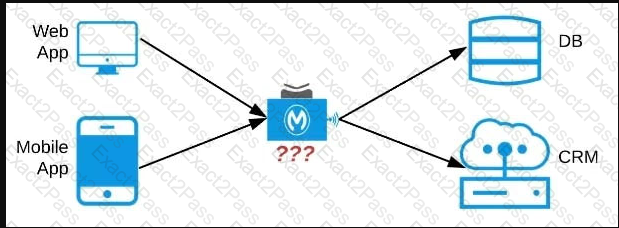
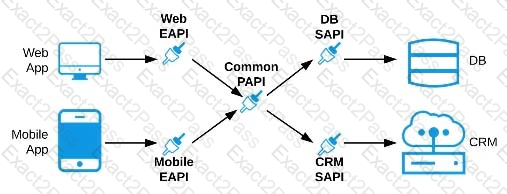
An organization needs to enable access to their customer data from both a mobile app and a web application, which each need access to common fields as well as certain unique fields. The data is available partially in a database and partially in a 3rd-party CRM system. What APIs should be created to best fit these design requirements?
An organization is implementing a Quote of the Day API that caches today's quote. What scenario can use the CloudHub Object Store connector to persist the cache's state?
The ABC company has an Anypoint Runtime Fabric on VMs/Bare Metal (RTF-VM) appliance installed on its own customer-hosted AWS infrastructure.
Mule applications are deployed to this RTF-VM appliance. As part of the company standards, the Mule application logs must be forwarded to an external log management tool (LMT).
Given the company's current setup and requirements, what is the most idiomatic (used for its intended purpose) way to send Mule application logs to the external LMT?
Refer to the exhibit.
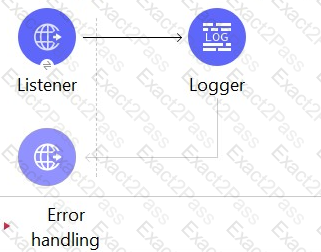
The HTTP Listener and the Logger are being handled from which thread pools respectively?
An organization is designing a mule application to support an all or nothing transaction between serval database operations and some other connectors so that they all roll back if there is a problem with any of the connectors
Besides the database connector , what other connector can be used in the transaction.
Mule application muleA deployed in cloudhub uses Object Store v2 to share data across instances. As a part of new requirement , application muleB which is deployed in same region wants to access this Object Store.
Which of the following option you would suggest which will have minimum latency in this scenario?
What API policy would LEAST likely be applied to a Process API?
A company is planning to extend its Mule APIs to the Europe region. Currently all new applications are deployed to Cloudhub in the US region following this naming convention
{API name}-{environment}. for example, Orders-SAPI-dev, Orders-SAPI-prod etc.
Considering there is no network restriction to block communications between API's, what strategy should be implemented in order to apply the same new API's running in the EU region of CloudHub as well to minimize latency between API's and target users and systems in Europe?
An organization has chosen Mulesoft for their integration and API platform.
According to the Mulesoft catalyst framework, what would an integration architect do to create achievement goals as part of their business outcomes?
What aspects of a CI/CD pipeline for Mule applications can be automated using MuleSoft-provided Maven plugins?


 A screenshot of a computer
Description automatically generated with low confidence
A screenshot of a computer
Description automatically generated with low confidence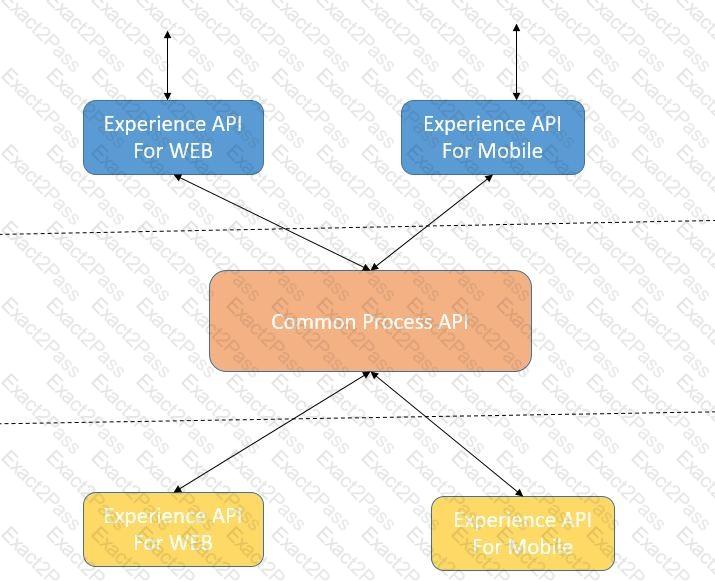 Diagram
Description automatically generated
Diagram
Description automatically generated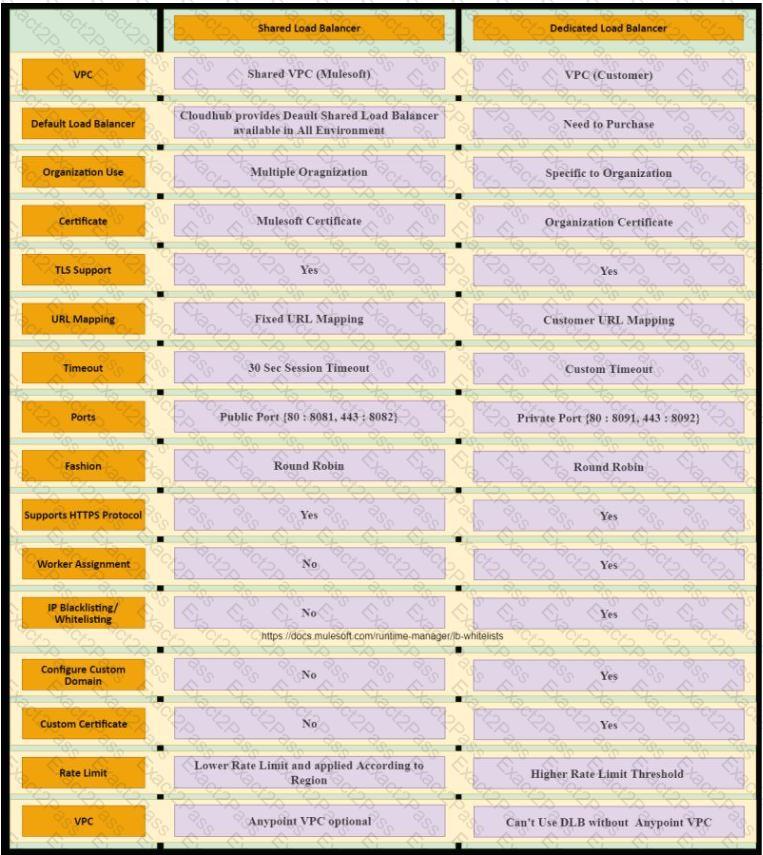 Table
Description automatically generated
Table
Description automatically generated Diagram
Description automatically generated
Diagram
Description automatically generated