Exact2Pass

Last Update 14 hours ago Total Questions : 56
The Fortinet NSE I - OT Security 7.6 Architect content is now fully updated, with all current exam questions added 14 hours ago. Deciding to include NSEI_OTS_AR-7.6 practice exam questions in your study plan goes far beyond basic test preparation.
You'll find that our NSEI_OTS_AR-7.6 exam questions frequently feature detailed scenarios and practical problem-solving exercises that directly mirror industry challenges. Engaging with these NSEI_OTS_AR-7.6 sample sets allows you to effectively manage your time and pace yourself, giving you the ability to finish any Fortinet NSE I - OT Security 7.6 Architect practice test comfortably within the allotted time.
Refer to the exhibit.
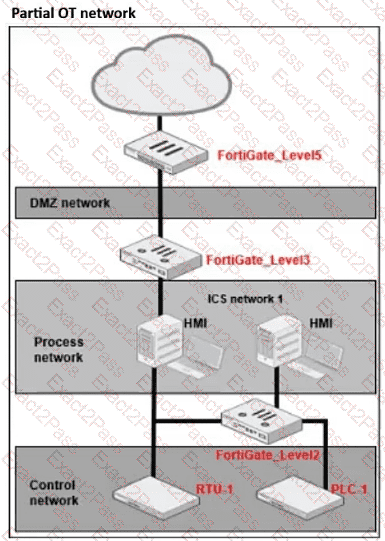
A partial OT network is shown.
PLC-1 has a known critical vulnerability, but you cannot update it.
What must you configure to protect PLC-1?
Refer to the exhibit.
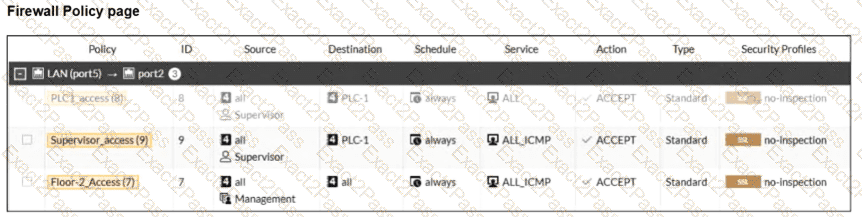
The configuration of firewall policies is shown.
To improve the security of your OT network, you have configured authentication in the firewall policies as shown in the exhibit, with CLI parameters set to their default settings. However, when you test HTTPS access from the LAN subnet to PLC-1, it is successful without any authentication prompt.
What is the reason?
Refer to the exhibit.
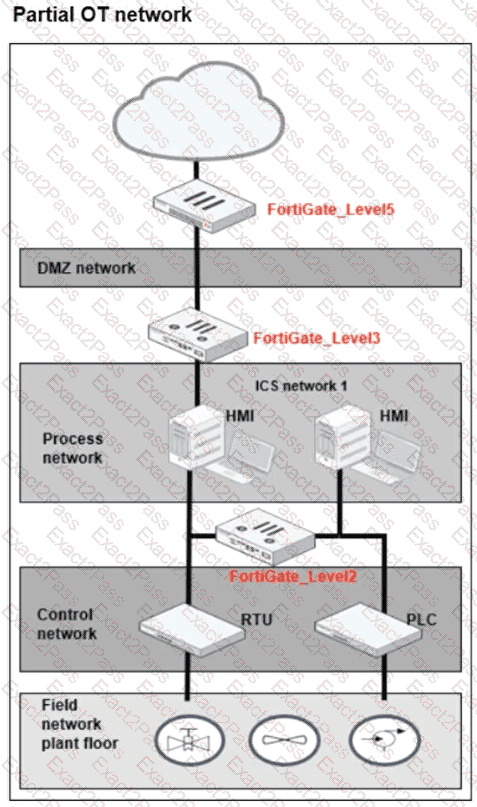
A partial OT network is shown.
You have recently removed the air gap in the network to provide full connectivity.
What must you configure to protect your OT network from external attacks?
You want to automate some tasks in your OT network. Which three configurations are directly available in a new basic event handler on FortiAnalyzer? (Choose three answers)
What is the next step if FortiGate cannot detect a device locally? (Choose one answer)
Refer to the exhibit.
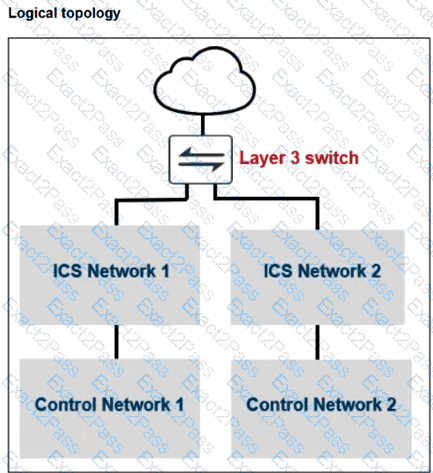
A partial OT network is shown. You must improve the security of this OT network and implement internal segmentation between network 1 and network 2. How can you achieve the segmentation? (Choose one answer)
Refer to the exhibit.
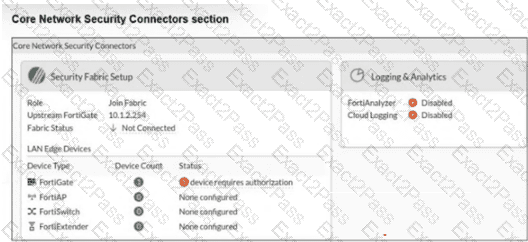
The Core Network Security Connectors page of the FortiGate-2 device is shown. Which statement is correct? (Choose one answer)
As the first step in your OT network protection plan, you must identify the OT protocols that the FortiGate device supports. Which two configurations must you implement on this FortiGate device? (Choose two answers)
Which industrial protocol does not support VLANs? (Choose one answer)
Refer to the exhibit.
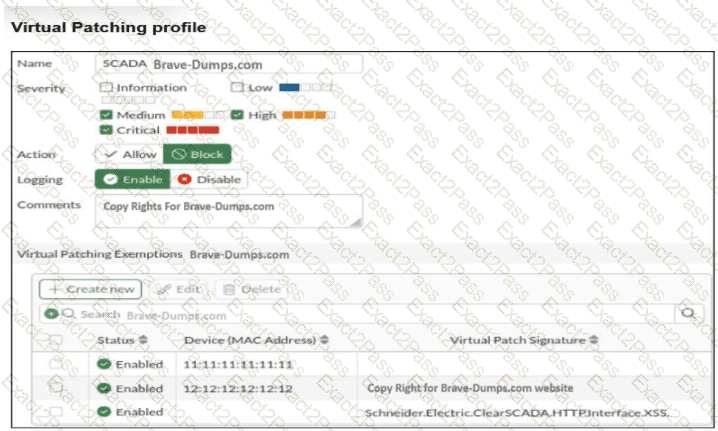
A Virtual Patching profile is shown. You have recently updated your SCADA system and would like to apply the SCADA virtual patching profile. Which two statements about this profile are correct? (Choose two answers)

