Exact2Pass

Last Update 23 hours ago Total Questions : 160
The PV Installation Professional (PVIP) Board Certification content is now fully updated, with all current exam questions added 23 hours ago. Deciding to include PVIP practice exam questions in your study plan goes far beyond basic test preparation.
You'll find that our PVIP exam questions frequently feature detailed scenarios and practical problem-solving exercises that directly mirror industry challenges. Engaging with these PVIP sample sets allows you to effectively manage your time and pace yourself, giving you the ability to finish any PV Installation Professional (PVIP) Board Certification practice test comfortably within the allotted time.
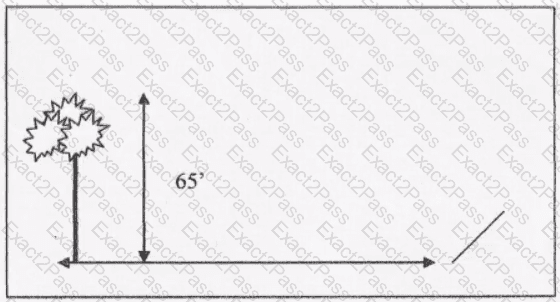
A PV system is located at 41 N latitude. The sun angle is 23 on December 21 at solar noon. Assuming that the 65 ft tree is directly south of the PV array and will grow 20 ft. over the life of the PV system, what is the MNIMUM distance the tree to the button of the prevent shading?
A PV system includes a 600V DC disconnect with a fault current rating of 10 kA. The available fault current from the inverter is 12 kA. What must be done to comply with NEC 110.10?
A PV system operates at 800V DC. What is the minimum distance for unqualified personnel per NFPA 70E restricted approach boundary?
Which is a requirement for designated battery rooms?
A commercial 600v carport-mounted PV system is installed with rigid running under the parking lot to an inverter pad located at the edge of the parking lot. At what depth below the parking lot base MUST condult be buried?
A worker is installing modules on a roof 20 feet above grade. What OSHA fall protection is required?
A rooftop PV system is being installed on a residential building with a 30-degree tilt angle. The modules are oriented directly south in a location where the solar noon altitude on December 21st is 30 degrees. What is the minimum distance required between two rows of modules to avoid shading between 9 AM and 3 PM solar time, assuming the module height is 3 feet?
A connector not listed to be used in a concealed location and being used as a disconnect for PV equipment shall comply with which of the following?
A grid-connected PV system on a dwelling is producing 30% less power than expected. The conductors from threes strings of modules enter into a 3-pole fused dc disconnect, and each ungrounded conductor is connected to a separate pole. On the inverter side of the switch terminals, the three strings are combined. The dc disconnect switch is opened. The voltages on the array side of the switch are 440 on string #1, 444V on string #2, and 0V on string #3. The dc disconnect is then closed and the inverter resumes operating, still producing about 30% less power than expected. A clamp-on ammeter is used to measure the dc current of each string of each string of modules where they enter the rooftop junction box. The operating currents of each string are 3.9A for string #1, 3 85A for string #2, and 4.3 A for string #3. What is the MOST likely with the system?
When installing a ground-mounted PV array, which of the following grounding methods complies with NEC Article 690 requirements for equipment grounding?

