Exact2Pass

Last Update 15 hours ago Total Questions : 422
The Administering Relational Databases on Microsoft Azure content is now fully updated, with all current exam questions added 15 hours ago. Deciding to include DP-300 practice exam questions in your study plan goes far beyond basic test preparation.
You'll find that our DP-300 exam questions frequently feature detailed scenarios and practical problem-solving exercises that directly mirror industry challenges. Engaging with these DP-300 sample sets allows you to effectively manage your time and pace yourself, giving you the ability to finish any Administering Relational Databases on Microsoft Azure practice test comfortably within the allotted time.
Which audit log destination should you use to meet the monitoring requirements?
You need to design a data retention solution for the Twitter feed data records. The solution must meet the customer sentiment analytics requirements.
Which Azure Storage functionality should you include in the solution?
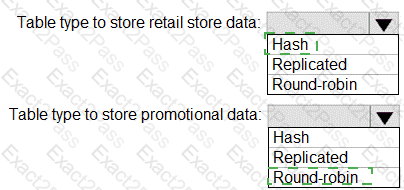
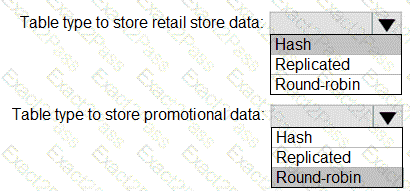
You need to implement the surrogate key for the retail store table. The solution must meet the sales transaction dataset requirements.
What should you create?
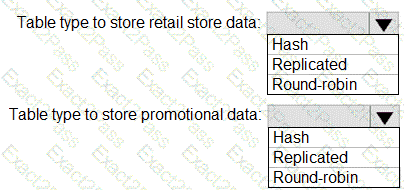
You need to design an analytical storage solution for the transactional data. The solution must meet the sales transaction dataset requirements.
What should you include in the solution? To answer, select the appropriate options in the answer area.
NOTE: Each correct selection is worth one point.
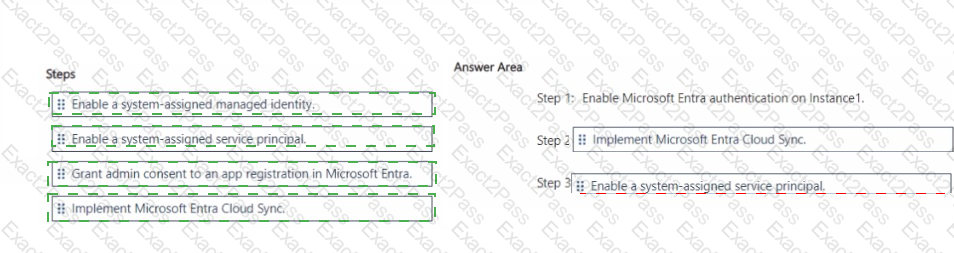
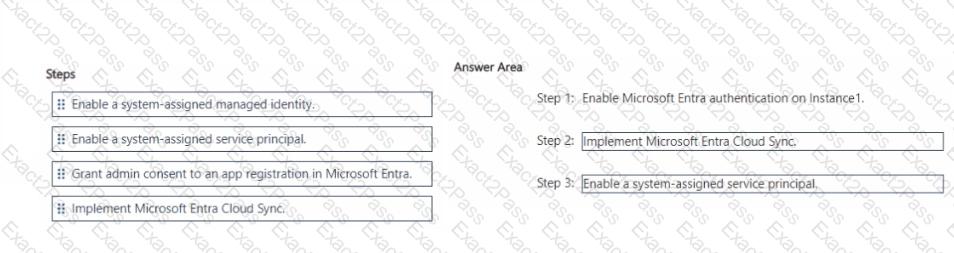
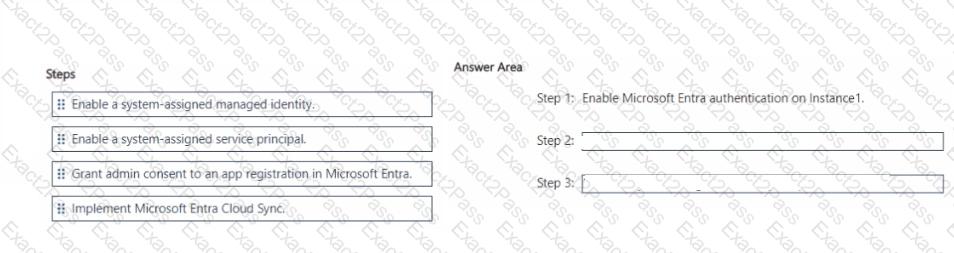
You need to recommend an authentication solution for App1 access to DB1 and DB2 after their migration to Instance1. The solution must meet the availability requirements.
Which actions should you perform in sequence? To answer, drag the appropriate actions to the correct order. Each action may be used once, more than once, or not at all. You may need to drag the split bar between panes or scroll to view content.
NOTE: Each correct selection is worth one point.
You need to identify the event_flle target for monitonng DB3 after the migration to Azure SQL Database. The solution must meet the management requirements,
What should you use as the event_file target?
You need to identify the event_file target for monitonng DB3 after the migration to Azure SQL Database. The solution must meet the management requirements.
What should you use as the event_file target?
You need to recommend a solution to meet the security requirements and the business requirements for DB3. What should you recommend as the first step of the solution?
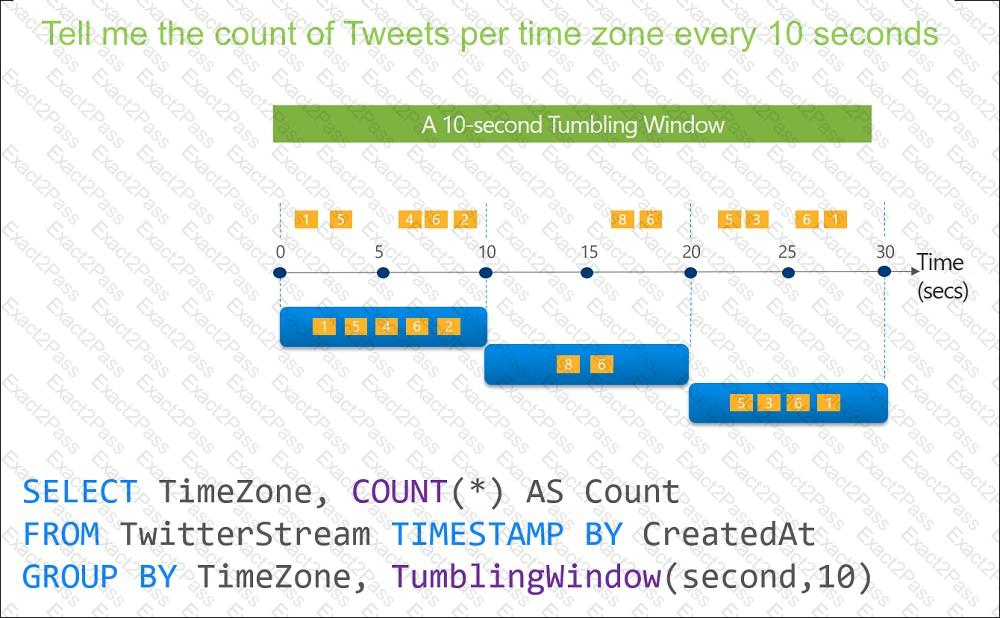
Which windowing function should you use to perform the streaming aggregation of the sales data?
You need to recommend a solution that will enable remote developers to access DB1 and DB2. The solution must support the planned changes and meet the secunty requirements.
What should you include in the recommendation?