Exact2Pass

Last Update 19 hours ago Total Questions : 209
The Implementing Analytics Solutions Using Microsoft Fabric content is now fully updated, with all current exam questions added 19 hours ago. Deciding to include DP-600 practice exam questions in your study plan goes far beyond basic test preparation.
You'll find that our DP-600 exam questions frequently feature detailed scenarios and practical problem-solving exercises that directly mirror industry challenges. Engaging with these DP-600 sample sets allows you to effectively manage your time and pace yourself, giving you the ability to finish any Implementing Analytics Solutions Using Microsoft Fabric practice test comfortably within the allotted time.
You have a Fabric tenant that contains a lakehouse. You plan to use a visual query to merge two tables.
You need to ensure that the query returns all the rows that are present in both tables. Which type of join should you use?
You have a Fabric tenant that contains a semantic model named Modell.
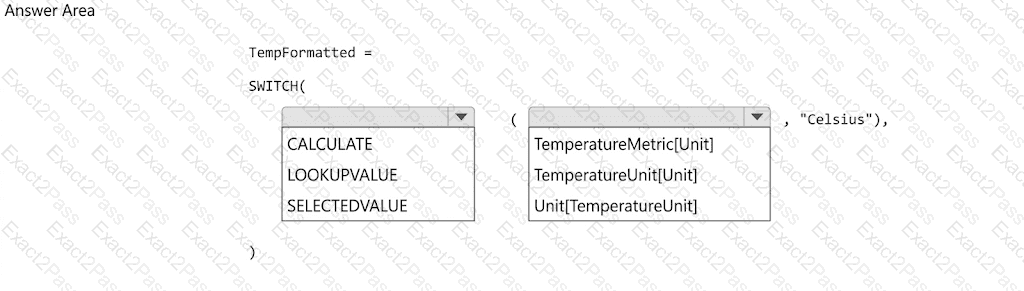
Model1 contains a table named TemperatureUnit. TemperatureUnit contains a column named Unit. Unit contains manually added options foe Celsius and Fahrenheit.
Modell contains the following, measures:
A measure that contains the following expression.
A measure that contains the following expression:
[TemperatureMetric] = AVERAGE(Weather[TempC] )
A dynamic measure that contains the following expression:
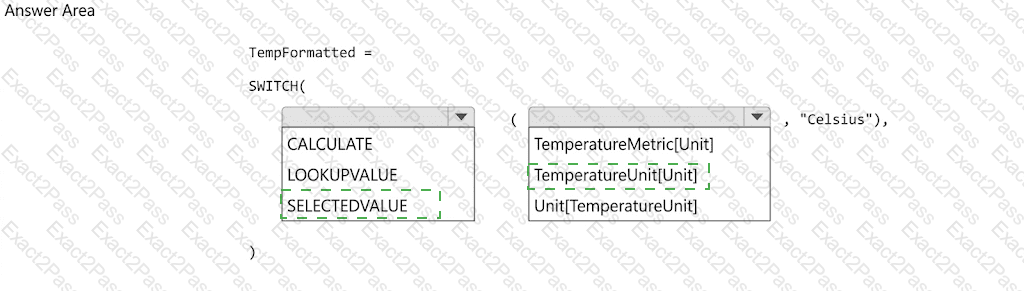
[TemperatureDisplay] = VAR Unit = SELECTEDVALUE(TemperatureUnit[Unit] , " Celsius " ) VAR CelsiusValue = [TemperatureMetric] RETURN SWITCH( Unit, " Fahrenheit " , (CelsiusValue * 9/5) + 32, CelsiusValue )
You need to add a dynamic format string to the [TemperatureDisplay] measure to enable users to switch display values between metric (Celsius) and imperial (Fahrenheit).
How should you complete the DAX expression? To answer, select the appropriate options in the answer area.
NOTE: Each correct selection is worth one point.
You have a Fabric tenant that uses a Microsoft tower Bl Premium capacity. You need to enable scale-out for a semantic model. What should you do first?
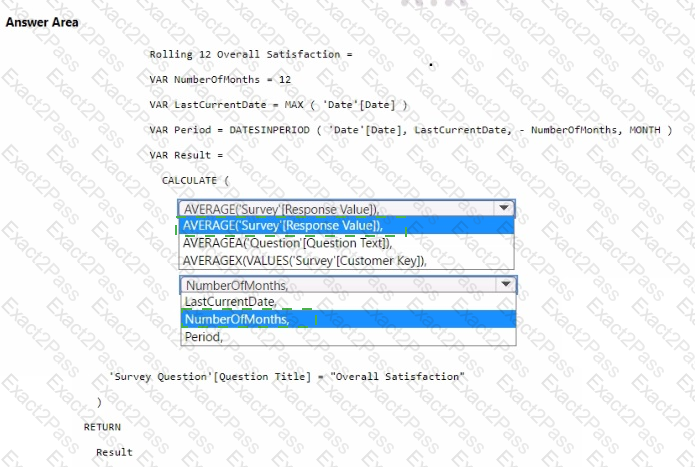
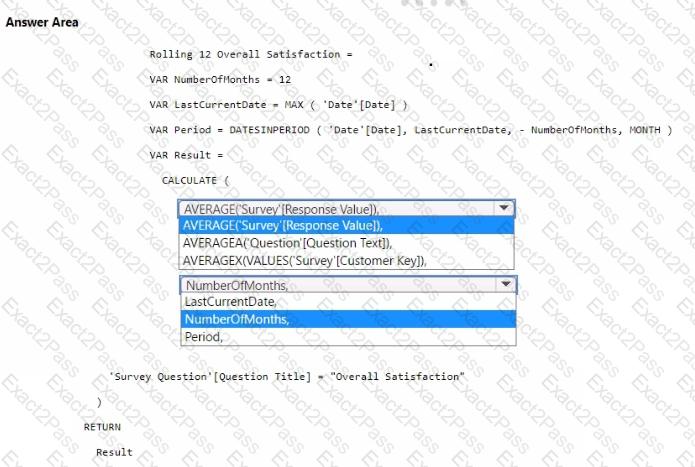
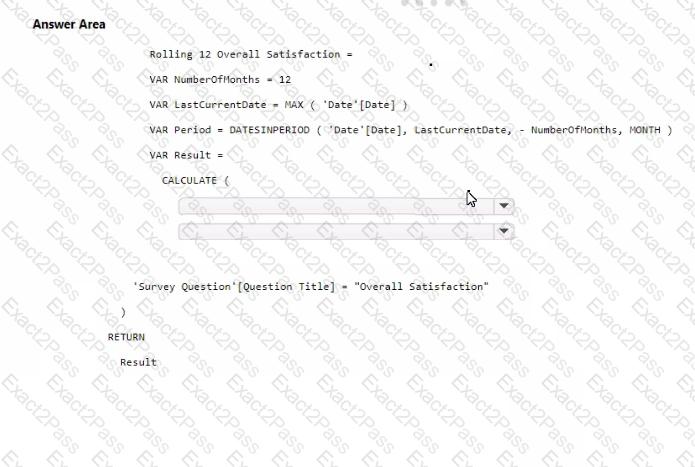
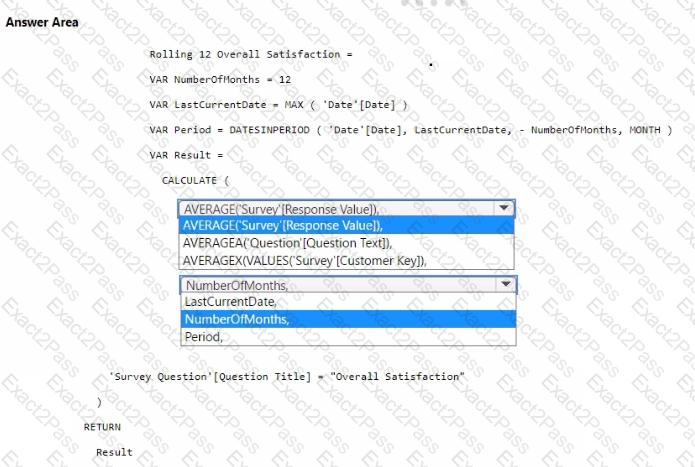
You need to create a DAX measure to calculate the average overall satisfaction score.
How should you complete the DAX code? To answer, select the appropriate options in the answer area.
NOTE: Each correct selection is worth one point.
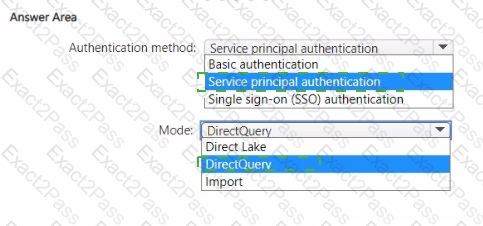
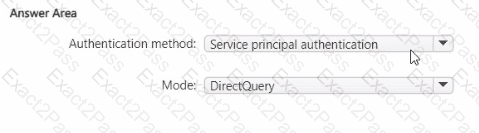
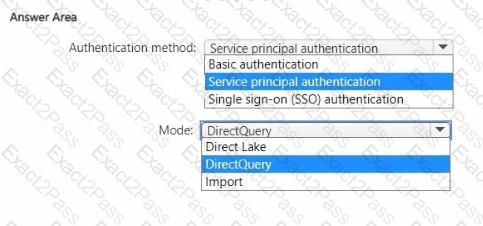
You need to design a semantic model for the customer satisfaction report.
Which data source authentication method and mode should you use? To answer, select the appropriate options in the answer area.
NOTE: Each correct selection is worth one point.
You have a Fabric tenant named Tenant! that contains a lakehouse named Lakehouse1.
You need to add data to Lakehouse1 from a CSV file in an Azure Storage account outside of Fabric. The solution must minimize development effort.
What should you use to add the data?
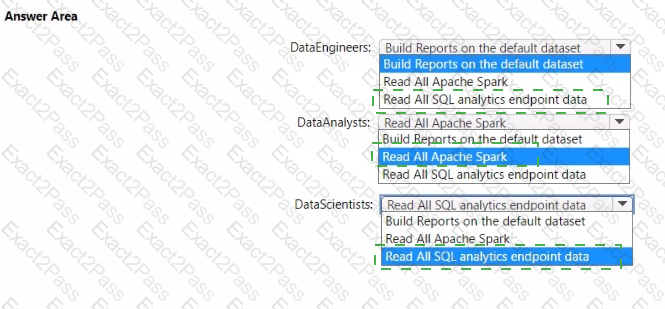
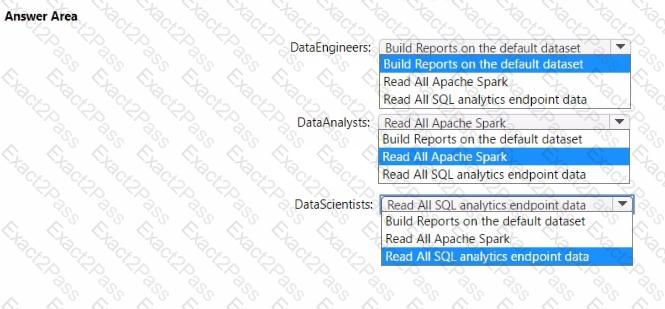
You to need assign permissions for the data store in the AnalyticsPOC workspace. The solution must meet the security requirements.
Which additional permissions should you assign when you share the data store? To answer, select the appropriate options in the answer area.
NOTE: Each correct selection is worth one point.
You have a Microsoft Power Bl report named Report1 that uses a Fabric semantic model.
Users discover that Report1 renders slowly.
You open Performance analyzer and identify that a visual named Orders By Date is the slowest to render. The duration breakdown for Orders By Date is shown in the following table.
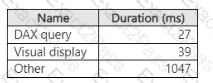
What will provide the greatest reduction in the rendering duration of Report1?
You need to implement the date dimension in the data store. The solution must meet the technical requirements.
What are two ways to achieve the goal? Each correct answer presents a complete solution.
NOTE: Each correct selection is worth one point.
You need to recommend a solution to prepare the tenant for the PoC.
Which two actions should you recommend performing from the Fabric Admin portal? Each correct answer presents part of the solution.
NOTE: Each correct answer is worth one point.