Exact2Pass

Last Update 8 hours ago Total Questions : 91
The Implementing Data Engineering Solutions Using Azure Databricks content is now fully updated, with all current exam questions added 8 hours ago. Deciding to include DP-750 practice exam questions in your study plan goes far beyond basic test preparation.
You'll find that our DP-750 exam questions frequently feature detailed scenarios and practical problem-solving exercises that directly mirror industry challenges. Engaging with these DP-750 sample sets allows you to effectively manage your time and pace yourself, giving you the ability to finish any Implementing Data Engineering Solutions Using Azure Databricks practice test comfortably within the allotted time.
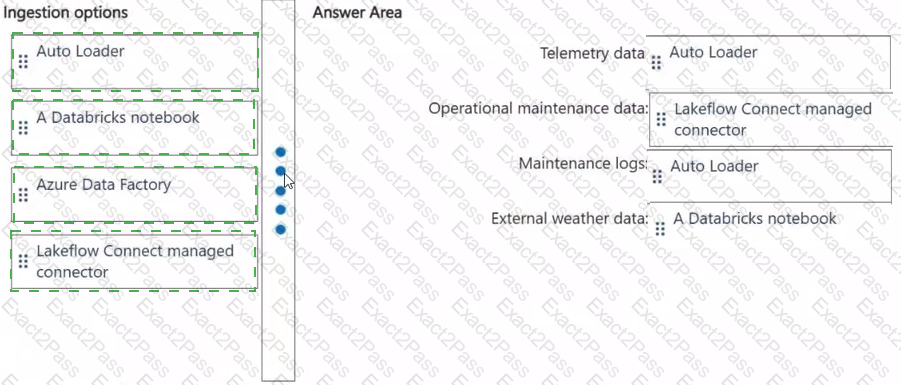
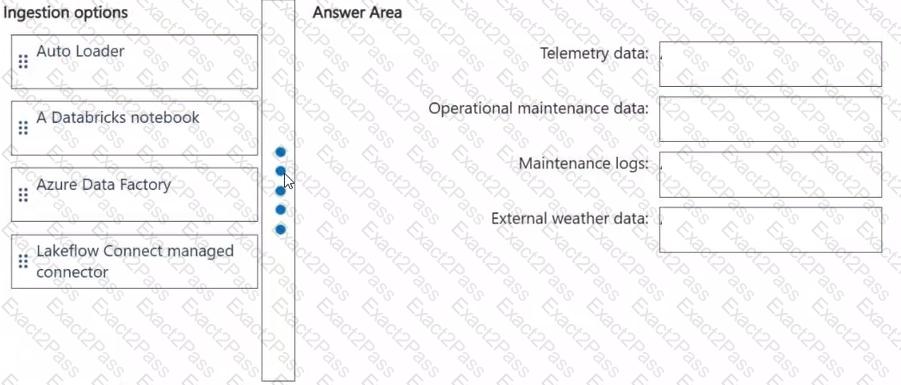
Which ingestion option should you recommend for each data source? To answer, drag the appropriate options to the correct data sources. Each option may be used once, more than once, or not at all. You may need to drag the split bar between panes or scroll to view content.
NOTE: Each correct selection is worth one point.
You need to develop the task logic for a new job in Lakeflow Jobs that processes telemetry data.
Each task must contain only the appropriate logic for its step in the pipeline. The solution must support the planned changes and meet the data ingestion and processing requirements.
What should you do?
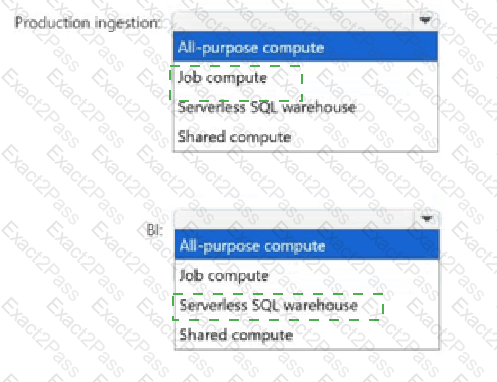
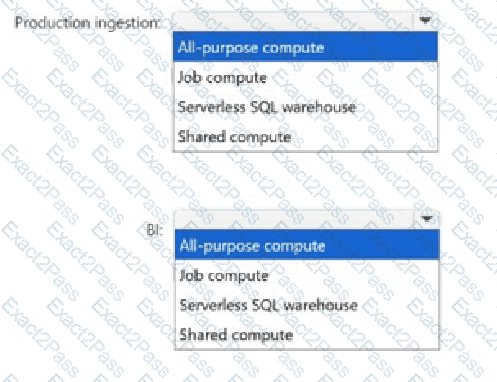
You need to recommend a compute type for the production ingestion workloads and BI workloads. The solution must meet the environment and compute requirements.
What should you recommend for each type of workload? To answer, select the appropriate options in the answer area.
NOTE: Each correct selection is worth one point.
You need to configure compute for the ingestion of telemetry data. The solution must meet the data ingestion and processing requirements.
What should you do?
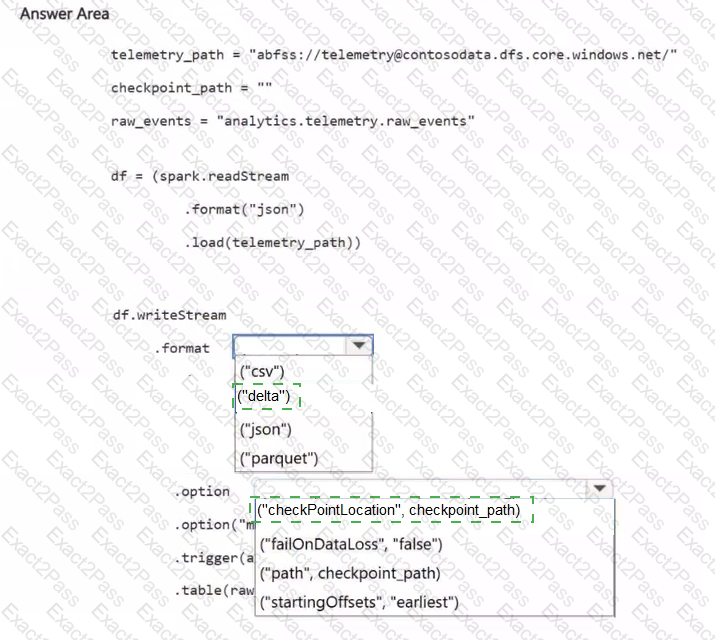
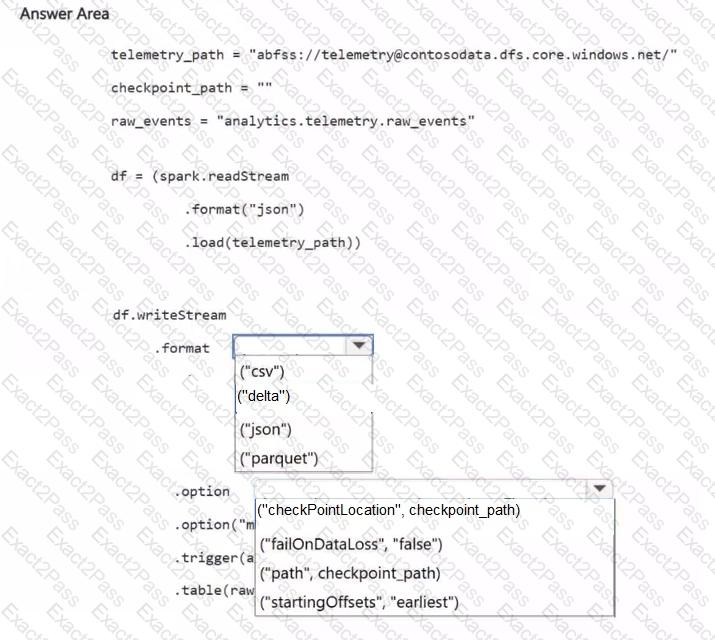
You need to complete the PySpark code for the Spark Structured Streaming pipelines. The solution must meet the data ingestion and processing requirements.
How should you complete the code segment? To answer, select the appropriate options in the answer area.
NOTE: Each correct selection is worth one point.
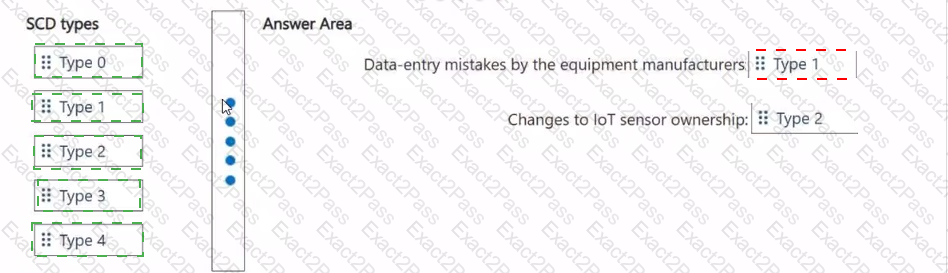
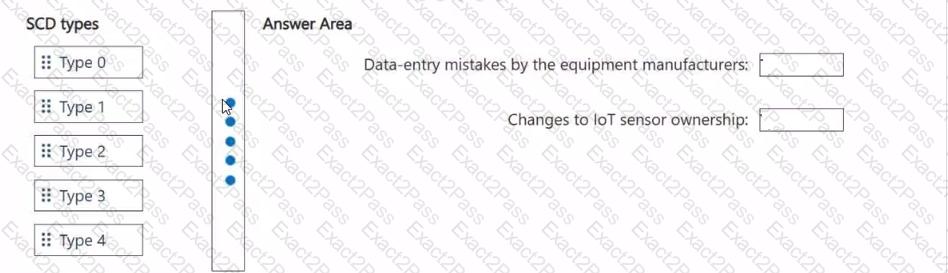
Which SCD type should you use to support the planned data modeling changes? To answer, drag the appropriate types to the correct issues. Each type may be used once, more than once, or not at all. You may need to drag the split bar between panes or scroll to view content.
NOTE: Each correct selection is worth one point.
You have an Azure Databricks workspace that is enabled for Unity Catalog and contains a Delta table named Orders.
You load the Orders table into an Apache Spark DataFrame named df.
You need to create a DataFrame that excludes rows where the order amount is null.
Solution: You run the following expression.
df.filter(df.order_amount.isNotNull())
Does this meet the goal?
You use Declarative Automation Bundles to manage two jobs and an app.
You need to deploy the bundle to development and production environments. The solution must meet the following requirements:
• Deploy the app to both environments.
• Deploy only one job to development.
• Minimize administrative effort.
What should you use?
You have an Azure Databricks workspace that is enabled for Unity Catalog and contains two managed Delta tables named sales.schema1.table1 and sales.schema1.table2.
sales.schema1.table1 contains sales data from the current year.
sales.schema1.table2 contains historical data.
You need to load all the rows from sales.schema1.table1 into sales.schema1.table2. The solution must preserve any existing data in sales.schema1.table2 and minimize processing effort.
Which command should you run?
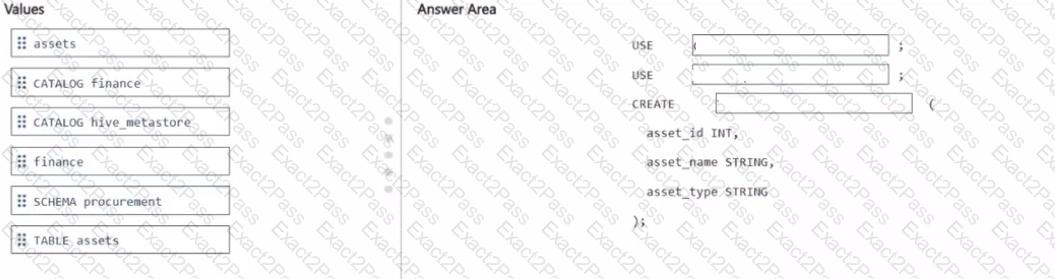
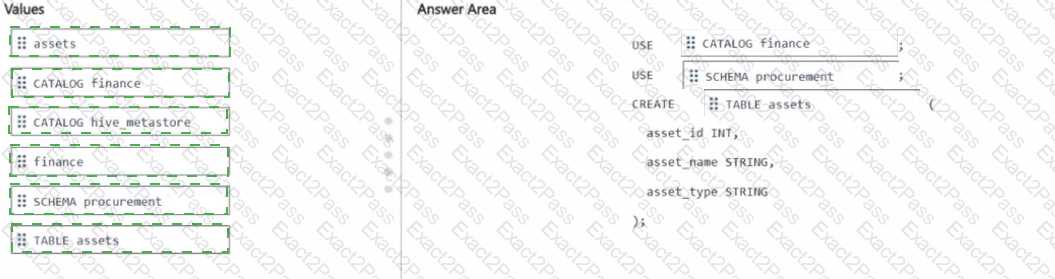
You have an Azure Databricks workspace that is enabled for Unity Catalog and contains a catalog named finance, finance contains two schemas named default and procurement.
You need to create a table named assets in the procurement schema, assets must contain the following columns:
• asset.id
• asset, type
• asset_name
How should you complete the SQL statement? To answer, drag the appropriate values to the correct targets. Each value may be used once, more than once, or not at all You may need to drag the split bar between panes or scroll to view content
NOTE: Each correct selection is worth one point.