Exact2Pass

Last Update 19 hours ago Total Questions : 96
The Fortinet NSE 6 - SD-WAN 7.6 Enterprise Administrator content is now fully updated, with all current exam questions added 19 hours ago. Deciding to include NSE6_SDW_AD-7.6 practice exam questions in your study plan goes far beyond basic test preparation.
You'll find that our NSE6_SDW_AD-7.6 exam questions frequently feature detailed scenarios and practical problem-solving exercises that directly mirror industry challenges. Engaging with these NSE6_SDW_AD-7.6 sample sets allows you to effectively manage your time and pace yourself, giving you the ability to finish any Fortinet NSE 6 - SD-WAN 7.6 Enterprise Administrator practice test comfortably within the allotted time.
(Refer to the exhibits.
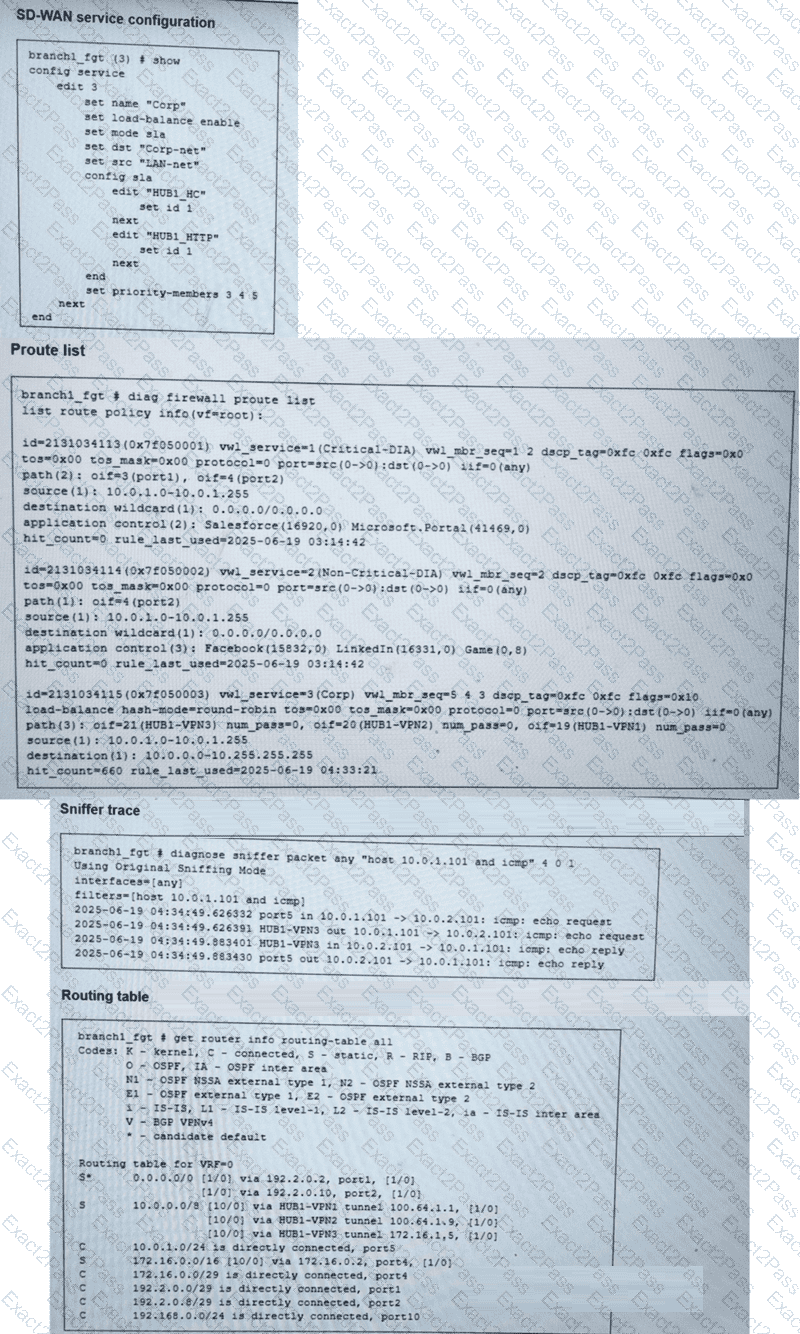
You collected the output shown in the exhibits and want to know which interface HTTP traffic will flow through from the user device 10.0.1.101 to the corporate web server 10.0.0.126 . All SD-WAN links are stable.
Which interface will FortiGate use to steer the traffic? Choose one answer.)
(Refer to the exhibit.
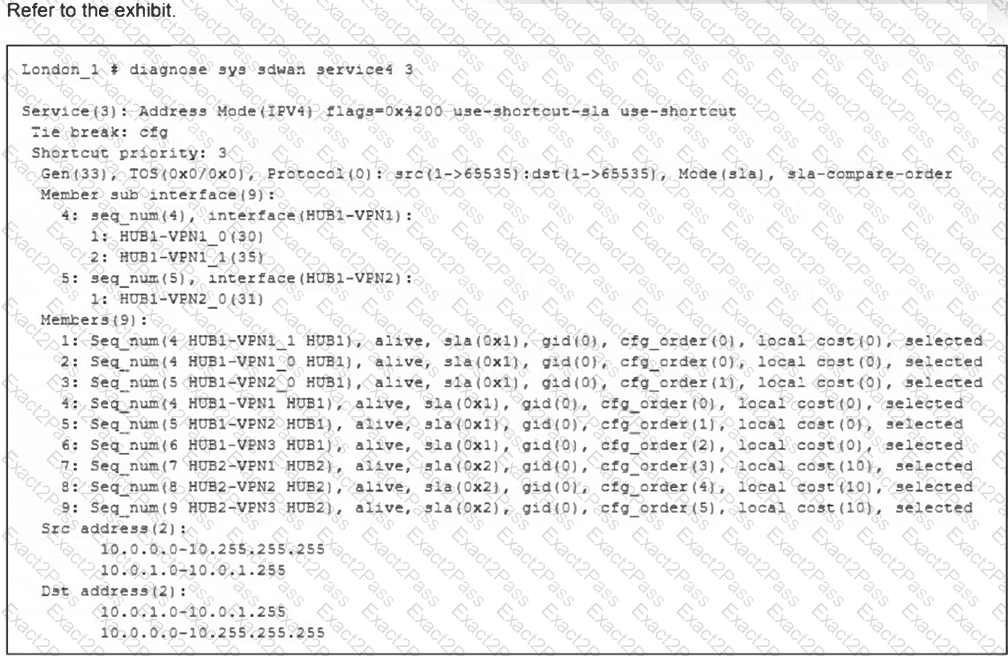
What can you conclude from the output shown? Choose one answer.)
Refer to the exhibits.
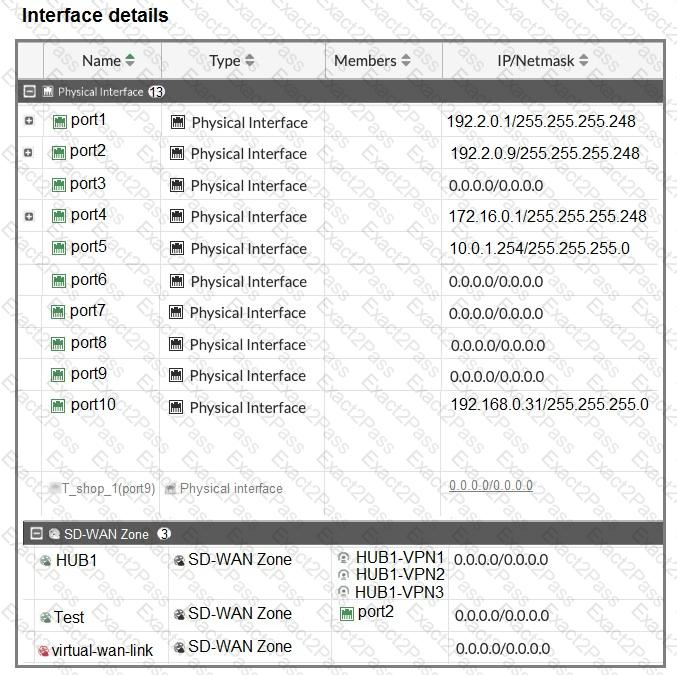
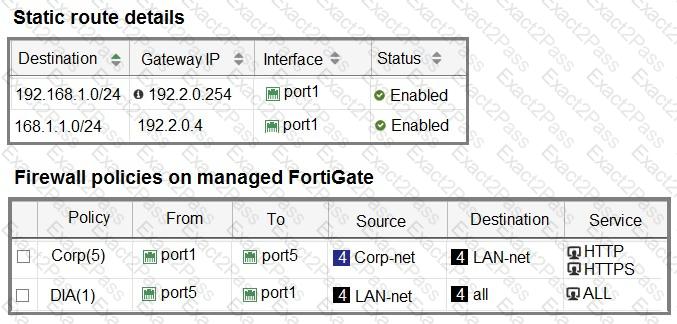
The interface details, static route configuration, and firewall policies on the managed FortiGate device are shown.
You want to configure a new SD-WAN zone, named Underlay, that contains the interfaces port1 and port2.
What must be your first action?
(Refer to the exhibit.
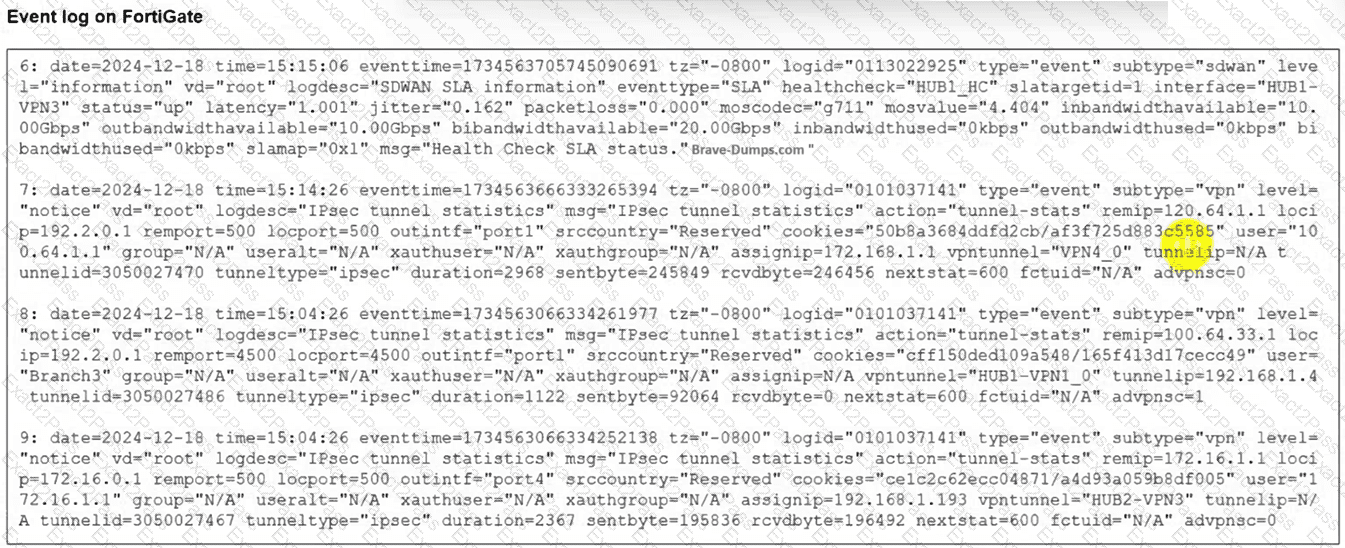
The event log on a FortiGate device is shown.
Based on the output shown in the exhibit, what can you conclude about the tunnels on this device? (Choose one answer))
Within the context of SD-WAN, what does SIA correspond to?
Refer to the exhibit.
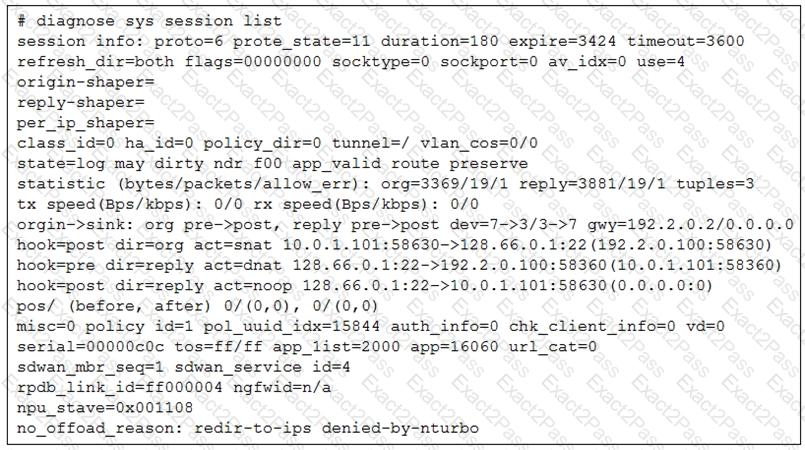
The administrator configured the SD-WAN rule ID 4 with two members (port1 and port2) and strategy lowest cost (SLA).
What are the two characteristics of the session shown in the exhibit? (Choose two.)
Exhibit.
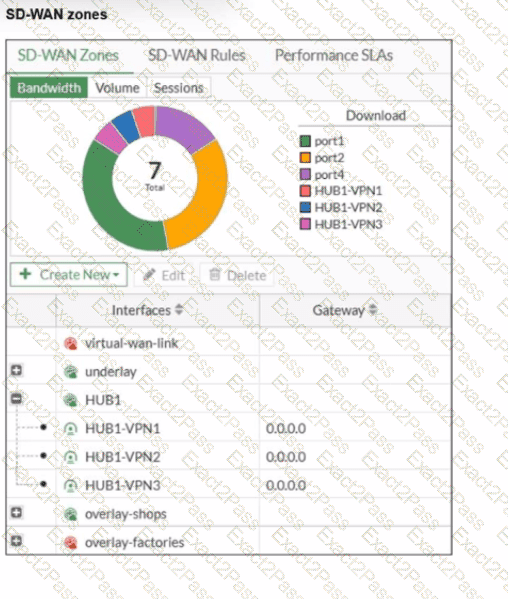
Refer to the exhibit, which shows an SD-WAN zone configuration on the FortiGate GUI. What can you conclude about the zone and member configuration on this device?
Refer to the exhibit.
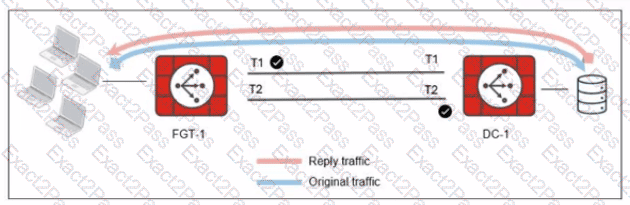
The administrator analyzed the traffic between a branch FortiGate and the server located in the data center, and noticed the behavior shown in the diagram.
When the LAN clients located behind FGT1 establish a session to a server behind DC-1, the administrator observes that, on DC-1, the reply traffic is routed overT2. even though T1 is the preferred member in
the matching SD-WAN rule.
What can the administrator do to instruct DC-1 to route the reply traffic through the member with the best performance?
Refer to the exhibit.
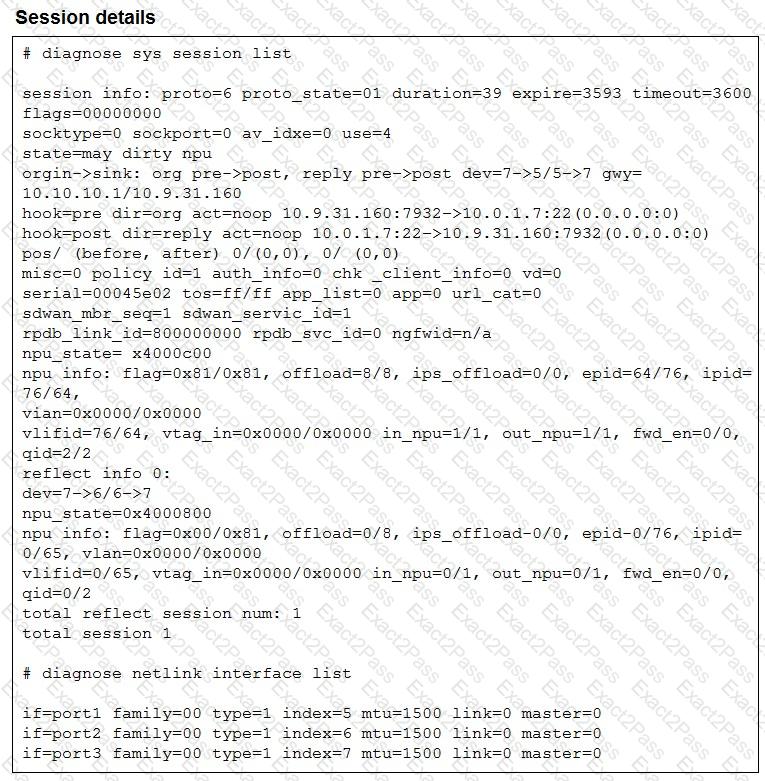
The exhibit shows the details of a session and the index numbers of some relevant interfaces on a FortiGate device that supports hardware offloading.
Based on the information shown in the exhibits, which two conclusions can you draw? (Choose two.)
(Refer to the exhibits. You collected the output shown in the exhibits and want to know which interface TCP traffic will flow through from the user device 10.0.1.101 to the corporate file server 10.0.0.125 . All SD-WAN links are stable.
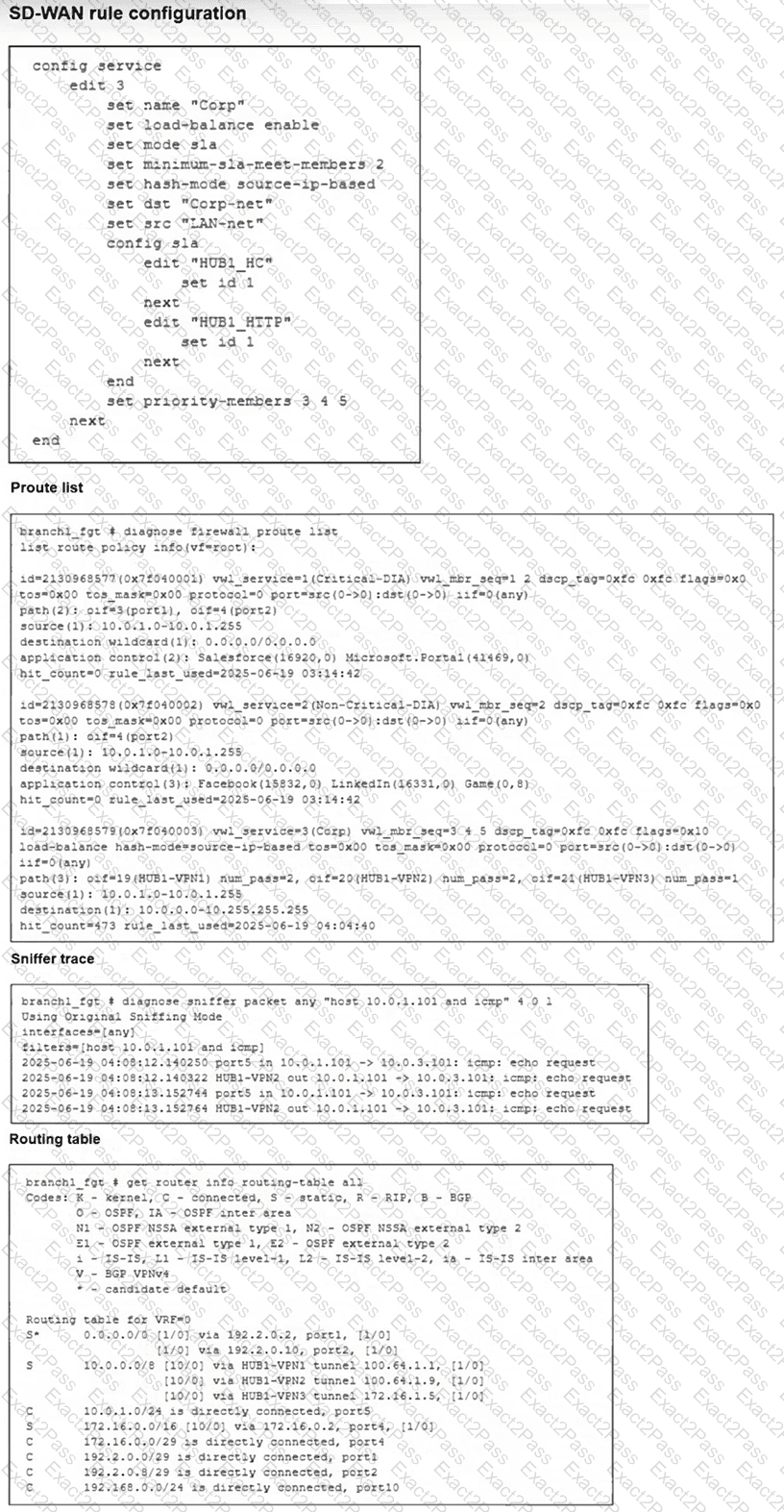
Which interface will FortiGate use to steer the traffic? Choose one answer.)

