Exact2Pass

Last Update 22 hours ago Total Questions : 67
The Fortinet NSE 7 - Public Cloud Security 7.6.4 Architect content is now fully updated, with all current exam questions added 22 hours ago. Deciding to include NSE7_CDS_AR-7.6 practice exam questions in your study plan goes far beyond basic test preparation.
You'll find that our NSE7_CDS_AR-7.6 exam questions frequently feature detailed scenarios and practical problem-solving exercises that directly mirror industry challenges. Engaging with these NSE7_CDS_AR-7.6 sample sets allows you to effectively manage your time and pace yourself, giving you the ability to finish any Fortinet NSE 7 - Public Cloud Security 7.6.4 Architect practice test comfortably within the allotted time.
Refer to the exhibit.
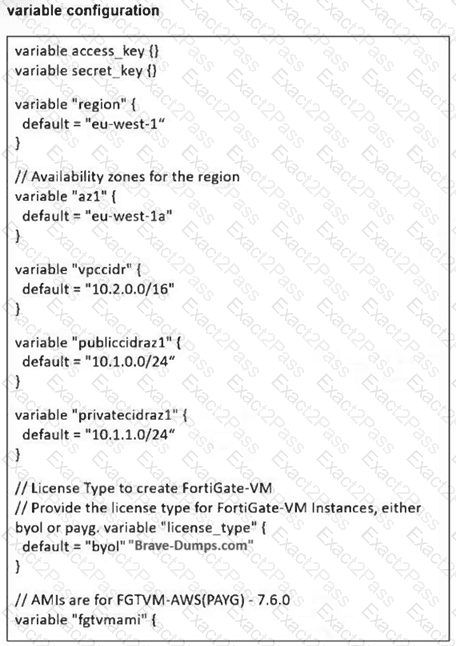
You are tasked to deploy a FortiGate VM with private and public subnets in Amazon Web Services (AWS). You examined the variables.tf file. Assume that all the other terraform files are in place. What will be the final result after running the terraform init and terraform apply commands? (Choose one answer)
Refer to the exhibit.
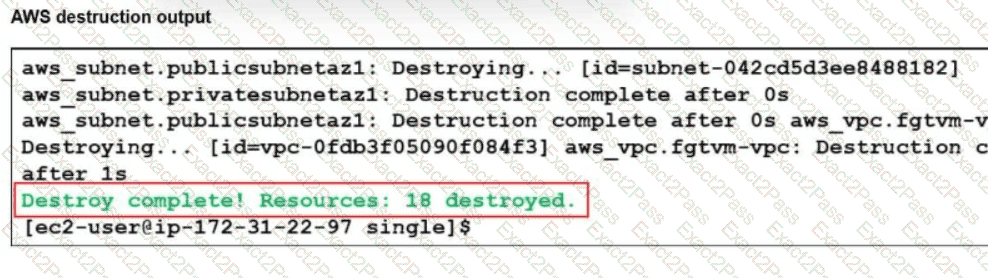
An administrator deployed a FortiGate-VM in a high availability (HA) (active/passive) architecture in Amazon Web Services (AWS) using Terraform for testing purposes. At the same time, the administrator deployed a single Linux server using AWS Marketplace.
Which two options are available for the administrator to delete all the resources created in this test? (Choose two.)
What is the main advantage of using SD-WAN Transit Gateway Connect over traditional SD-WAN?
Which statement about Transit Gateway (TGW) in Amazon Web Services (AWS) is true?
Refer to the exhibit.
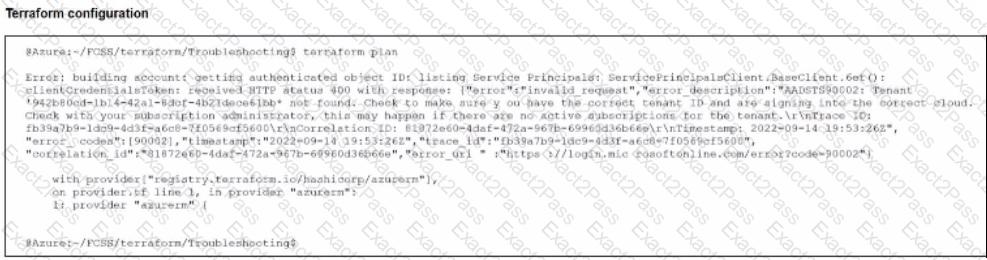
After the initial Terraform configuration in Microsoft Azure, the terraform plan command is run.
Which two statements about running the terraform plan command are true? (Choose two.)
An administrator implements FortiWeb ingress controller to protect containerized web applications in an AWS Elastic Kubernetes Service (EKS) cluster.
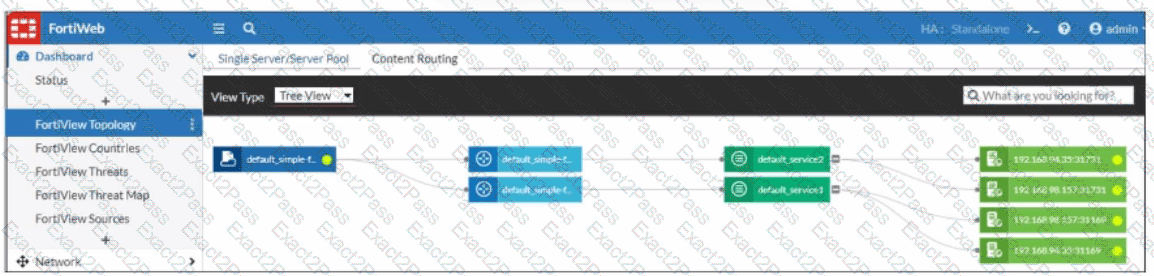
What can you conclude about the topology shown in FortiView?
Refer to the exhibit.
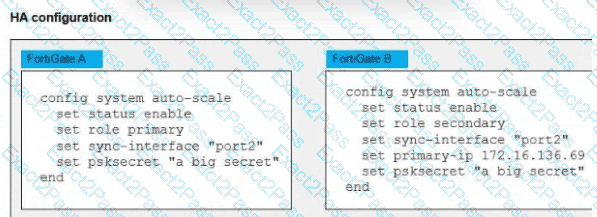
An administrator deployed an HA active-active load balance sandwich in Microsoft Azure. The setup requires configuration synchronization between devices.
What can you conclude from the configured settings shown in the exhibit? (Choose two.)
A customer would like to use FortiGate fabric integration with FortiCNP. When adding a FortiGate VM to FortiCNP, which three mandatory configuration steps must you follow on FortiGate? (Choose three answers)
Refer to the exhibit.
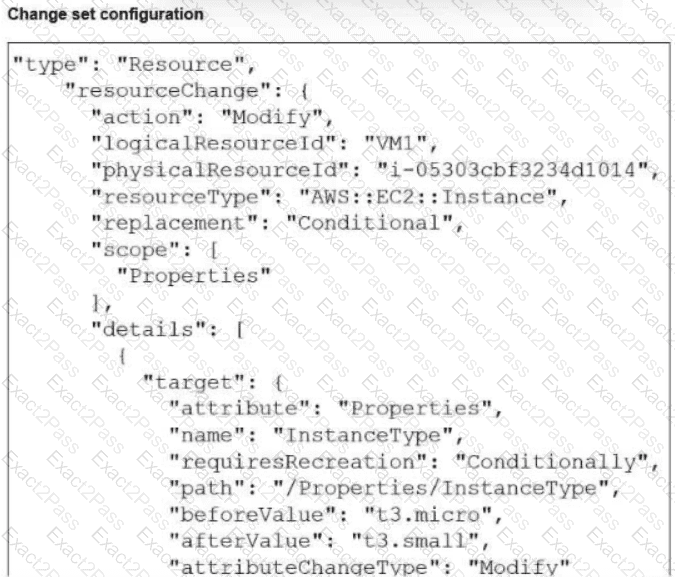
The exhibit shows partial output of changes that AWS found after you created a new change set.
What can you conclude from this output if you decide to execute this change set?
An administrator is looking for a solution that can provide insight into users and data stored in major SaaS applications in the multicloud environment. Which product should the administrator deploy to have secure access to SaaS applications? (Choose one answer)

