
Halloween Sale Special - 75% Discount Offer - Ends in 0d 00h 00m 00s - Coupon code: 75epass

Exact2Pass Menu

Fortinet NSE 7 - FortiSASE 26 Architect

Last Update 1 hour ago Total Questions : 110

The Fortinet NSE 7 - FortiSASE 26 Architect content is now fully updated, with all current exam questions added 1 hour ago. Deciding to include NSE7_SSE_AR-26 practice exam questions in your study plan goes far beyond basic test preparation.

You'll find that our NSE7_SSE_AR-26 exam questions frequently feature detailed scenarios and practical problem-solving exercises that directly mirror industry challenges. Engaging with these NSE7_SSE_AR-26 sample sets allows you to effectively manage your time and pace yourself, giving you the ability to finish any Fortinet NSE 7 - FortiSASE 26 Architect practice test comfortably within the allotted time.

Question # 21

When a customer delegate the installation and management of its SD-WAN infrastructure to an MSSP, the MSSP usually keeps the hub within its infrastructure for ease of management and to share costly resources. In which two situations will the MSSP install the hub in customer premises? (Choose two.)

A.

The customer requires SIA with centralized breakout.

B.

The administrator expects a large volume of traffic between the branches.

C.

The customer expects a large amount of VoIP traffic.

D.

The majority of the branch traffic is directed to a corporate data center.

Question # 22

You are configuring SD-WAN to load balance network traffic and you want to take into account the link quality.

Which two facts should you consider? (Choose two.)

A.

When applicable, FortiGate load balances the traffic through all members that meet the SLA target.

B.

You can select the lowest cost service level agreement (SLA) strategy and allow SD-WAN load balancing.

C.

You can select the best quality strategy and allow SD-WAN load balancing.

D.

The best quality strategy is compatible with the session, spillover, and volume load balance algorithms.

Question # 23

Refer to the exhibits.

The administrator increases the member priority on port2 to 20.

Assuming the route egressing port2 is still valid, upon configuration changes and the receipt of new packets.

Which two actions does FortiGate perform on existing sessions established over port2? (Choose two.)
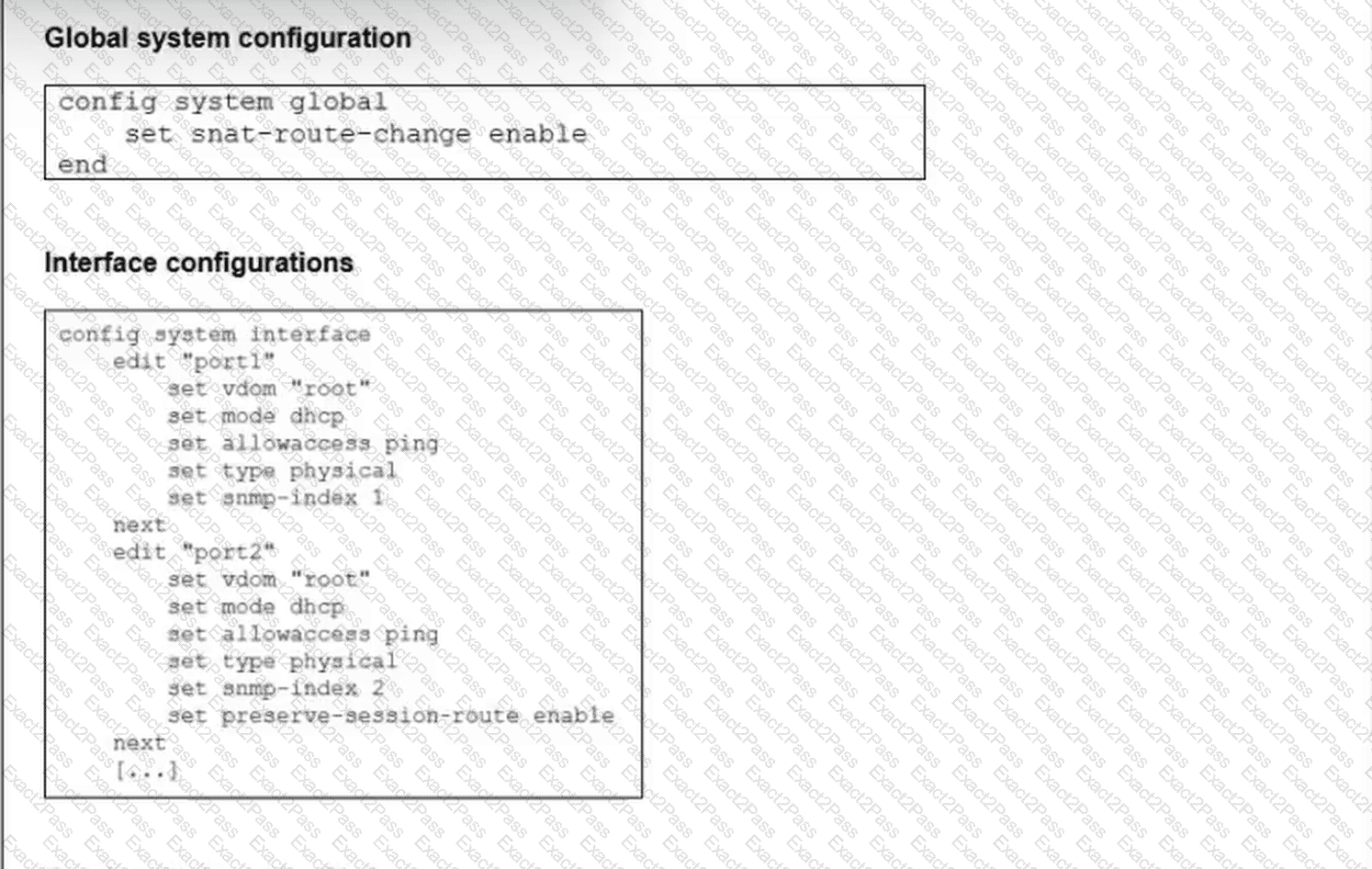
Exhibit 1 — Global system and interface configuration
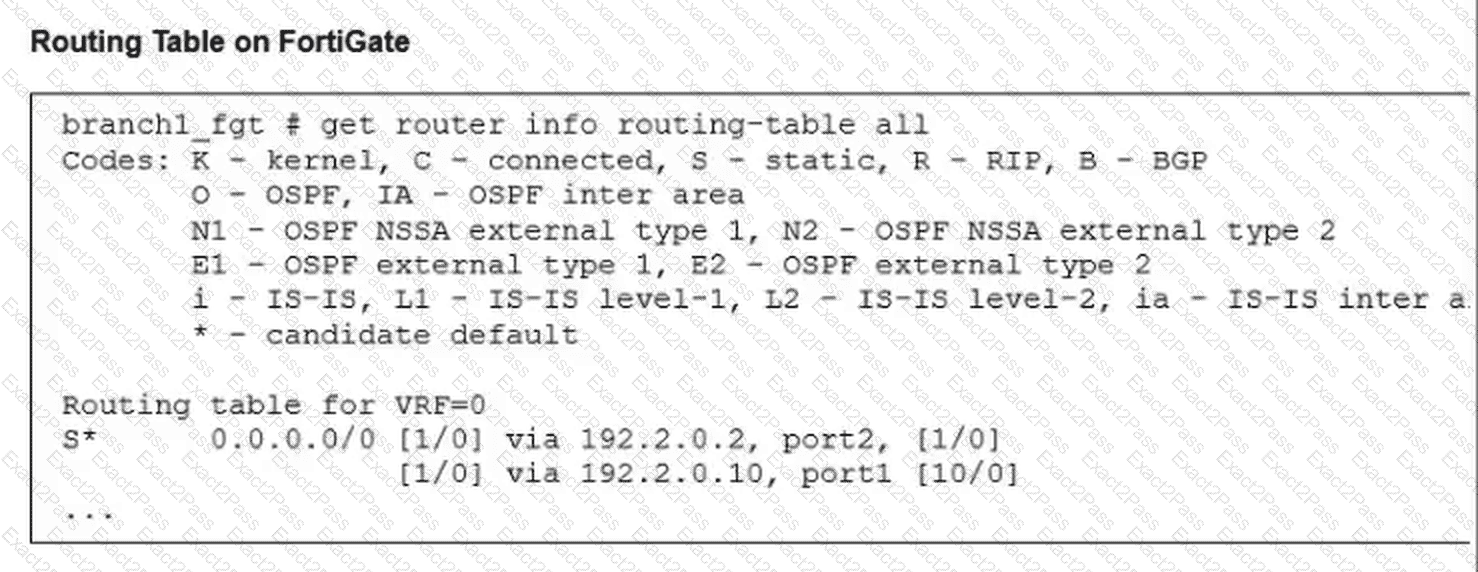
Exhibit 2 — FortiGate routing table

A.

FortiGate updates the gateway information of the sessions with SNAT so that they use port1 instead of port2.

B.

FortiGate flags all source network address translation (SNAT) sessions as dirty only if the administrator has assigned an IP pool to the firewall policies with NAT.

C.

FortiGate routes new sessions over port1.

D.

FortiGate flags all sessions as dirty.

E.

FortiGate continues routing all existing sessions over port2.

Question # 24

What are two benefits of deploying secure private access with SD-WAN? (Choose two.)

A.

A direct access proxy tunnel from FortiClient to the on-premises FortiGate

B.

ZTNA posture check performed by the hub FortiGate

C.

Inline security inspection by FortiSASE

D.

Support of both TCP and UDP applications

Question # 25

Refer to the exhibit. How does FortiGate handle the traffic with the source IP 10.0.1.130 and the destination IP 128.66.0 125?
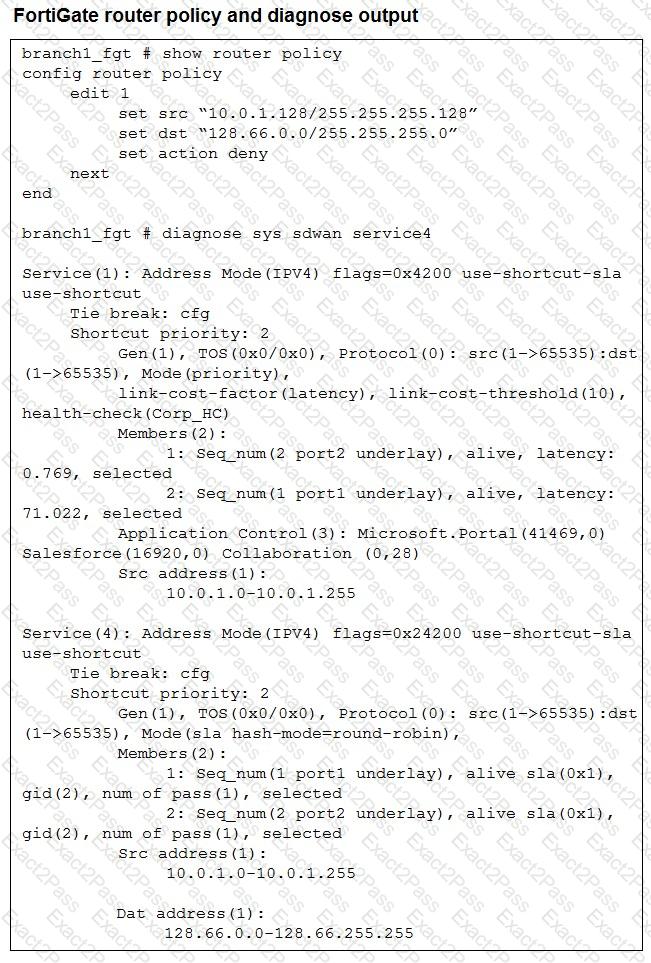
Exhibit 1

A.

FortiGate drops the traffic flow.

B.

FortiGate routes the traffic flow according to the forwarding information base (FIB).

C.

FortiGate load balances the traffic flow through port7 and port8.

D.

FortiGate steers the traffic flow through port7.

Question # 26

Your FortiGate is in production. To optimize WAN link use and improve redundancy, you enable and configure SD-WAN. What must you do as part of this configuration update process?

A.

Replace references to interfaces used as SD-WAN members in the routing configuration.

B.

Purchase and install the SD-WAN license, and reboot the FortiGate device.

C.

Replace references to interfaces used as SD-WAN members in the firewall policies.

D.

Disable the interface that you want to use as an SD-WAN member.

Question # 27

Refer to the exhibits. The exhibits show an SD-WAN event log, the member status, and the SD-WAN rule configuration. Which two conclusions can you draw from the information shown? (Choose two.)
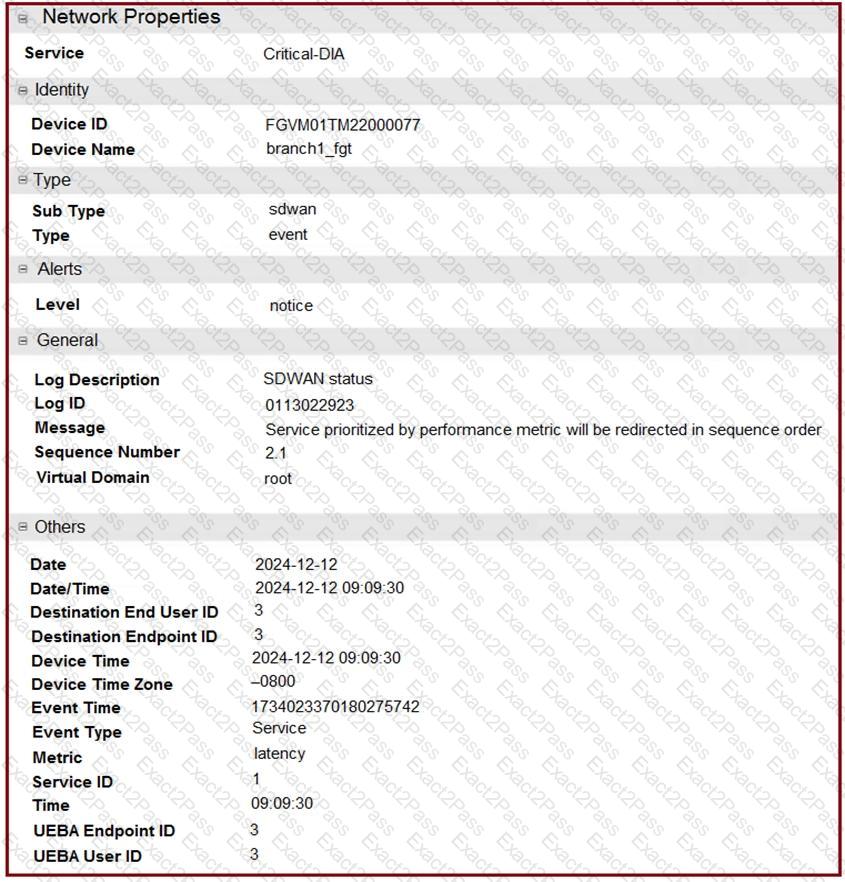
Exhibit 1
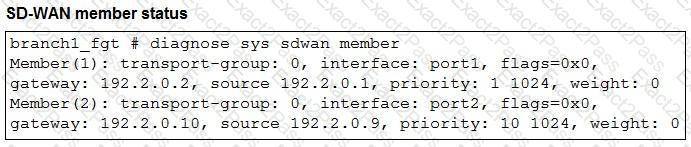
Exhibit 2
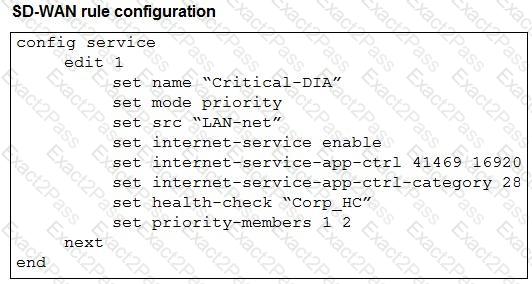
Exhibit 3

A.

The administrator configured the service ID 1 with the highest priority member for port2.

B.

Port2 has a lower latency than port1.

C.

FortiGate updated the outgoing interface list on the rule so it prefers port2.

D.

The administrator configured the SD-WAN rule ID 1 with the default strategy mode.

Question # 28

How is the geofencing feature used on FortiSASE?

A.

To restrict application access based on time of day in specific countries

B.

To monitor and block access to personal content from specific countries

C.

To encrypt data at rest on endpoints located in specific countries

D.

To allow or block remote user connections to FortiSASE points of presence (POPs) based on source country

Question # 29

Refer to the exhibit.

Which action will FortiGate take if it detects SD-WAN members as dead?
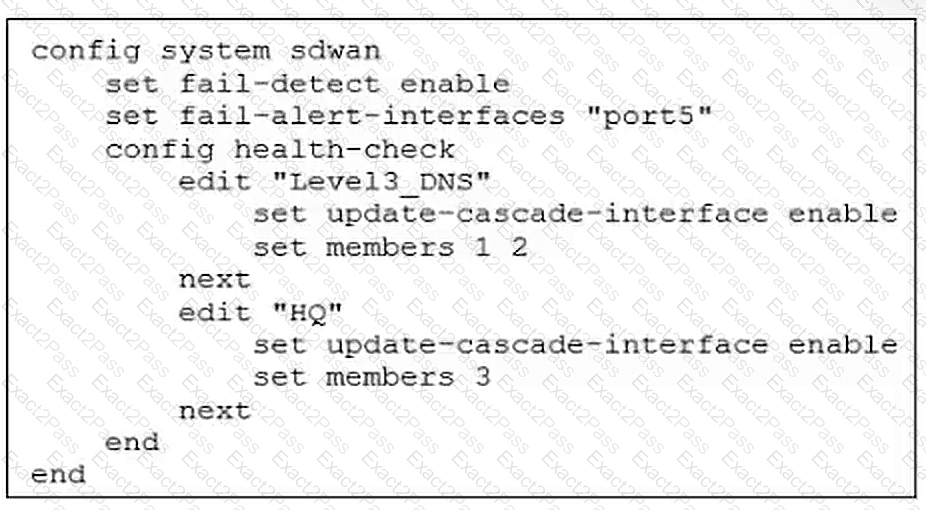
Exhibit — SD-WAN failure detection and cascade interface

A.

FortiGate sends alert messages through port5 when it detects any SD-WAN member as dead.

B.

FortiGate brings up port5 after it detects one SD-WAN member as alive.

C.

FortiGate brings up port5 when it detects all SD-WAN members as dead.

D.

FortiGate sends alert messages through port5 when it detects all SD-WAN members as dead.

Question # 30

You configure the overlay tunnels for an SD-WAN hub-and-spoke topology defined with IPsec tunnels, BGP on loopback, and dynamic BGP.

Which are two recommended IPsec settings for this topology? (Choose two.)

A.

On the spoke, set the parameter net-device to enable.

B.

On the hub, set the tunnel type to static.

C.

On the spoke, configure the parameter localid .

D.

On the hub, set the parameter mode-cfg to enable.

Go to page: