Exact2Pass

Last Update 8 hours ago Total Questions : 139
The Performing Cybersecurity Using Cisco Security Technologies content is now fully updated, with all current exam questions added 8 hours ago. Deciding to include 350-201 practice exam questions in your study plan goes far beyond basic test preparation.
You'll find that our 350-201 exam questions frequently feature detailed scenarios and practical problem-solving exercises that directly mirror industry challenges. Engaging with these 350-201 sample sets allows you to effectively manage your time and pace yourself, giving you the ability to finish any Performing Cybersecurity Using Cisco Security Technologies practice test comfortably within the allotted time.
The SIEM tool informs a SOC team of a suspicious file. The team initializes the analysis with an automated sandbox tool, sets up a controlled laboratory to examine the malware specimen, and proceeds with behavioral analysis. What is the next step in the malware analysis process?
An engineer is utilizing interactive behavior analysis to test malware in a sandbox environment to see how the malware performs when it is successfully executed. A location is secured to perform reverse engineering on a piece of malware. What is the next step the engineer should take to analyze this malware?
Refer to the exhibit.
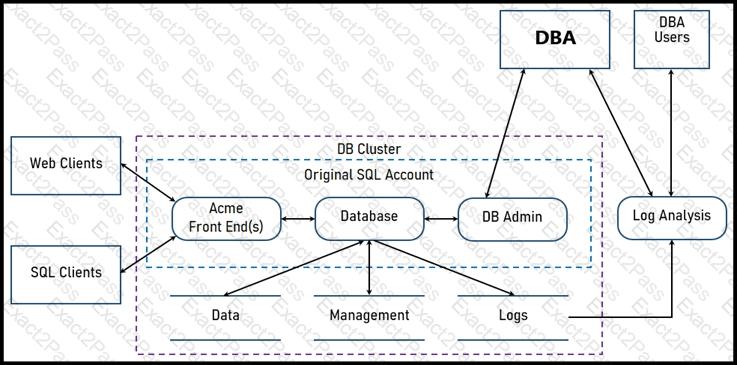
Two types of clients are accessing the front ends and the core database that manages transactions, access control, and atomicity. What is the threat model for the SQL database?
A SOC team is investigating a recent, targeted social engineering attack on multiple employees. Cross- correlated log analysis revealed that two hours before the attack, multiple assets received requests on TCP port 79. Which action should be taken by the SOC team to mitigate this attack?
An engineer has created a bash script to automate a complicated process. During script execution, this error occurs: permission denied. Which command must be added to execute this script?
A security architect is working in a processing center and must implement a DLP solution to detect and prevent any type of copy and paste attempts of sensitive data within unapproved applications and removable devices. Which technical architecture must be used?
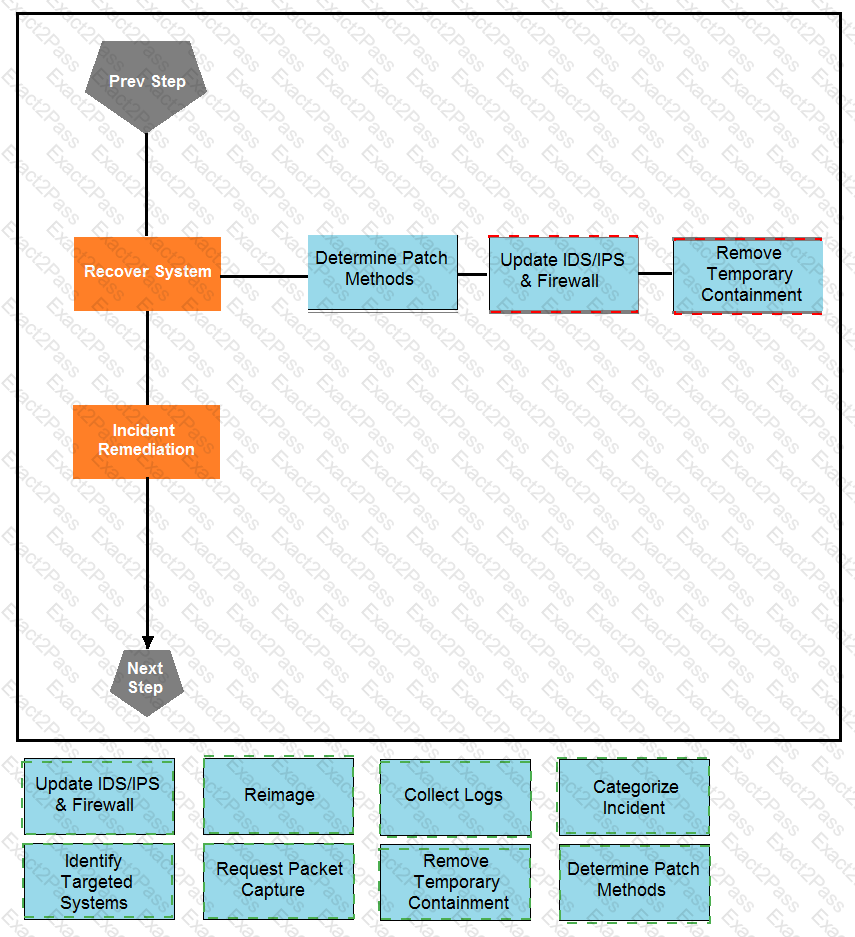
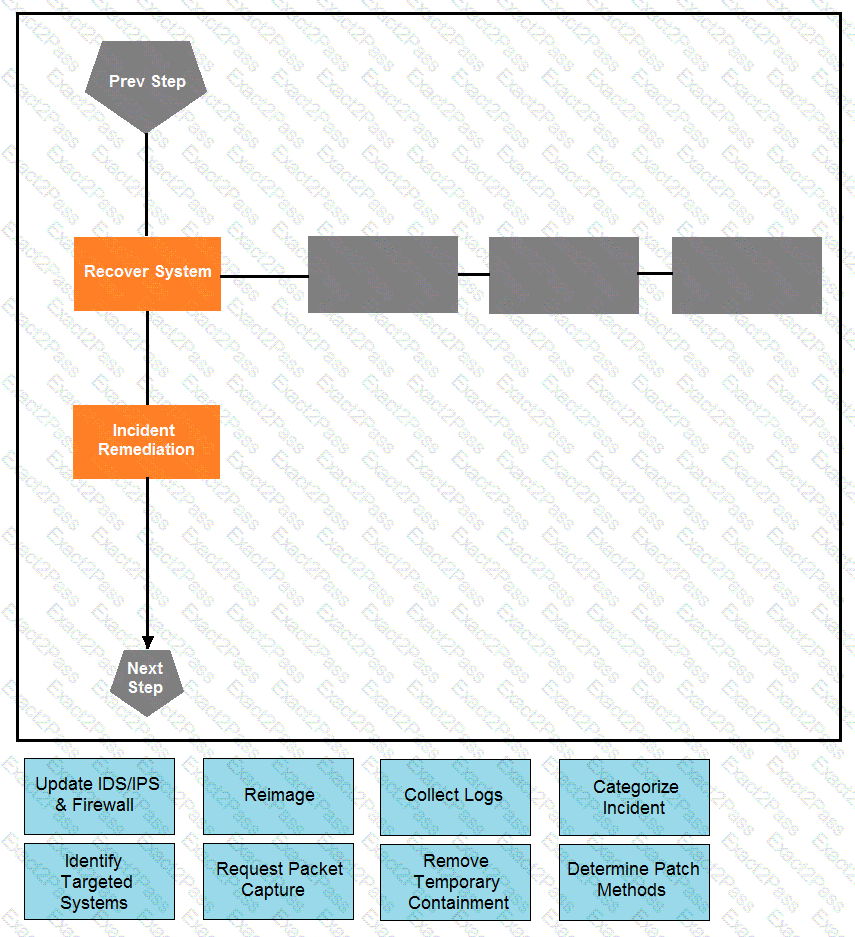
Drag and drop the actions below the image onto the boxes in the image for the actions that should be taken during this playbook step. Not all options are used.
A patient views information that is not theirs when they sign in to the hospital’s online portal. The patient calls the support center at the hospital but continues to be put on hold because other patients are experiencing the same issue. An incident has been declared, and an engineer is now on the incident bridge as the CyberOps Tier 3 Analyst. There is a concern about the disclosure of PII occurring in real-time. What is the first step the analyst should take to address this incident?
An engineer returned to work and realized that payments that were received over the weekend were sent to the wrong recipient. The engineer discovered that the SaaS tool that processes these payments was down over the weekend. Which step should the engineer take first?
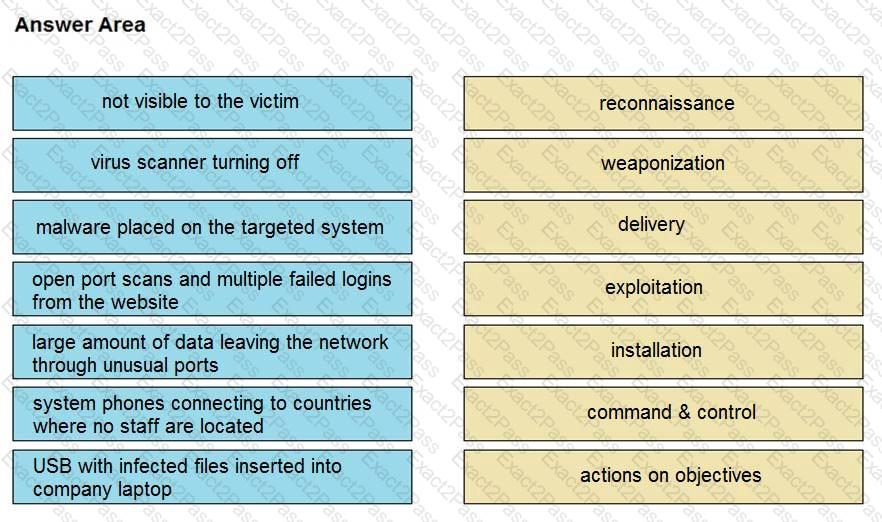
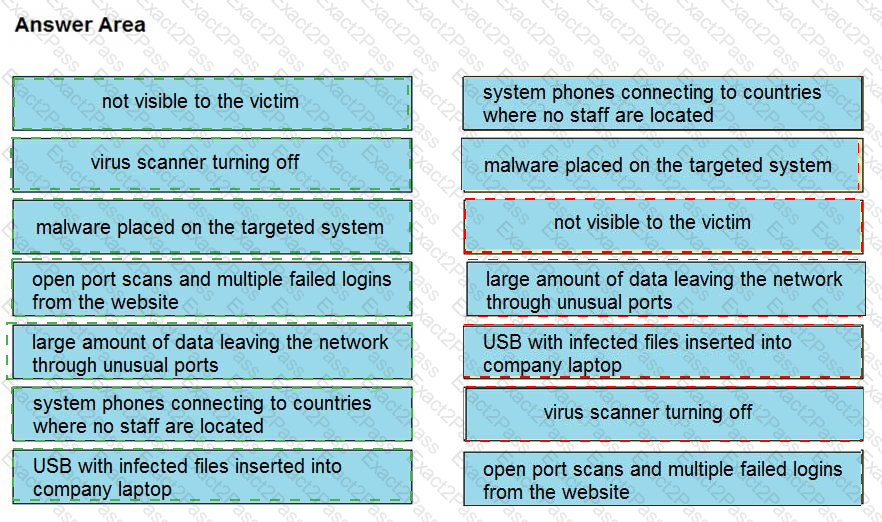
Drag and drop the type of attacks from the left onto the cyber kill chain stages at which the attacks are seen on the right.