Exact2Pass

Last Update 1 hour ago Total Questions : 489
The Implementing Cisco Collaboration Core Technologies (350-801 CLCOR) v2.0 content is now fully updated, with all current exam questions added 1 hour ago. Deciding to include 350-801 practice exam questions in your study plan goes far beyond basic test preparation.
You'll find that our 350-801 exam questions frequently feature detailed scenarios and practical problem-solving exercises that directly mirror industry challenges. Engaging with these 350-801 sample sets allows you to effectively manage your time and pace yourself, giving you the ability to finish any Implementing Cisco Collaboration Core Technologies (350-801 CLCOR) v2.0 practice test comfortably within the allotted time.
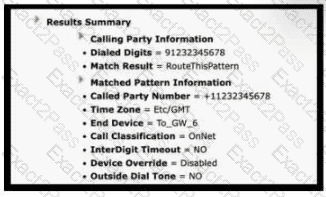
Refer to the exhibit An engineer is troubleshooting issues with outbound calls after adding a new route pattern on Cisco UCM Which tool will the engineer use to troubleshoot the issue?
Which Webex Hybrid Service allows users to schedule Webex Meetings directly from their on-premises Microsoft Exchange or Office 365 calendar without requiring a cloud connector?
An engineer must deploy the Webex app to a Windows Virtual Desktop Infrastructure environment by using these settings:
• Thin client plugin: Installed
• Call service-enabled user: Media is optimized
• Calls on Webex app: Media is optimized
Which two command-line arguments are valid when running the installer? (Choose two.)
An administrator needs to help a remote employee make a free call to an international destination. The administrator calls the employee, then conferences in the international party. The administrator drops the call, and the employee and the international party continue their conversation. Which action prevents this type of toll fraud in the Cisco UCM?
After an administrator installs the Cisco jabber Client, it fails to register with the cisco UCM server. Which two actions should be taken to troubleshoot this problem? (Choose two.)
An end user at a remote site is trying to initiate an Ad Hoc conference call to an end user at the main site. The conference bridge is configured to support G.711. The remote user ' s phone only supports G.729. The remote end user receives an error message on the phone: " Cannot Complete Conference Call. " What is the cause of the issue?
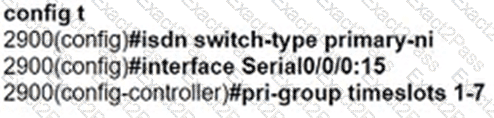
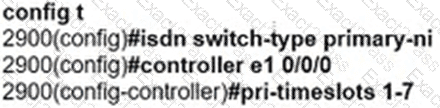
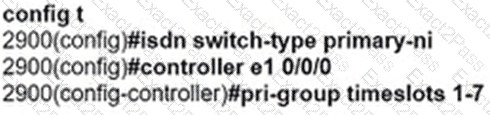
An administrator needs to create a partial PRI consisting of the first seven timeslots available. Which configuration snippet configures the ISDN E1 PRI for this task?

An engineer is implementing LDAP synchronization on a Cisco UCM cluster to synchronize users from the OU=Engineering.DC=company.DC=com user search base and needs the LDAP Attribute for User ID to match with the telephoneNumber of each user Which action accomplishes this goal " ?
An administrator is trying to change the default LINECODE for a voice ISDN T1 PRI. Which command makes this change?
Which behavior occurs when Cisco UCM has a Call Manager group that consists of two subscribers?

