Exact2Pass

Last Update 16 hours ago Total Questions : 572
The MEDICAL LABORATORY TECHNICIAN - MLT(ASCP) content is now fully updated, with all current exam questions added 16 hours ago. Deciding to include ASCP-MLT practice exam questions in your study plan goes far beyond basic test preparation.
You'll find that our ASCP-MLT exam questions frequently feature detailed scenarios and practical problem-solving exercises that directly mirror industry challenges. Engaging with these ASCP-MLT sample sets allows you to effectively manage your time and pace yourself, giving you the ability to finish any MEDICAL LABORATORY TECHNICIAN - MLT(ASCP) practice test comfortably within the allotted time.
Fibers can be mistaken for casts on occasion, especially hyaline casts. Fibers, however, are usually thinner and appear less uniform in structure than casts do.
Urinalysis & Other Body Fluids
Which of the following artifacts may be mistaken for casts?
The laboratory employee with a 4-year college degree who performs clinical analysis is the:
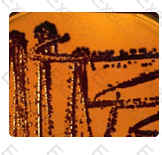
The colonies seen growing on the bird seed agar appear smooth and have a distinct reddish-brown pigmentation. The active ingredient in bird seed (Guizotia abyssinica) agar is caffeic acid, which is extracted and placed in an agar containing 1% glucose. Of the cryptococci, and other species of yeasts, Cryptococcus neoformans selectively produces the enzyme phenoloxidase, which oxidizes the caffeic acid in the medium to melanin, producing the red-brown pigmentation.
The other yeast species included in this exercise do not possess phenoloxidase activity and therefore remain non-pigmented when grown on bird seed agar.
The colonies shown in this photograph were grown on Guizotia abyssinica (bird seed) agar at 30°C for 72 hours. The most likely identification is:
Monoclonal antibodies are monospecific antibodies that are the same because they are made by one type of immune cell which are all clones of a unique parent cell, also called a hybrid cell line, which usually arise from a hybridoma. The fusion of a specific antibody-producing lymphocyte with a myeloma cell will multiply to become a source of pure monoclonal antibody. This is often used in the manufacturing process for monoclonal antibody reagents.
Monoclonal antibodies are usually manufactured in vitro by using:
Antibodies in the Rh system typically exhibit which one of the following characteristics?
Limited to blood and body fluids visibly contaminated with blood
All of the following activities are associated with platelets EXCEPT:
Blood bank
Once the seal on a unit of packed red cells is broken, how long can the unit be stored refrigerated prior to administration:
AABB Standards do not require a DAT, autologous control, or a minor crossmatch for pretransfusion testing.
Essential components of compatibility testing include all of the following except :
Basophilic stippling is the term used to describe red blood cells that contain tiny particles of RNA within their cytoplasm. Basophilic stippling is associated with many conditions, but is strongly associated with lead poisoning.
Multiple small, dark blue particles scattered throughout the cytoplasm of erythrocytes is/are called:
Troponin is potentially more specific for myocardial damage than CK-MB and stays elevated longer. It may eventually replace CK-MB as the standard marker of myocardial damage. In addition, troponin T has been known to be elevated in the setting of even mild degrees of renal failure. Troponin and CK-MB both tend to rise approximately 3 hours after a MI (hence why the correct answer is " A " , since it is false); however, troponins can stay elevated up to 2 weeks as CK-MB tends to return to baseline around 36 hours.
Chemistry
Which of the following statements is FALSE regarding troponin?
Antibodies are differentiated based on their heavy chains; different heavy chains create different isotypes. Humans have five different isotypes of immunoglobulins.
Immunology
The part of the molecule responsible for differences among immunoglobulin classes is:
To prevent blood from clotting the specimen must be:
Blood collected in CPDA-1 may be stored at 1 - 6 oC for up to 35 days.
How long may blood be stored using CPDA-1 preservative prior to transfusion?
Which of the following testing options would be classified as waived testing by CLIA standards?

