Exact2Pass

Last Update 16 hours ago Total Questions : 572
The MEDICAL LABORATORY TECHNICIAN - MLT(ASCP) content is now fully updated, with all current exam questions added 16 hours ago. Deciding to include ASCP-MLT practice exam questions in your study plan goes far beyond basic test preparation.
You'll find that our ASCP-MLT exam questions frequently feature detailed scenarios and practical problem-solving exercises that directly mirror industry challenges. Engaging with these ASCP-MLT sample sets allows you to effectively manage your time and pace yourself, giving you the ability to finish any MEDICAL LABORATORY TECHNICIAN - MLT(ASCP) practice test comfortably within the allotted time.
Fusarium species is the most likely associated with mycotic keratitis.
Trichophyton rubrum is a dermatophyte that commonly causes an itching, scaling skin infection of the feet, known as tinea pedis. Scedosporium apiospermum is commonly associated with sinusitis. Aspergillus niger typically causes otitis externa and can also be associated with sinusitis.
Which of the following species or organisms is the most likely to be the cause of mycotic keratitis (fungal eye infection)?
The morphologic characteristic(s) associated with the Chediak-Higashi syndrome is (are):
Provide the equivalent measurement for one gallon.
Question options:
Howell-Jolly bodies are composed of DNA, usually left from the nucleus, that appears as a round, dark-staining inclusion in the cytoplasm of red blood cells. Howell-Jolly bodies can be found in various conditions including splenectomy and anemia.
Remnants of erythrocyte nuclei, nuclear fragments, or aggregates of chromosomes are called:
The best course of action when entering an isolation room is:
Gram-positive bacteria retain the primary crystal violet stain that is applied in the Gram stain because of the cross-linking of the thick peptidoglycan layer in their cell walls. Their cell walls contain less lipids than that of a gram-negative bacteria, and this reduces the permeability of their cell wall to the organic solvents that are used as a decolorizer. When the counterstain is added, it may enter the gram-positive cell, but does not change the color of the cells.
A thick peptidoglycan is MOST often associated with which of the following types of bacteria?
Tan stopper tubes are used for reticulocyte counts.
Question options:
Rule-out is a process by which antibodies are identified as being unlikely in a given sample because of the absence of an expected antigen-antibody reaction. In other words, the absence of a reaction is noted with a cell that is positive for the corresponding antigen.
Although rule-out procedures may vary somewhat from institution to institution, the following general principles apply:
Non-reactive cells are selected for rule-out. To be classified as non-reactive, a cell must NOT have reacted at any phase of testing in a given panel or screen.
Using the logic that if the rule-out cell is positive for a given antigen, it should have reacted with the corresponding antibody, you can rule-out antibodies that correspond to antigen positive cells.
To increase the probability that rule-out will not mistakenly eliminate a weakly-reacting antibody that exhibits dosage*, use only cells that are homozygous for the corresponding antigen for those systems that generally show dosage. Generally these include: C, c, E, e, Fya, Fyb, Jka, Jkb, M, N, S, and s.
In this case, it is only possible to rule out on screening cell 2 since it demonstrates a negative reaction with the patient serum. Anti-C cannot be ruled out since the C antigen is heterozygous on screening cell 2 with c. Anti-Fya cannot be ruled out since this antigen is not present on screening cell 2. Anti-M and anti-Jka can be ruled out since the antigens are homozyous while demonstrating a negative reaction on screening cell 2.
Rule-out, while very useful, can lead to error. Ruling out an antibody should be combined with other supporting data to increase confidence in the solution; the more data collected, the higher the probability that the final solution is correct.
*Dosage means that there are two " doses " of the same antigen present on the red cells . Antibodies that exhibit dosage react more strongly with homozygous cells (e.g., Jka Jka) than with heterozygous cells (e.g., Jka Jkb) .
Based on the phenotype of the RBC screening cells, and patient results shown on the right, which of the following antibodies CANNOT be ruled out?
The electrolyte panel consists of potassium, sodium, chloride, carbon dioxide. These analytes are also typically ordered within other panels as well, including the basic metabolic and complete metabolic panels.
An electrolyte panel (lytes, chem-4) consists of:
Polyspecific antihuman globulin (AHG) reagent contains both anti-IgG and anti-C3d.
Polyspecific antihuman globulin (AHG) reagent used in antiglobulin testing should react with which one of the following?
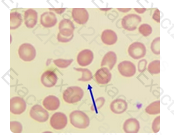
What is the cell that is indicated by the arrow in this field?
What is the first thing a phlebotomist should do in the event of an accidental needle stick?
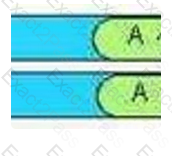
This drawing depicts beta thalassemia minor B+/B. In Beta thalassemia minor B+/B, one beta gene locus is partially deleted or inactive.
Hematology
This drawing depicts which beta chain genotype ?
Black stopper tubes are used for glucose collections.
Question options:
Bicarbonate and Chloride form an exchanger to help regulate and buffer the body ' s pH.
The buffering capacity of blood is maintained by a reversible exchange process between bicarbonate and:

