Exact2Pass

Last Update 21 hours ago Total Questions : 65
The Enterprise Routing and Switching, Specialist (JNCIS-ENT) content is now fully updated, with all current exam questions added 21 hours ago. Deciding to include JN0-352 practice exam questions in your study plan goes far beyond basic test preparation.
You'll find that our JN0-352 exam questions frequently feature detailed scenarios and practical problem-solving exercises that directly mirror industry challenges. Engaging with these JN0-352 sample sets allows you to effectively manage your time and pace yourself, giving you the ability to finish any Enterprise Routing and Switching, Specialist (JNCIS-ENT) practice test comfortably within the allotted time.
[Exhibit]
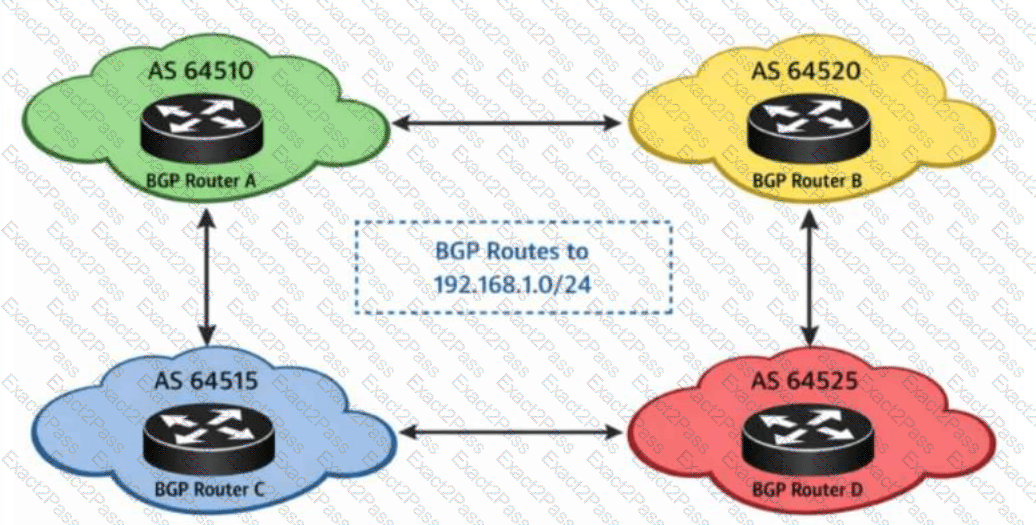
Click the Exhibit button.
A network includes several autonomous systems that exchange routing information using BGP. Multiple BGP routes exist for the same prefix.
Referring to the exhibit, which attribute would BGP use first when selecting a preferred route?
You have enabled MACsec on two directly connected Ethernet devices but MACsec is not working.
Which two actions will solve this problem? (Choose two.)
[Exhibit]
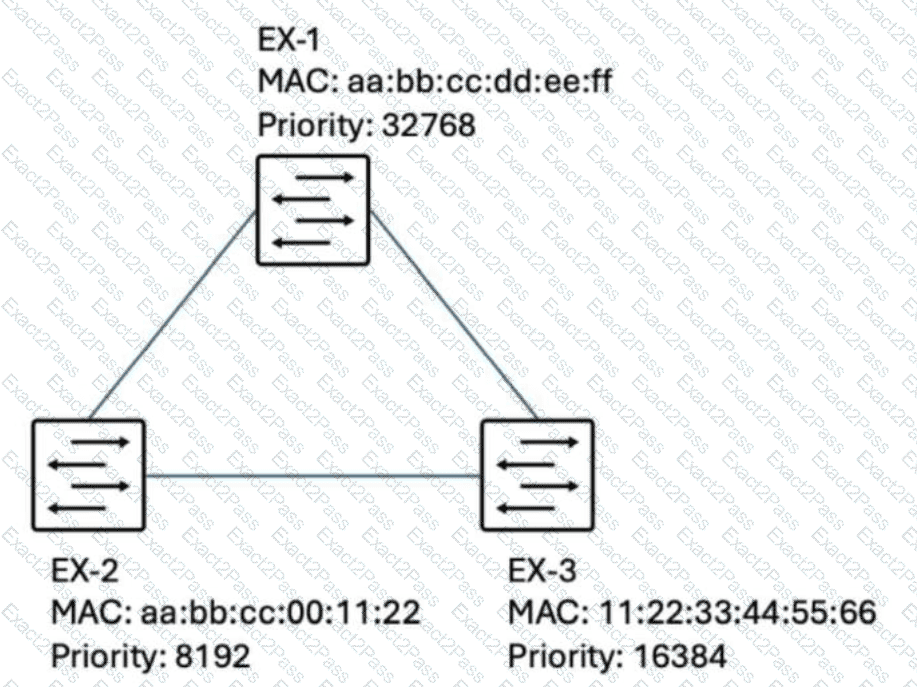
Click the Exhibit button.
You have three Juniper Networks EX Series Switches in an STP domain as shown in the exhibit.
Which statement describes the switch that will be elected as the root bridge?
[Exhibit]

Click the Exhibit button.
Which three statements about this BGP session are correct? (Choose three.)
You are establishing a new BGP session to an EBGP peer using loopback addresses.
In addition to your general EBGP settings, which BGP feature must be enabled for this session to establish?
Refer to Exhibit:
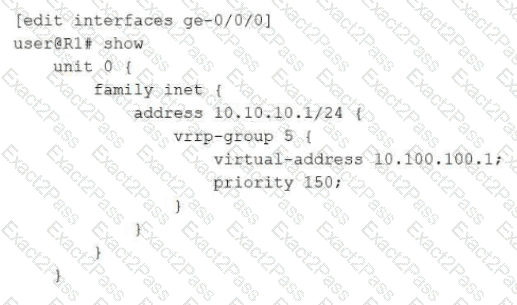
R1 is not responding to ICMP requests sent to the VIP address.
Referring to the exhibit, which command option would you configure on the virtual address to correct this problem?
Which two statements are correct about BGP local preference? (Choose two.)
[Exhibit]
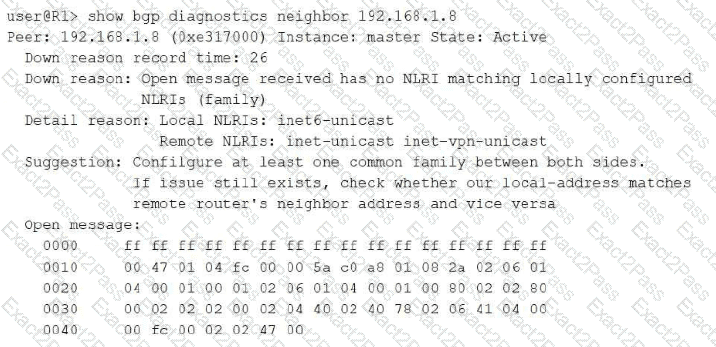
Click the Exhibit button.
You have two routers on your network that are not able to establish BGP sessions.
Which two statements are correct in this scenario? (Choose two.)
You are troubleshooting a Layer 2 topology issue in a campus network. The switches are running RSTP. You need to verify which switch is currently acting as the root bridge and identify the root port on the local device.
Which operational command should the administrator use to view this information?
What are two characteristics of IS-IS? (Choose two.)

