Exact2Pass

We have coached hundreds of network administrators, security analysts, and systems engineers through this essential professional-tier Fortinet edge validation milestone. Let's talk openly about the modern network security training environment. The professionals who fall short on this foundational security-tier evaluation are almost always those who leaned heavily on low-tier test pools—those flat, context-stripped question repositories floating around unverified community IT forums. Those static, unverified materials simply cannot prepare you for real-world interface configurations or the intricate traffic routing decisions tested on the real exam. At Exact2Pass, our approach targets the underlying operational logic, session table behaviors, and policy enforcement frameworks of the active FortiOS 7.6 platform instead. Our NSE4_FGT_AD-7.6 exam question prep delivers comprehensive programmatic breakdowns for every firewall rule dependency and high-availability clustering scenario. You will master actual core production mechanics instead of leaning on short-sighted memorization shortcuts. We map out Source and Destination NAT pools, Central SNAT policies, Fortinet Single Sign-On (FSSO) directory integrations, and deep-packet SSL inspection profiles step by step.
Our learning material is built from the ground up by certified system leads who deploy and monitor production FortiGate systems daily. Because of that, we completely avoid mindless, repetitive question-and-answer lists. Instead, our workspace functions as an active training simulation that forces you to evaluate data flows, review system logs, and isolate interface drop-outs like a senior administrator. You will learn the exact reason why a specific security profile or SD-WAN load-balancing algorithm succeeds or breaks context under production constraints. That is how you build real confidence before logging into your official Pearson VUE dashboard or launching the OnVUE online proctoring workspace. Our adaptive platform develops authentic engineering skills that transfer directly to live enterprise environments, helping you pass on your very first try.
You have configured the below commands on a FortiGate.
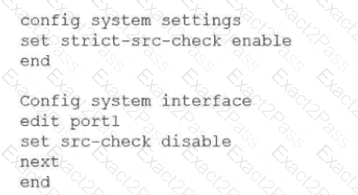
What would be the impact of this configuration on FortiGate?
Which three methods are used by the collector agent for AD polling? (Choose three answers)
Refer to the exhibit
A firewall policy to enable active authentication is shown.

When attempting to access an external website using an active authentication method, the user is not presented with a login prompt. What is the most likely reason for this situation?
Refer to the exhibit.
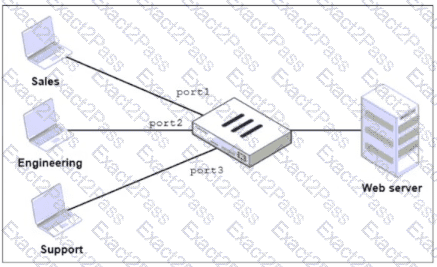
FortiGate has two separate firewall policies for Sales and Engineering to access the same web server with the same security profiles.
Which action must the administrator perform to consolidate the two policies into one?
Refer to the exhibits.
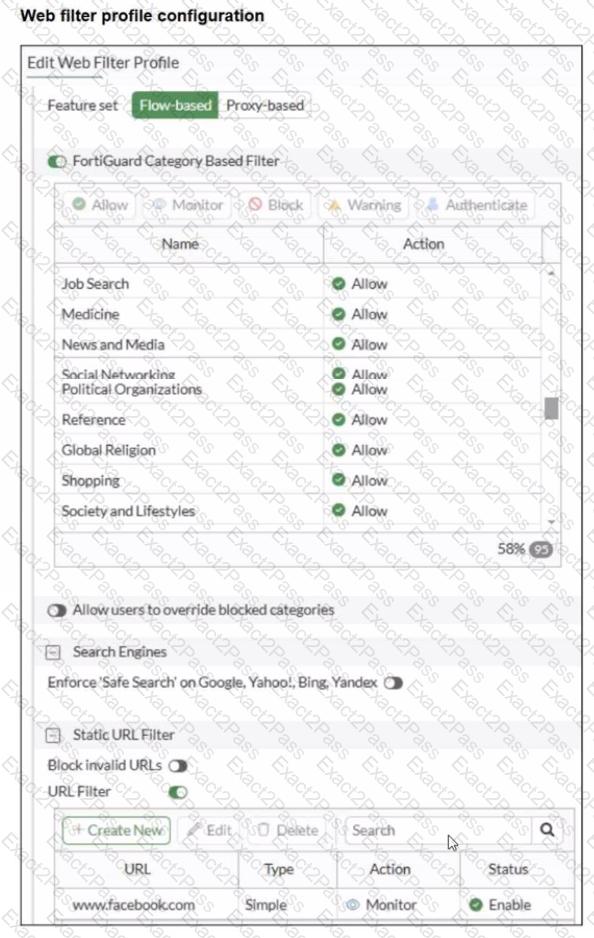
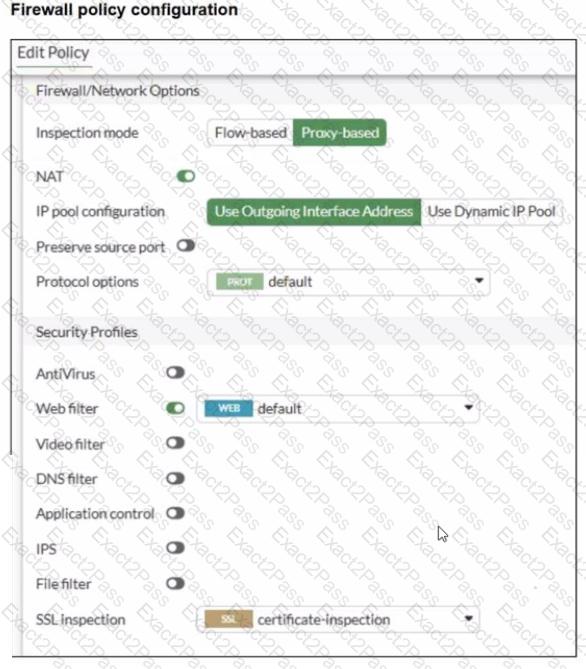
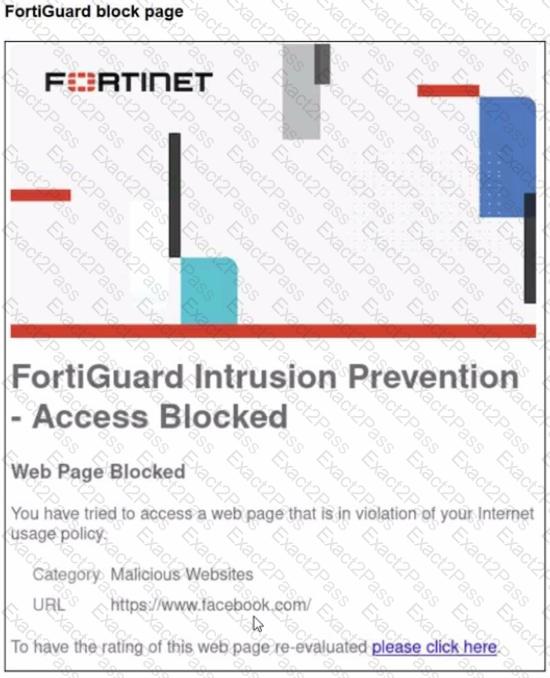
A web filter profile configuration and firewall policy configuration are shown.
You are trying to access www. facebook.com, but you are redirected to a FortiGuard web filtering block page.
Based on the exhibits, what is the possible cause of the issue?
Which two components are part of the secure internet access (SIA) agent-based mode on FortiSASE? (Choose two.)
You have configured the FortiGate device for FSSO. A user is successful in log-in to Windows, but their access to the internet is denied. What should the administrator check first? (Choose one answer)
Refer to the exhibit.
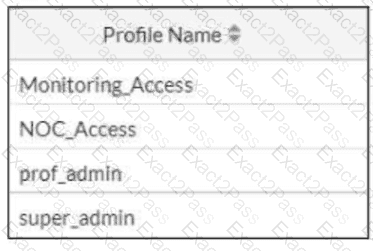
The NOC team connects to the FortiGate GUI with the NOC_Access admin profile. They request that their GUI sessions do not disconnect too early during inactivity. What must the administrator configure to answer this specific request from the NOC team? (Choose one answer)
There are multiple dialup IPsec VPNs configured in aggressive mode on the HQ FortiGate. The requirement is to connect dial-up users to their respective department VPN tunnels.
Which phase 1 setting you can configure to match the user to the tunnel?
Refer to the exhibit.
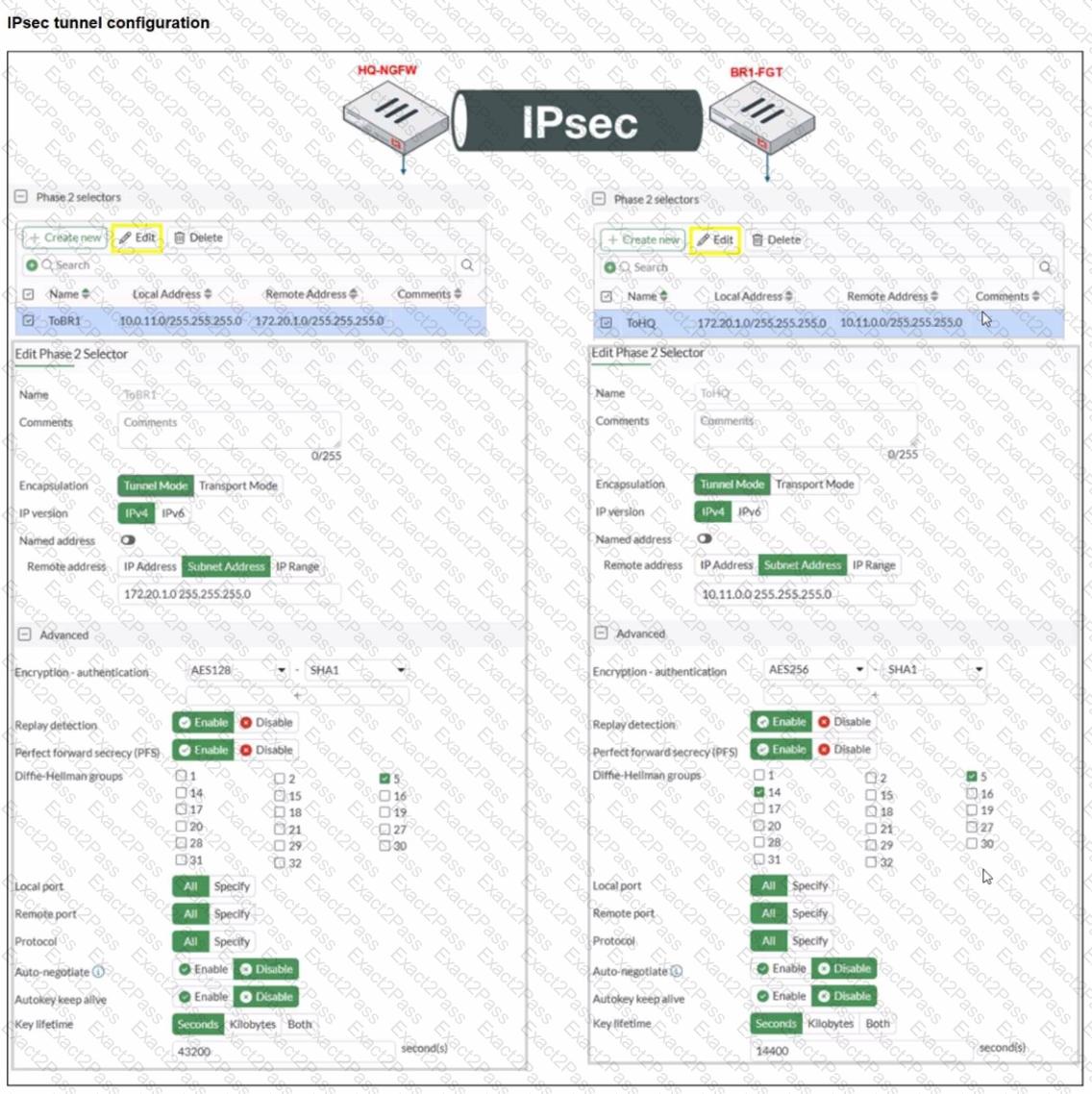
A network administrator is troubleshooting an IPsec tunnel between two FortiGate devices. The administrator has determined that phase 1 status is up, but phase 2 fails to come up.
Based on the phase 2 configuration shown in the exhibit, which two configuration changes will bring phase 2 up? (Choose two.)

