Exact2Pass

Last Update 14 hours ago Total Questions : 201
The EC-Council Certified Security Analyst (ECSA) v10 : Penetration Testing content is now fully updated, with all current exam questions added 14 hours ago. Deciding to include ECSAv10 practice exam questions in your study plan goes far beyond basic test preparation.
You'll find that our ECSAv10 exam questions frequently feature detailed scenarios and practical problem-solving exercises that directly mirror industry challenges. Engaging with these ECSAv10 sample sets allows you to effectively manage your time and pace yourself, giving you the ability to finish any EC-Council Certified Security Analyst (ECSA) v10 : Penetration Testing practice test comfortably within the allotted time.
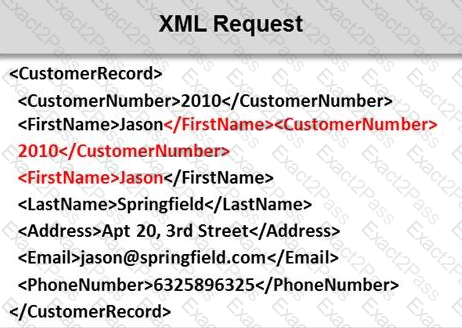
Identify the injection attack represented in the diagram below:
Jim performed a vulnerability analysis on his network and found no potential problems. He runs another utility that executes exploits against his system to verify the results of the vulnerability test. The second utility executes five known exploits against h is network in which the vulnerability analysis said were not exploitable.
What kind of results did Jim receive from his vulnerability analysis?
Which among the following information is not furnished by the Rules of Engagement (ROE) document?
Internet Control Message Protocol (ICMP) messages occur in many situations, such as whenever a datagram cannot reach the destination or the gateway does not have the buffering capacity to forward a datagram.
Each ICMP message contains three fields: type, code, and checksum. Different types of Internet Control Message Protocols (ICMPs) are identified by a TYPE field.
If the destination is not reachable, which one of the following are generated?
Wireless communication allows networks to extend to places that might otherwise go untouched by the wired networks. When most people say ‘Wireless’ these days, they are referring to one of the 802.11 standards. There are three main 802.11 standards: B, A, and G.
Which one of the following 802.11 types uses DSSS Modulation, splitting the 2.4ghz band into channels?
War Driving is the act of moving around a specific area, mapping the population of wireless access points for statistical purposes. These statistics are then used to raise awareness of the security problems associated with these types of networks.
Which one of the following is a Linux based program that exploits the weak IV (Initialization Vector) problem documented with static WEP?
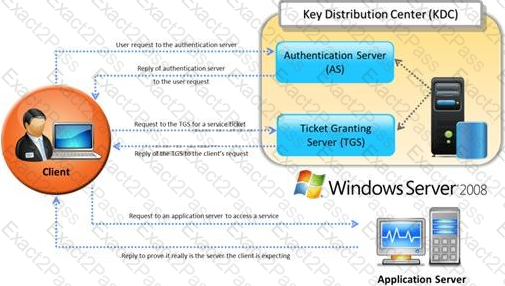
Identify the type of authentication mechanism represented below:
In which of the following firewalls are the incoming or outgoing packets blocked from accessing services for which there is no proxy?
Vulnerability assessment is an examination of the ability of a system or application, including current security procedures and controls, to withstand assault. It recognizes, measures, and classifies security vulnerabilities in a computer system, network, and communication channels.
A vulnerability assessment is used to identify weaknesses that could be exploited and predict the effectiveness of additional security measures in protecting information resources from attack.

Which of the following vulnerability assessment technique is used to test the web server infrastructure for any misconfiguration and outdated content?
Which of the following statement holds true for TCP Operation?