Exact2Pass

Last Update 14 hours ago Total Questions : 201
The EC-Council Certified Security Analyst (ECSA) v10 : Penetration Testing content is now fully updated, with all current exam questions added 14 hours ago. Deciding to include ECSAv10 practice exam questions in your study plan goes far beyond basic test preparation.
You'll find that our ECSAv10 exam questions frequently feature detailed scenarios and practical problem-solving exercises that directly mirror industry challenges. Engaging with these ECSAv10 sample sets allows you to effectively manage your time and pace yourself, giving you the ability to finish any EC-Council Certified Security Analyst (ECSA) v10 : Penetration Testing practice test comfortably within the allotted time.
Which of the following appro aches to vulnerability assessment relies on the administrator providing baseline of system configuration and then scanning continuously without incorporating any information found at the time of scanning?

You are the security analyst working for a private company out of France. Your current assignment is to obtain credit card information from a Swiss bank owned by that company. After initial reconnaissance, you discover that the bank security defenses are very strong and would take too long to penetrate. You decide to get the information by monitoring the traffic between the bank and one of its subsidiaries in London.
After monitoring some of the traffic, you see a lot of FTP packets traveling back and forth. You want to sniff the traffic and extract usernames and passwords. What tool could you use to get this information?
DNS information records provide important data about:
Which of the following is developed to address security concerns on time and reduce the misuse or threat of attacks in an organization?
What is the following command trying to accomplish?

What are the scanning techniques that are used to bypass firewall rules and logging mechanisms and disguise themselves as usual network traffic?
Hackers today have an ever-increasing list of weaknesses in the web application structure at their disposal, which they can exploit to accomplish a wide variety of malicious tasks.
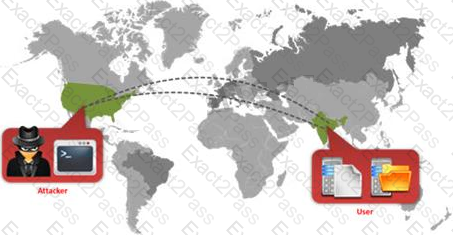
New flaws in web application security measures are constantly being researched, both by hackers and by security prof essionals. Most of these flaws affect all dynamic web applications whilst others are dependent on specific application technologies.
In both cases, one may observe how the evolution and refinement of web technologies also brings about new exploits which c ompromise sensitive databases, provide access to theoretically secure networks, and pose a threat to the daily operation of online businesses.
What is the biggest threat to Web 2.0 technologies?
Which of the following is not the SQL injection attack character?
Which of the following equipment could a pen tester use to perform shoulder surfing?
When setting up a wireless network with multiple access points, why is it important to set each access point on a different channel?

