Exact2Pass

Last Update 16 hours ago Total Questions : 210
The HCIP-Datacom-Advanced Routing & Switching Technology V1.0 content is now fully updated, with all current exam questions added 16 hours ago. Deciding to include H12-831_V1.0 practice exam questions in your study plan goes far beyond basic test preparation.
You'll find that our H12-831_V1.0 exam questions frequently feature detailed scenarios and practical problem-solving exercises that directly mirror industry challenges. Engaging with these H12-831_V1.0 sample sets allows you to effectively manage your time and pace yourself, giving you the ability to finish any HCIP-Datacom-Advanced Routing & Switching Technology V1.0 practice test comfortably within the allotted time.
As shown in the figure, an administrator enables port isolation on the switch’s interfaces connected to terminals.
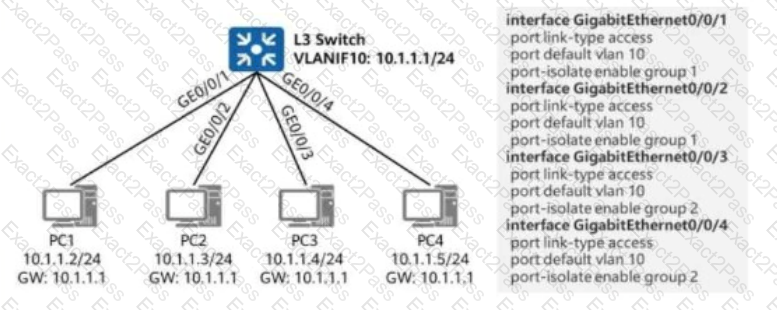
In this scenario, which of the following IP addresses cannot be pinged from PC1?
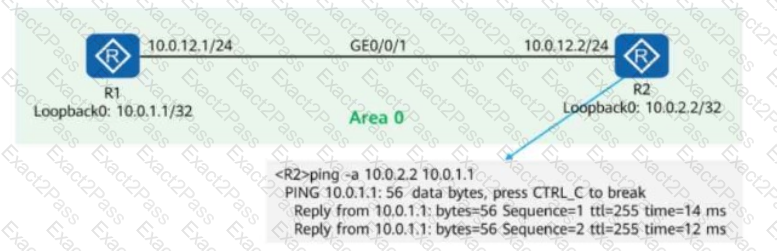
On the OSPF network shown in the figure, R1 and R2 use OSPF to communicate with each other through Loopback0 . In addition:
MPLS LDP is enabled on R1 and R2 .
The LDP transport address is the IP address of Loopback0 .
A network engineer finds that an LDP session cannot be established between R1 and R2 and runs diagnostic commands (shown in the figure) to locate the fault.
Given this, which of the following are possible causes of the fault?
Options:
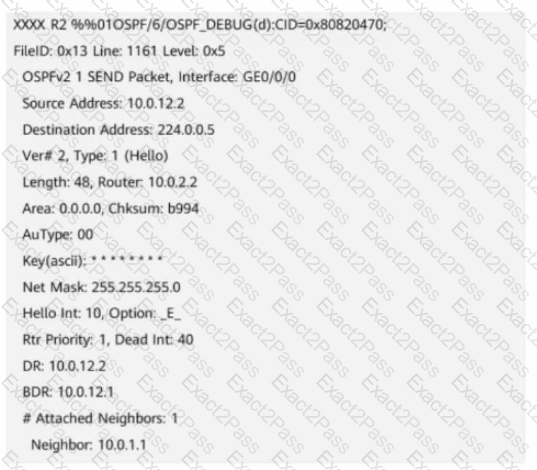
The figure shows the debugging information on an OSPF router. Which of the following is the router ID of this router?
On the network shown in the figure, EBGP peer relationships are established between neighboring routers through directly connected interfaces. The AS number is 6500X, where X is the number of the router. Both Rl and R4 have static routes to 192.168.1.0/24, which are imported to BGP through the import-route command. By default, in the routing table of R3, which of the following is the AS_Path attribute carried in the route to 192.168.1.0/24?
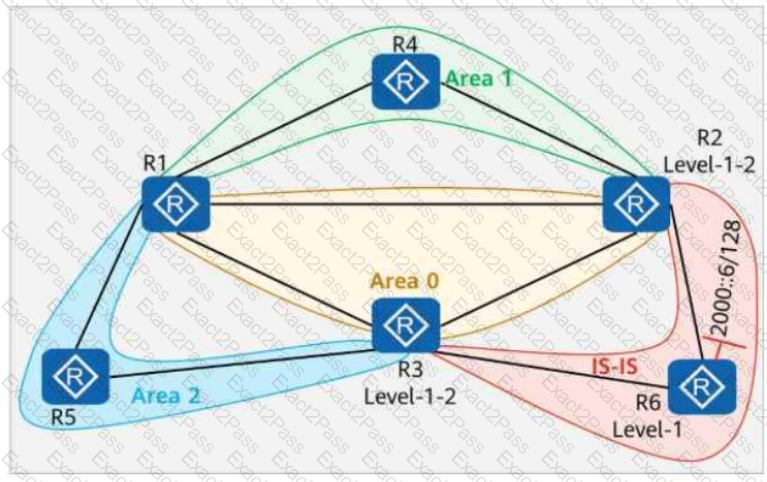
On the network shown in the figure, IS-IS IPv6 runs on R2, R6, and R3 , and the IPv6 address of Loopback0 on R6 is 2000::6/128 . OSPFv3 runs on other links. Area 1 is a stub area, and Area 2 is an NSSA . IS-IS routes are imported to OSPFv3 on R2 and R3 . Which of the following statements are false?
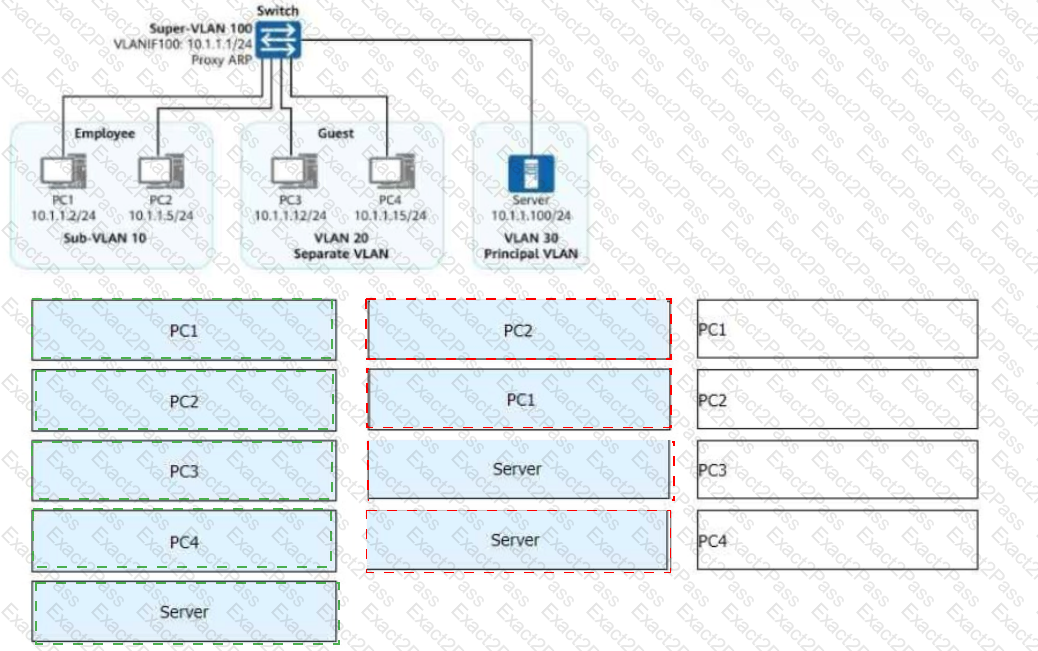
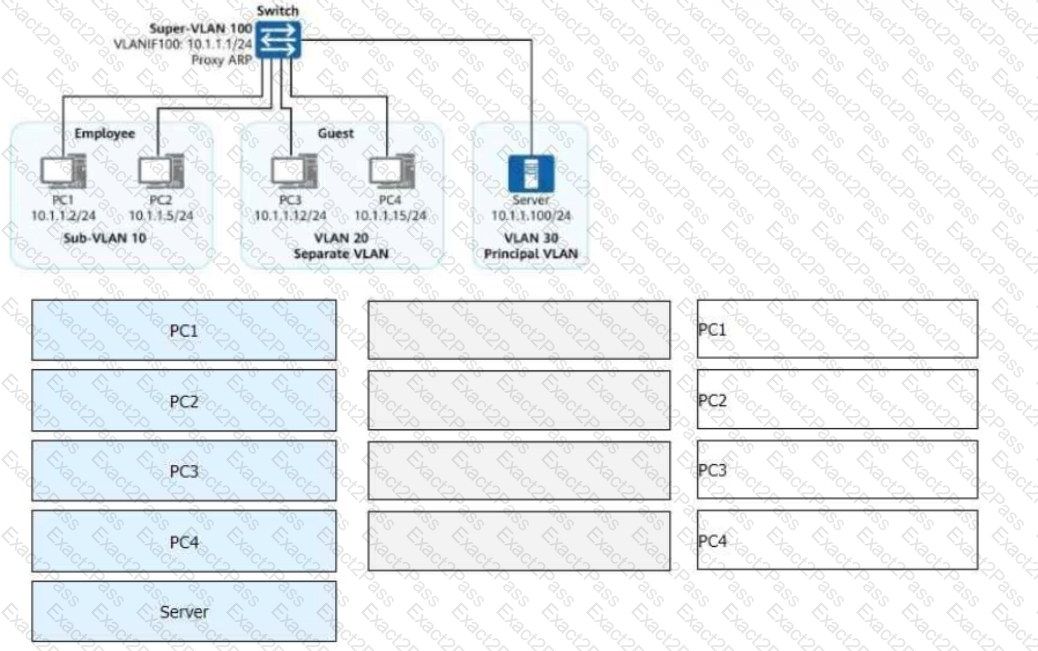
Both VLAN aggregation and MUX VLAN are deployed on the enterprise network shown in the figure.
All switch interfaces connected to terminals are access interfaces.
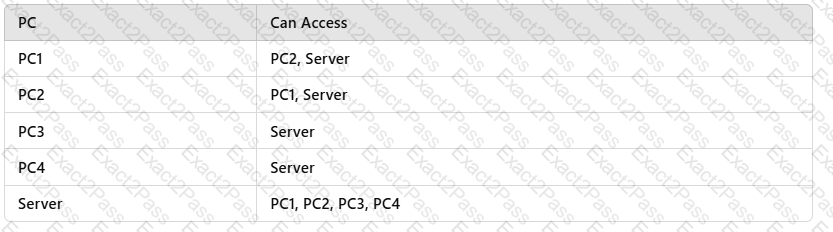
Given this, match PC1 to PC4 with the hosts or servers they can access on the network.
( Note: A host cannot be matched with itself. For example, PC1 cannot match PC1. Tokens can be reused.)
A network device has established an OSPF neighbor relationship with another device. The figure shows the configuration of GE0/0/0 on the network device.
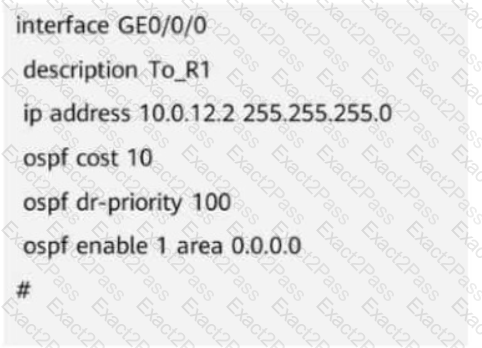
Which of the following commands would NOT affect the OSPF neighbor status of the interface?
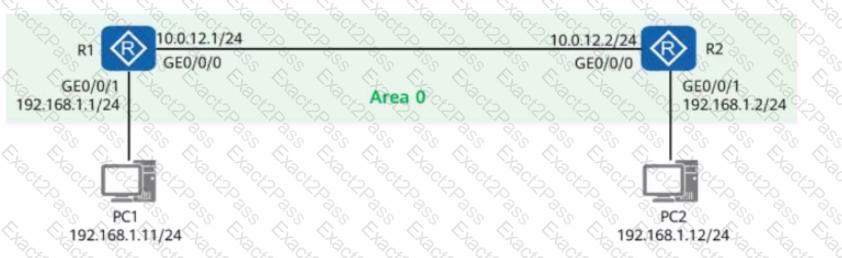
A network engineer provides a troubleshooting report after rectifying a fault. The actual network is simplified into the one shown in the figure, where R1 and R2 both have OSPF enabled, and function as the gateways of PCI and PC2, respectively. Given this, which of the following statements is false?
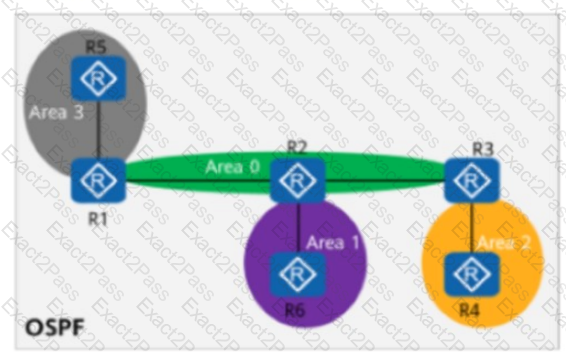
On the OSPF network shown in the figure, area 1 is a common area, area 2 is a stub area, and area 3 is an NSSA. R5 imports an external route 10.0.5.5/32. Given this, which of the following routers does not have the route 10.0.5.5/32 in its routing table?
An OSPFv3 NSSA LSA is generated by an ASBR , describes routes to a destination outside the AS , and is advertised in an NSSA .
Options: