Exact2Pass

Last Update 18 hours ago Total Questions : 244
The HCIP-Datacom-Advanced Routing & Switching Technology V1.0 content is now fully updated, with all current exam questions added 18 hours ago. Deciding to include H12-831_V1.0 practice exam questions in your study plan goes far beyond basic test preparation.
You'll find that our H12-831_V1.0 exam questions frequently feature detailed scenarios and practical problem-solving exercises that directly mirror industry challenges. Engaging with these H12-831_V1.0 sample sets allows you to effectively manage your time and pace yourself, giving you the ability to finish any HCIP-Datacom-Advanced Routing & Switching Technology V1.0 practice test comfortably within the allotted time.
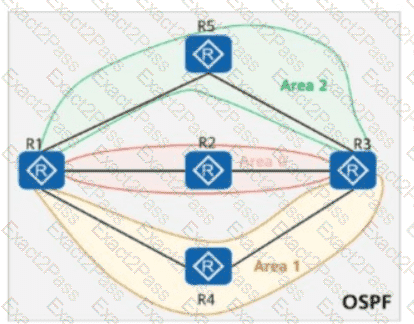
On the OSPF network shown in the figure, area 1 is an NSSA, area 2 is a common area, and R4 imports an external route 10.0.4.4/32. The router ID of each router is 10.0.X.X, where X is the number of the router. The command asbr-summary 10.0.4.0 255.255.255.0 is configured in the OSPF processes of R1 and R3. Which of the following statements is true?
There are multiple types of MAC address entries on a switch. Which of the following entries are manually configured and cannot be aged out?
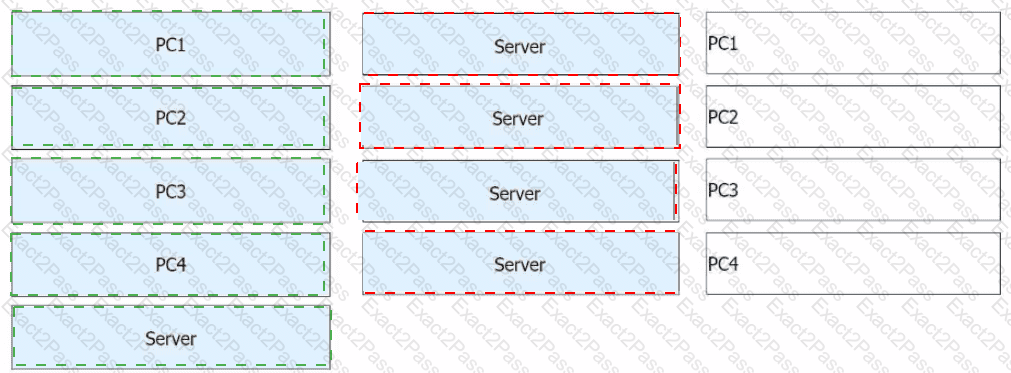
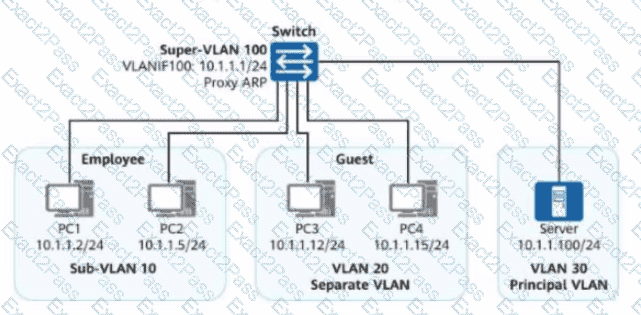
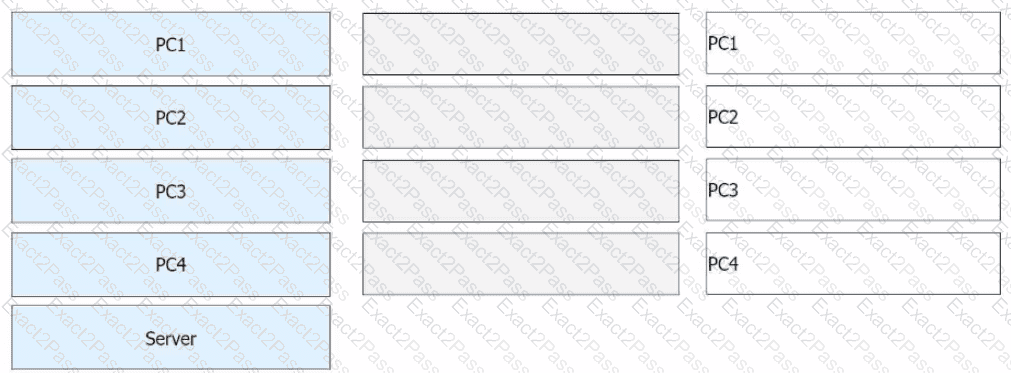
Both VLAN aggregation and MUX VLAN are deployed on the enterprise network shown in the figure, and all switch interfaces connected to terminals are access interfaces. Given this, match PCI to PC4 with the hosts or servers that they can access on the network. (Note: A host cannot be matched with itself. For example, PCI cannot match PCI.) (Tokens can be reused.)
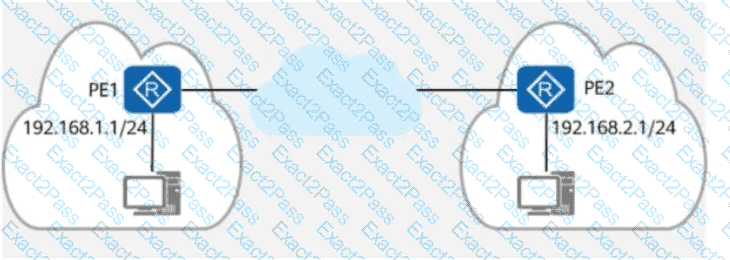
The figure shows the logical network architecture of a migration project. The purpose of the migration is to enable terminals in different geographical locations to communicate with each other and deploy the gateway of the terminals on the PE routers.
After the migration is complete, which of the following methods can be used by network engineers to preliminarily check the network connectivity?
Options:
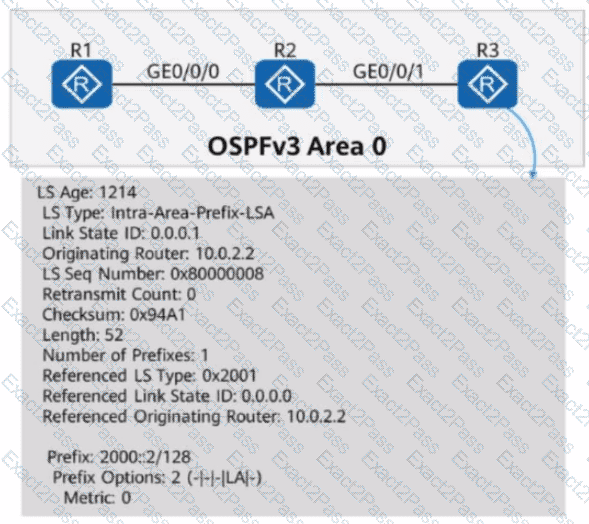
On the OSPFv3 network shown in the figure, OSPFv3 is enabled on the interfaces connecting R1, R2, and R3. The router ID of each router is 10.0.X.X, where X is the number of the router. If you check detailed information about an LSA on R3, the command output shows that the LSA is generated by R2 and describes the IPv6 prefix address associated with the Router-LSA.
The set-overload command is configured in the process of an IS-IS router. By default, how long after being restarted does the router exit the overload state?
OSPFv3 packets are encapsulated in IPv6 packets. Which of the following is the value of the Next Header field in the IPv6 packet header?
Options:
On an MPLS network where LDP is used to establish LSPs, a transit node directly connected to the ingress node that sends a label request distributes labels to the ingress node only after receiving a label mapping message from the egress node. In this case, which of the following is the correct combination of the label advertisement mode and label distribution control mode?
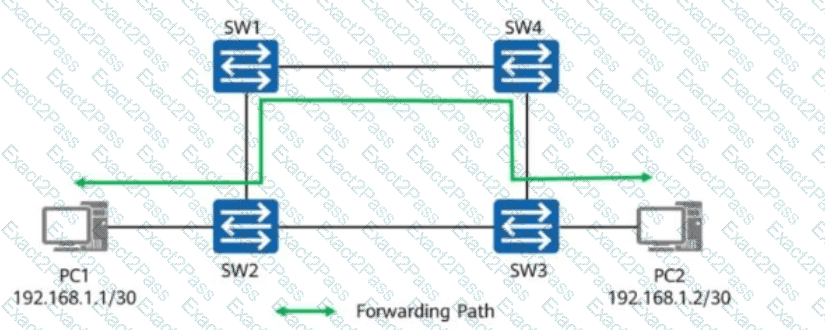
On the network shown in the figure, a network engineer finds that the path between PC1 and PC2 is not the optimal path, and all links along the path have the same cost.
Given this, which of the following routers may be the root bridges of the Layer 2 network?
Options:
The figure shows an MPLS packet with multiple labels.
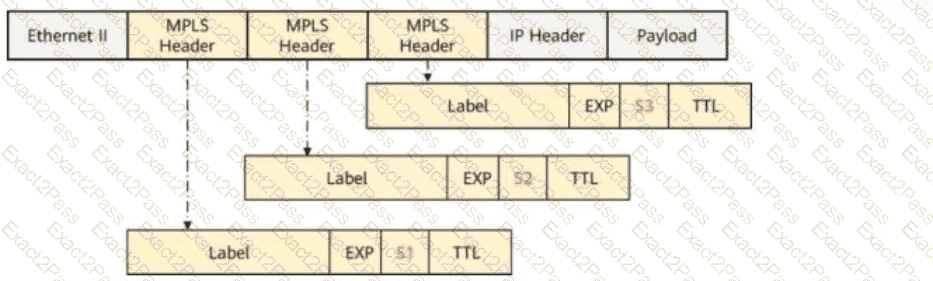
Which of the following values for the S field is correct?