Exact2Pass

Last Update 20 hours ago Total Questions : 273
The MuleSoft Certified Integration Architect - Level 1 content is now fully updated, with all current exam questions added 20 hours ago. Deciding to include MCIA-Level-1 practice exam questions in your study plan goes far beyond basic test preparation.
You'll find that our MCIA-Level-1 exam questions frequently feature detailed scenarios and practical problem-solving exercises that directly mirror industry challenges. Engaging with these MCIA-Level-1 sample sets allows you to effectively manage your time and pace yourself, giving you the ability to finish any MuleSoft Certified Integration Architect - Level 1 practice test comfortably within the allotted time.
A system administrator needs to determine when permissions were last changed for an Anypoint Platform user.
Which Anypoint Platform component should the administrator use to obtain this information?
What aspects of a CI/CD pipeline for Mule applications can be automated using MuleSoft-provided Maven plugins?
A rale limiting policy has been applied to a soap VI.2 API published in Clondhub. The API implementation catches errors in a global error handler on error propagate in the main flow for HTTP: RETRY_EXHAUSTED with HTTP status set to 429 and any with the HTTP status set to 500.
What is the expected H1TP status when the client exceeds the quota of the API calls?
An API implementation is being designed that must invoke an Order API which is known to repeatedly experience downtime. For this reason a fallback API is to be called when the Order API is unavailable. What approach to designing invocation of the fallback API provides the best resilience?
Mule application A receives a request Anypoint MQ message REQU with a payload containing a variable-length list of request objects. Application A uses the For Each scope to split the list into individual objects and sends each object as a message to an Anypoint MQ queue.
Service S listens on that queue, processes each message independently of all other messages, and sends a response message to a response queue.
Application A listens on that response queue and must in turn create and publish a response Anypoint MQ message RESP with a payload containing the list of responses sent by service S in the same order as the request objects originally sent in REQU.
Assume successful response messages are returned by service S for all request messages.
What is required so that application A can ensure that the length and order of the list of objects in RESP and REQU match, while at the same time maximizing message throughput?
Refer to the exhibit.
A Mule application is being designed to expose a SOAP web service to its clients.
What language is typically used inside the web service ' s interface definition to define the data structures that the web service Is expected to exchange with its clients?
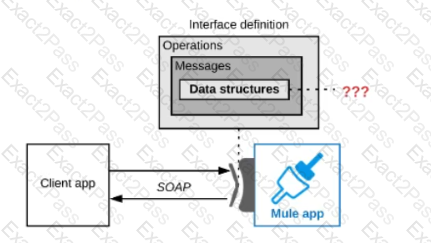
According to MuleSoft, what Action should an IT organization take regarding its technology assets in order to close the IT delivery.
A high-volume eCommerce retailer receives thousands of orders per hour and requires notification of its order management, warehouse, and billing system for subsequent processing within 15 minutes of order submission through its website.
Which integration technology, when used for its typical and intended purpose, meets the retailer’s requirements for this use case?
An XA transaction Is being configured that involves a JMS connector listening for Incoming JMS messages. What is the meaning of the timeout attribute of the XA transaction, and what happens after the timeout expires?
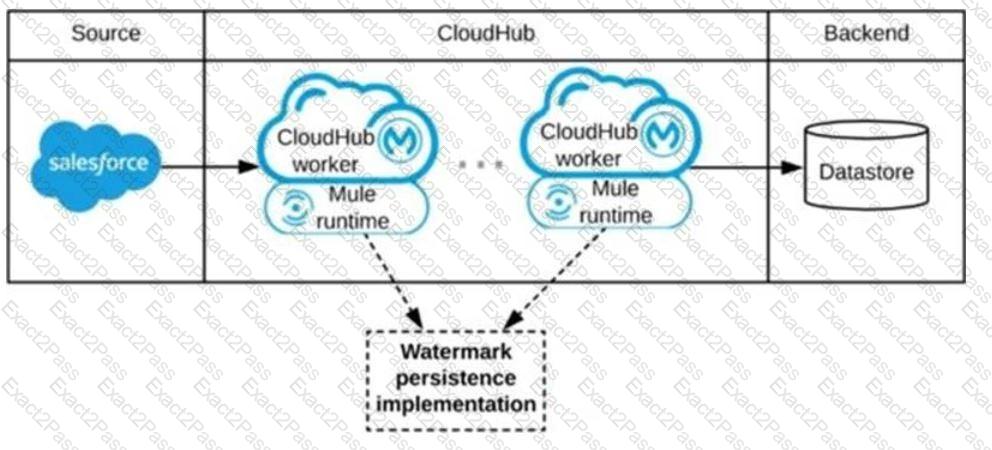
A Mule application is being designed for deployment to a single CloudHub worker. The Mule application will have a flow that connects to a SaaS system to perform some operations each time the flow is invoked.
The SaaS system connector has operations that can be configured to request a short-lived token (fifteen minutes) that can be reused for subsequent connections within the fifteen minute time window. After the token expires, a new token must be requested and stored.
What is the most performant and idiomatic (used for its intended purpose) Anypoint Platform component or service to use to support persisting and reusing tokens in the Mule application to help speed up reconnecting the Mule application to the SaaS application?


 Diagram
Description automatically generated
Diagram
Description automatically generated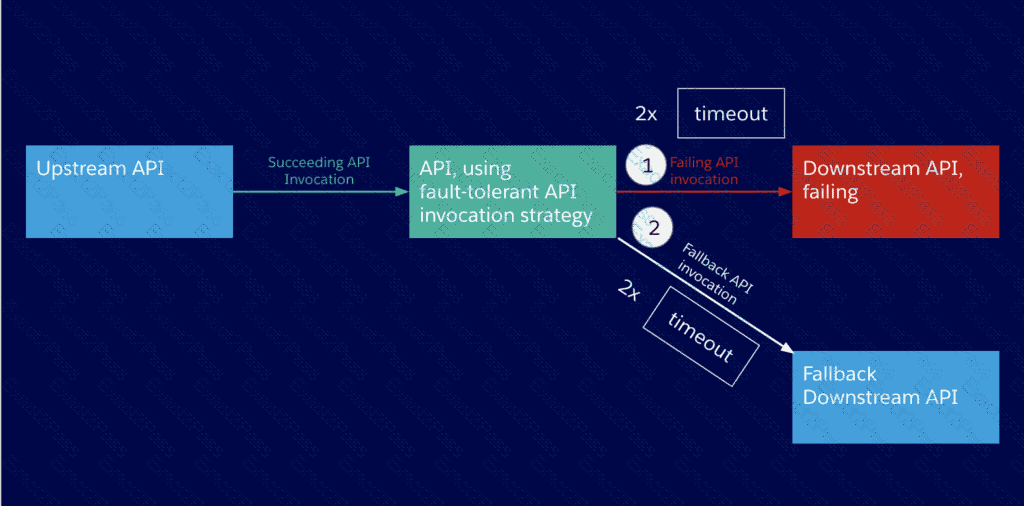 Diagram
Description automatically generated
Diagram
Description automatically generated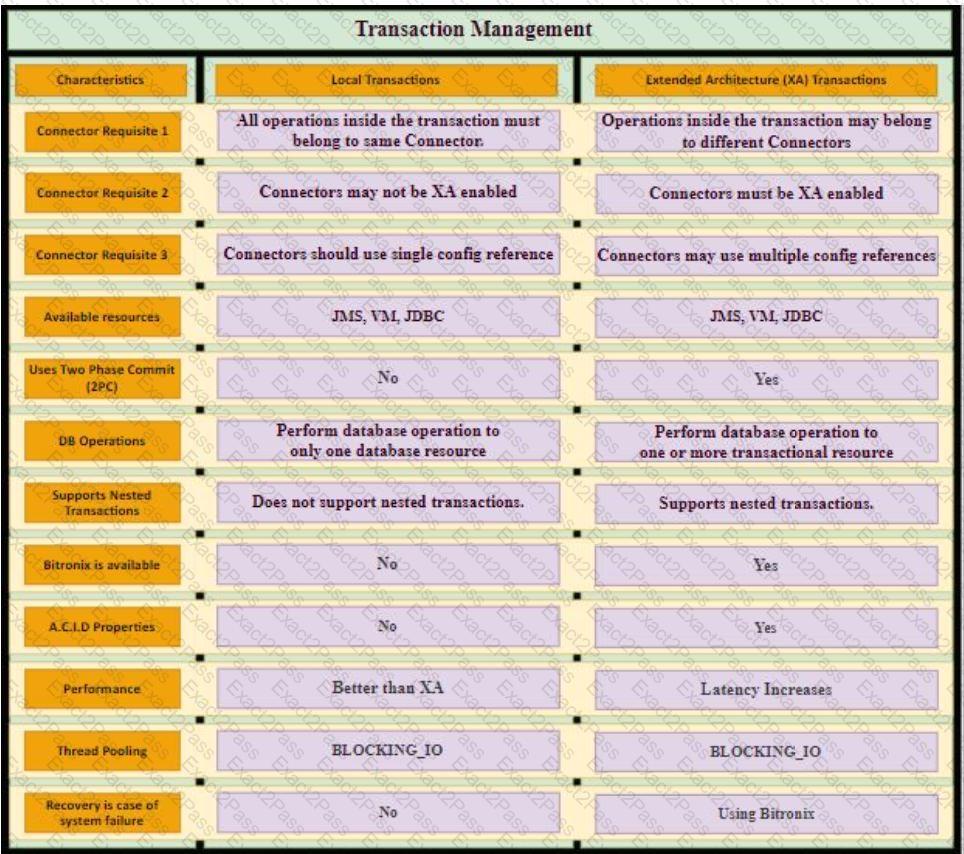 Graphical user interface, table
Description automatically generated with medium confidence
Graphical user interface, table
Description automatically generated with medium confidence