Exact2Pass

Last Update 14 hours ago Total Questions : 209
The LTM Specialist: Maintain & Troubleshoot content is now fully updated, with all current exam questions added 14 hours ago. Deciding to include 301b practice exam questions in your study plan goes far beyond basic test preparation.
You'll find that our 301b exam questions frequently feature detailed scenarios and practical problem-solving exercises that directly mirror industry challenges. Engaging with these 301b sample sets allows you to effectively manage your time and pace yourself, giving you the ability to finish any LTM Specialist: Maintain & Troubleshoot practice test comfortably within the allotted time.
-- Exhibit –
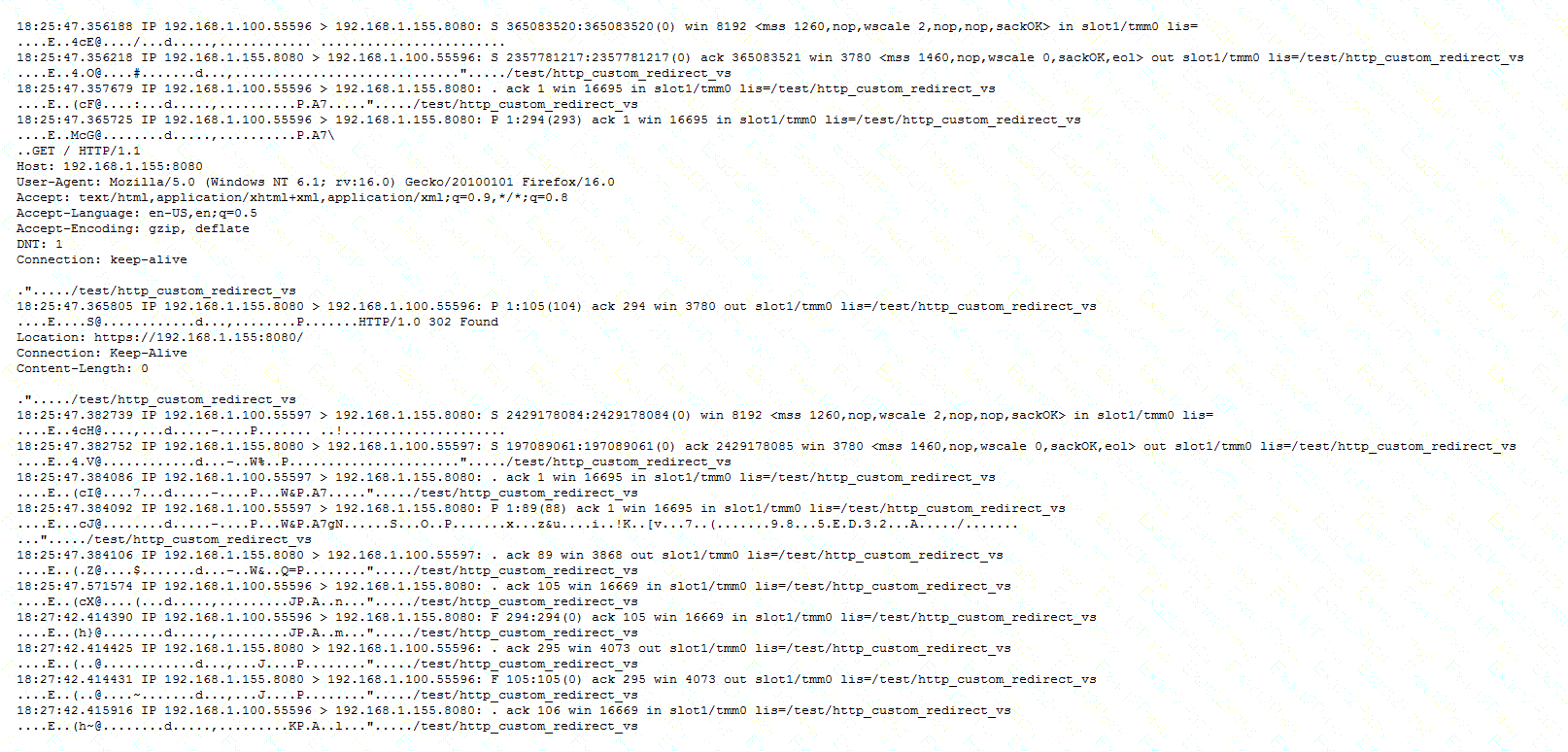
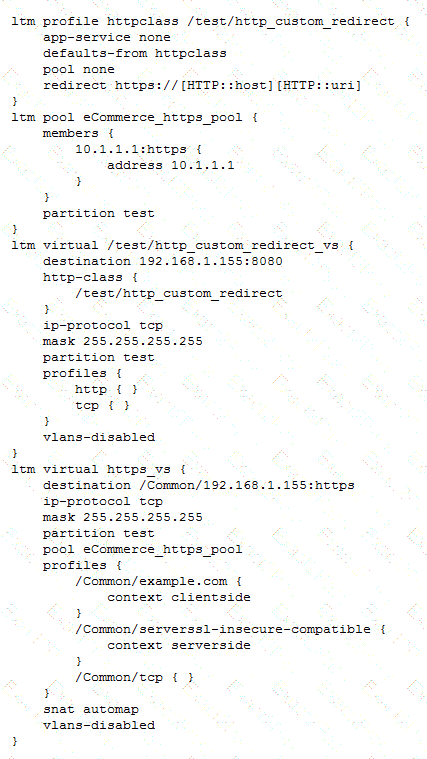
-- Exhibit --
Refer to the exhibits.
An LTM Specialist is reconfiguring a virtual server to redirect all clients to HTTPS. Testing reveals that the redirect is functioning incorrectly. As part of the troubleshooting process, the LTM Specialist performs a packet capture.
What is the issue?
-- Exhibit –
-- Exhibit --
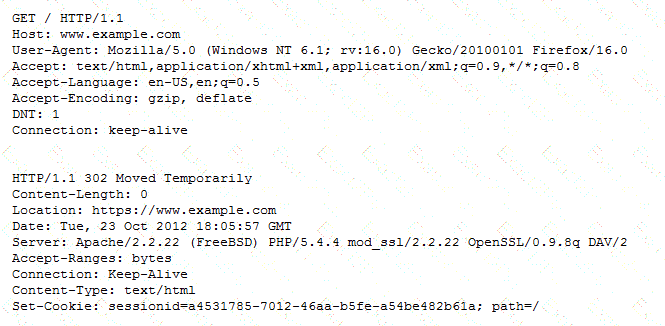
Refer to the exhibit.
An LTM Specialist is performing an HTTP trace on the client side of the LTM device and notices there are many undesired headers being sent by the server in the response. The LTM Specialist wants to remove all response headers except "Set-Cookie" and "Location."
How should the LTM Specialist modify the HTTP profile to remove undesired headers from the HTTP response?
-- Exhibit –
-- Exhibit --
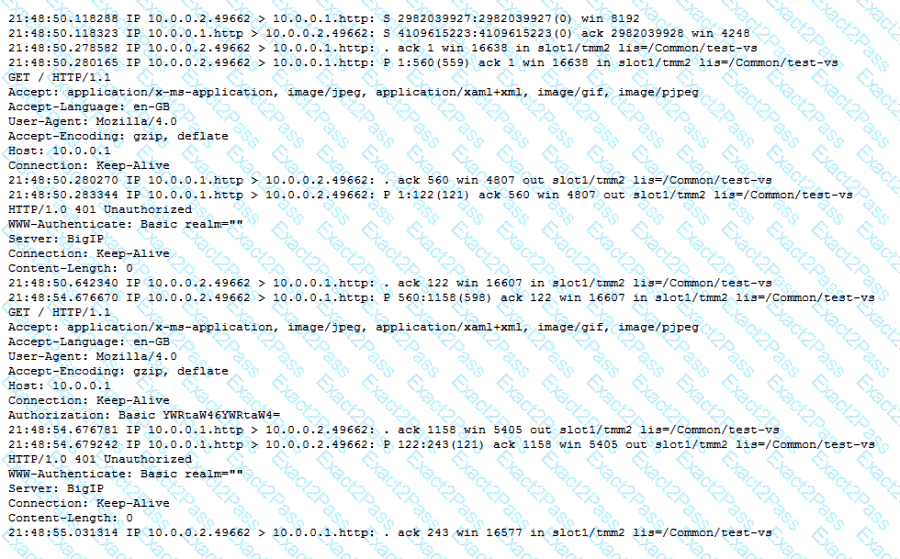
Refer to the exhibit.
A user is unable to access an application.
What is the root cause of the problem?
-- Exhibit –
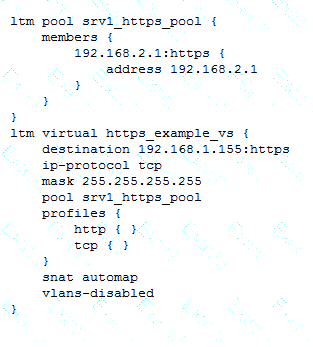
-- Exhibit --
Refer to the exhibit.
An LTM Specialist is troubleshooting an issue with a new virtual server. When connecting through the virtual server, clients receive the message "The connection was reset" in the browser. Connections directly to the pool member show the application is functioning correctly.
What is the issue?
Which two alerting capabilities can be enabled from within an application visibility reporting (AVR) analytics profile? (Choose two.)
Users are experiencing low throughput when downloading large files over a high-speed WAN connection. Extensive packet loss was found to be an issue but CANNOT be eliminated.
Which two TCP profile settings should be modified to compensate for the packet loss in the network? (Choose two.)
A customer needs to intercept all of the redirects its application is sending to clients. When a redirect is matched, the customer needs to log a message including the client IP address.
Which iRule should be used?
Which file should be modified to create custom SNMP alerts?
A web developer has created a custom HTTP call to a backend application. The HTTP headers being sent by the HTTP call are:
GET / HTTP/1.1
User-Agent: MyCustomApp (v1.0)
Accept: text/html
Cache-Control: no-cache
Connection: keep-alive
CookiE. somecookie=1
The backend server is responding with the following:
HTTP/1.1 400 Bad Request
DatE. Wed, 20 Jul 2012 17:22:41 GMT
Connection: close
Why is the HTTP web server responding with a HTTP 400 Bad Request?
An LTM Specialist has just manually failed the active LTM device over to the standby LTM device. The LTM Specialist notices the newly active LTM device is NOT currently receiving traffic. The LTM Specialist verifies the newly active device is responding to ARP but still no traffic is hitting the virtual servers. The LTM Specialist also notices that the virtual servers eventually start responding.
What should be added to the configuration to resolve the problem?

