
Summer Sale Special Limited Time 70% Discount Offer - Ends in 0d 00h 00m 00s - Coupon code: buysanta

Exact2Pass Menu

Certified Supply Chain Professional Exam

Last Update 13 hours ago Total Questions : 629

The Certified Supply Chain Professional Exam content is now fully updated, with all current exam questions added 13 hours ago. Deciding to include CSCP practice exam questions in your study plan goes far beyond basic test preparation.

You'll find that our CSCP exam questions frequently feature detailed scenarios and practical problem-solving exercises that directly mirror industry challenges. Engaging with these CSCP sample sets allows you to effectively manage your time and pace yourself, giving you the ability to finish any Certified Supply Chain Professional Exam practice test comfortably within the allotted time.

Question # 16

A return material authorization (RMA) policy is used in reverse logistics to:

A.

physically transport returned items by using an efficient transportation mode.

B.

minimize the number of returned items by involving product design and demand forecasting.

C.

reduce the cost of returned items by refusing to accept items that should not be returned.

D.

reclaim substantial value from returned items by recycling.

Question # 17

A company originally based in Germany sets up companies in India, China, Vietnam, Mexico, and Brazil. It sources most of the raw materials locally and employs the local workforce to manage and produce finished goods. Most of the goods produced are consumed in the same country. The company can be classified as what type of enterprise?

A.

Globally integrated

B.

Domestic

C.

Multinational

D.

Virtual

Question # 18

The purpose of price differentiation is to:

A.

reduce sales variability.

B.

clear out inventories.

C.

increase total revenue.

D.

increase customer loyalty.

Question # 19

A shipping company investing to reduce damages due to weather conditions is an example of:

A.

risk tolerance.

B.

risk exposure.

C.

risk mitigation.

D.

risk resilience.

Question # 20

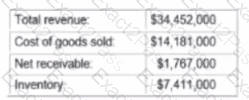
What is the inventory turnover for a company with the following financial data?
A.

1.91

B.

4.64

C.

8.03

D.

19.50

Question # 21

Bullwhip effect is mainly caused by which of the following factors?

A.

Forecast accuracy and information sharing

B.

Strategic partnership and price fluctuation

C.

E-business and information sharing

D.

Forecast accuracy and price fluctuation

Question # 22

Which of the following modes of transportation has the highest fixed cost and lowest variable cost while retaining the advantage of flexibility of commodities transported?

A.

Pipeline

B.

Truck

C.

Water

D.

Rail

Question # 23

Activity costing (ABC) is an example of:

A.

Generally accepted accounting principles.

B.

Inventory classification system.

C.

Asset cost estimate technique.

D.

Cost allocation technique.

Question # 24

After two firms have established an initial relationship to apply the principles of collaborative planning, forecasting, and replenishment (CPFR) for products, the next logical step is to:

A.

share forecasts for the products with each other.

B.

obtain orders for the products and enter them into the master schedule.

C.

create joint business plans for the products.

D.

negotiate prices and profit expectations for the products.

Question # 25

Which of the following statements characterizes a supply chain of innovative products as opposed to functional products?

A.

Lead times are longer.

B.

Product life cycle is longer.

C.

Profit margins are lower.

D.

Demand uncertainty is higher.

Question # 26

Which of the following outcomes is most likely to result when lot size increases?

A.

Setup costs will increase.

B.

Inventory carrying cost will increase.

C.

Operating expenses will increase.

D.

Total profit will increase.

Question # 27

In the Supply Chain Operations Reference-model (SCOR®), the cash-to-cash cycle time for a manufacturing company is the number of days between which two of the following situations?

A.

Paying for raw materials and getting paid for the product

B.

Shipping the product from the warehouse and receiving it at the customer ' s location

C.

Paying for raw materials and sending an invoice to the customer

D.

Billing the customer and getting paid for the product

Question # 28

Which of the following activities typically would be an appropriate application of the ISO 31000 Risk Management Principles and Guidelines?

A.

Calculating a risk index for each facility

B.

Establishing external risk communications processes

C.

Projecting the ability of a facility to recover from an event

D.

Preparing for risk management accreditation

Question # 29

Which of the following distribution approaches for a low-volume, high-variety product line typically will result in the highest level of customer service and the lowest total distribution costs?

A.

Direct shipment from plant to customers

B.

Shipment from a central distribution warehouse

C.

Shipment through a multi-echelon distribution network

D.

Outsourcing the distribution function

Question # 30

The customer who provides point-of-sale data remains the sole decision-maker regarding order quantities when what type of inventory strategy is used?


A.

Continuous replenishment

B.

Advanced continuous replenishment

C.

Vendor-managed replenishment

D.

Quick response

Go to page: