Exact2Pass

Last Update 10 hours ago Total Questions : 184
The Conducting Forensic Analysis and Incident Response Using Cisco CyberOps Technologies (CBRFIR v1.2) content is now fully updated, with all current exam questions added 10 hours ago. Deciding to include 300-215 practice exam questions in your study plan goes far beyond basic test preparation.
You'll find that our 300-215 exam questions frequently feature detailed scenarios and practical problem-solving exercises that directly mirror industry challenges. Engaging with these 300-215 sample sets allows you to effectively manage your time and pace yourself, giving you the ability to finish any Conducting Forensic Analysis and Incident Response Using Cisco CyberOps Technologies (CBRFIR v1.2) practice test comfortably within the allotted time.
Refer to the exhibit.
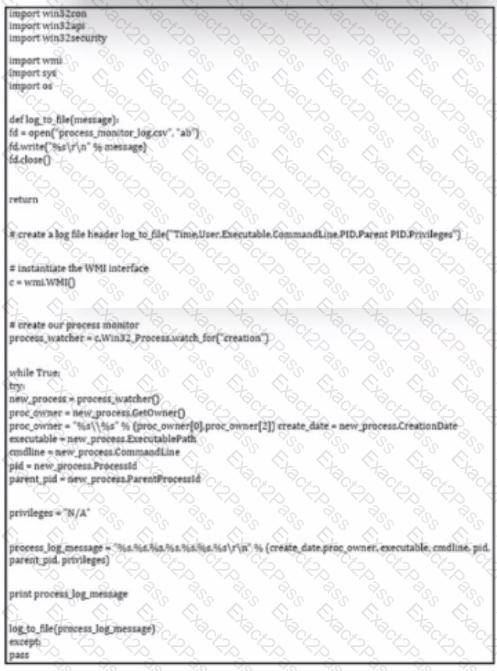
Which type of code is shown?
Refer to the exhibit.

Which encoding method is used to obfuscate the script?
A security team received an alert of suspicious activity on a user’s Internet browser. The user’s anti-virus software indicated that the file attempted to create a fake recycle bin folder and connect to an external IP address. Which two actions should be taken by the security analyst with the executable file for further analysis? (Choose two.)
Refer to the exhibit.
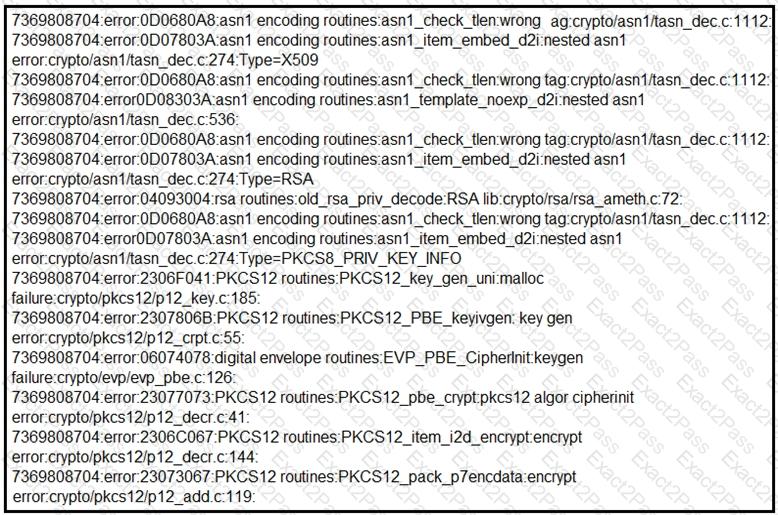
What should be determined from this Apache log?
An engineer is analyzing a ticket for an unexpected server shutdown and discovers that the web-server ran out of useable memory and crashed.
Which data is needed for further investigation?
Which two tools conduct network traffic analysis in the absence of a graphical user interface? (Choose two.)
An employee receives an email from a “trusted” person containing a hyperlink that is malvertising. The employee clicks the link and the malware downloads. An information analyst observes an alert at the SIEM and engages the cybersecurity team to conduct an analysis of this incident in accordance with the incident response plan. Which event detail should be included in this root cause analysis?
Refer to the exhibit.
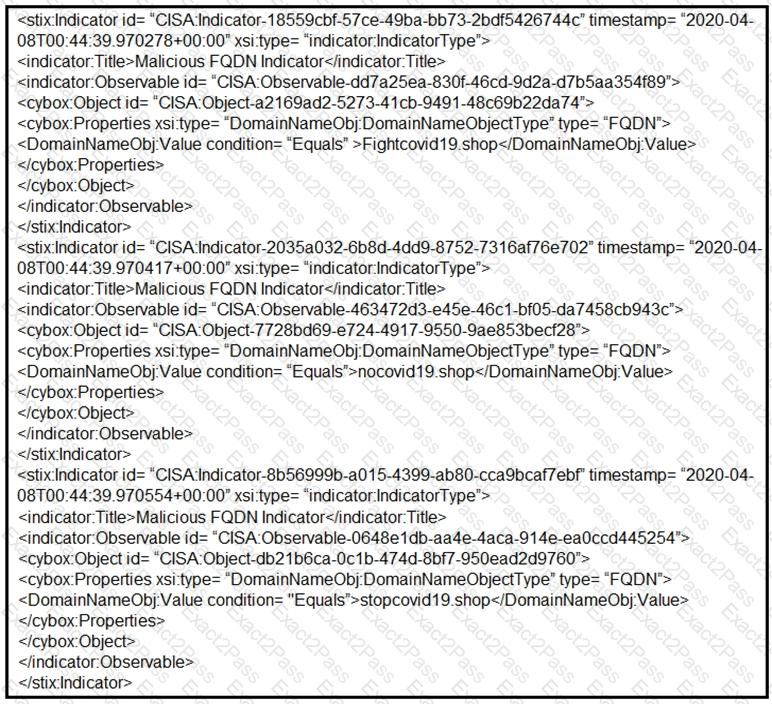
Which two actions should be taken based on the intelligence information? (Choose two.)
Which tool is used for reverse engineering malware?
An analyst finds .xyz files of unknown origin that are large and undetected by antivirus. What action should be taken next?

