Exact2Pass

Last Update 10 hours ago Total Questions : 184
The Conducting Forensic Analysis and Incident Response Using Cisco CyberOps Technologies (CBRFIR v1.2) content is now fully updated, with all current exam questions added 10 hours ago. Deciding to include 300-215 practice exam questions in your study plan goes far beyond basic test preparation.
You'll find that our 300-215 exam questions frequently feature detailed scenarios and practical problem-solving exercises that directly mirror industry challenges. Engaging with these 300-215 sample sets allows you to effectively manage your time and pace yourself, giving you the ability to finish any Conducting Forensic Analysis and Incident Response Using Cisco CyberOps Technologies (CBRFIR v1.2) practice test comfortably within the allotted time.
Refer to the exhibit.
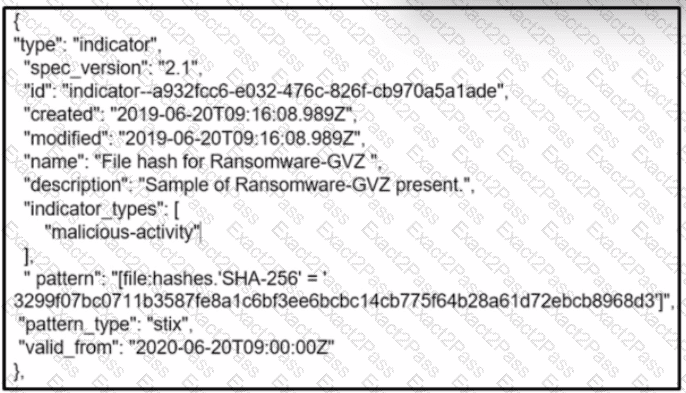
What is the indicator of compromise?
An organization experienced a ransomware attack that resulted in the successful infection of their workstations within their network. As part of the incident response process, the organization ' s cybersecurity team must prepare a comprehensive root cause analysis report. This report aims to identify the primary factor or factors responsible for the successful ransomware attack and to formulate effective strategies to prevent similar incidents in the future. In this context, what should the cybersecurity engineer emphasize in the root cause analysis report to demonstrate the underlying cause of the incident?
Refer to the exhibit.
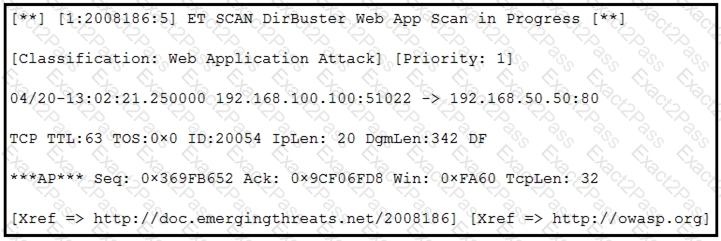
According to the SNORT alert, what is the attacker performing?
A cybersecurity analyst detects fileless malware activity on secure endpoints. What should be done next?
Data has been exfiltrated and advertised for sale on the dark web. A web server shows:
Database unresponsiveness
PageFile.sys changes
Disk usage spikes with CPU spikes
High page faults
Which action should the IR team perform on the server?
Over the last year, an organization’s HR department has accessed data from its legal department on the last day of each month to create a monthly activity report. An engineer is analyzing suspicious activity alerted by a threat intelligence platform that an authorized user in the HR department has accessed legal data daily for the last week. The engineer pulled the network data from the legal department’s shared folders and discovered above average-size data dumps. Which threat actor is implied from these artifacts?
What is the steganography anti-forensics technique?
Refer to the exhibit.
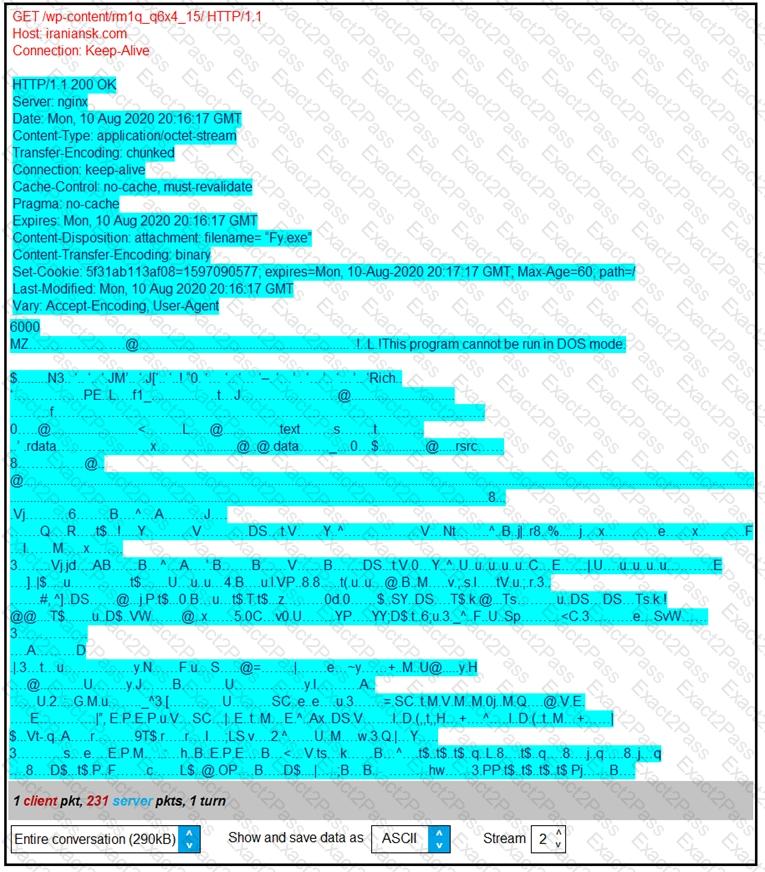
According to the Wireshark output, what are two indicators of compromise for detecting an Emotet malware download? (Choose two.)
A new zero-day vulnerability is discovered in the web application. Vulnerability does not require physical access and can be exploited remotely. Attackers are exploiting the new vulnerability by submitting a form with malicious content that grants them access to the server. After exploitation, attackers delete the log files to hide traces. Which two actions should the security engineer take next? (Choose two.)
A financial company handling international transactions recently experienced a complex security incident The incident involves simultaneous DDoS attacks, suspected internal data leakage and the discovery of sophisticated malware implants that have remained dormant until triggered remotely During the incident it became clear that the current procedures are inadequate and plans to tackle issues were created on the go To counter this problem going forward, the IR team is developing an incident playbook to be used if a similar incident reoccurs Which set of elements of the playbook must be introduced?

