Exact2Pass

Last Update 1 hour ago Total Questions : 60
The Implementing Cisco Application Centric Infrastructure - Advanced (600-660 DCACIA) content is now fully updated, with all current exam questions added 1 hour ago. Deciding to include 600-660 practice exam questions in your study plan goes far beyond basic test preparation.
You'll find that our 600-660 exam questions frequently feature detailed scenarios and practical problem-solving exercises that directly mirror industry challenges. Engaging with these 600-660 sample sets allows you to effectively manage your time and pace yourself, giving you the ability to finish any Implementing Cisco Application Centric Infrastructure - Advanced (600-660 DCACIA) practice test comfortably within the allotted time.
Refer to the exhibit.
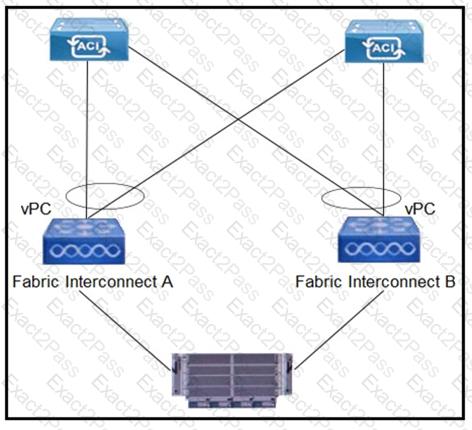
Which configuration mode must be selected for the VMM vSwitch Port Channel policy to avoid MAC flapping on the Cisco UCS Fls and Cisco ACI leaf switches?
Refer to the exhibit.
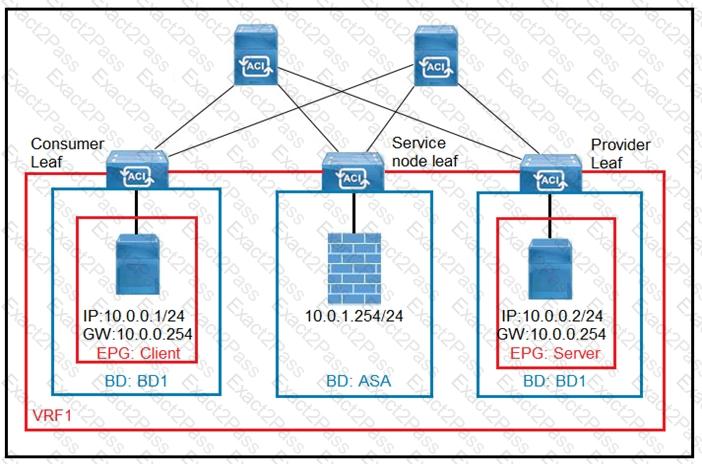
What must be configured in the service graph to redirect HTTP traffic between the EPG client and EPG server to go through the Cisco ASA firewall?
Refer to the exhibit.
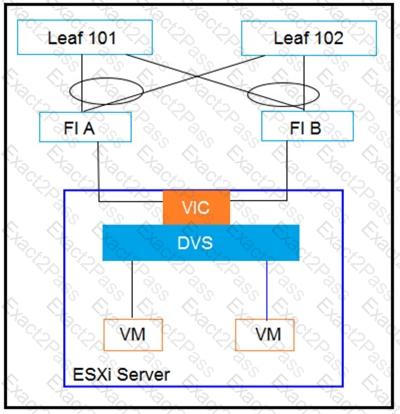
Between Cisco UCS Fls and Cisco ACI leaf switches, CDP is disabled, the LLDP is enabled, and LACP is in Active mode. Which two discovery protocols and load-balancing mechanism combinations can be implemented for the DVS? (Choose two.)
Which two components must be configured as stretched to establish intra-VRF communication between two EPGs that are deployed in different sites and different bridge domains? (Choose two.)
Where are STP BPDUs flooded in Cisco ACI fabric?
What is a design implication for Cisco ACI using an application-centric approach?
Cisco ACI fabric is migrated from network-centric mode to application-centric mode. What is possible in an application-centric design?
What are two characteristics of Cisco ACI interaction with MSTP? (Choose two.)
An engineer configures a new Cisco ACI Multi-Pod and must set up the link between the spine and the IPN device. Which three actions should be taken to accomplish this goal? (Choose three.)
Which firewall connection allows for the integration of service nodes in transparent mode with a Cisco ACI Multi-Pod setup?

