Exact2Pass

Modern security operations center (SOC) environments require immediate threat detection, behavioral anomaly correlation, and automated incident containment across multi-cloud and hybrid networks. Enterprise cybersecurity analysts must analyze real-time packet streams, identify evasive advanced persistent threat (APT) tactics, and manage vulnerability lifecycles under strict compliance standards. CompTIA established the CySA+ certification track to validate an analyst's ability to combat cyber threats using continuous security monitoring and intelligence-led defense strategies.
Passing the CS0-003 examination requires practical analytical competence rather than passive terminology memorization. Relying on static study sheets or high-yield cs0-003 exam questions leaves candidates unprepared for complex Performance-Based Questions (PBQs) that require interpreting SIEM alert outputs, analyzing PCAP packet captures in Wireshark, or configuring firewall remediation rules. Sourcing an updated comptia cysa cs0-003 study guide alongside realistic lab simulations ensures you build the diagnostic skills needed to score at least 750 on the official 100–900 scale. Exact2Pass provides calibrated, scenario-based practice tests that mirror official CompTIA assessment standards, helping you succeed on your first attempt.
The CS0-003 examination challenges your technical capacity to monitor infrastructure, prioritize enterprise vulnerabilities, and execute coordinated incident response procedures. Our practice tests replicate realistic terminal logs, Nmap scan outputs, and SIEM correlation queries instead of simple factual questionnaires. Practicing within timed simulations builds the analytical speed and diagnostic precision necessary to master both multiple-choice and multi-step performance-based questions under the 165-minute limit.
AXSS vulnerability was reported on one of the non-sensitive/non-mission-critical public websites of a company. The security department confirmed the finding and needs to provide a recommendation to the application owner. Which of the following recommendations will best prevent this vulnerability from being exploited? (Select two).
An analyst is reviewing a dashboard from the company’s SIEM and finds that an IP address known to be malicious can be tracked to numerous high-priority events in the last two hours. The dashboard indicates that these events relate to TTPs. Which of the following is the analyst most likely using?
A security analyst is reviewing the following alert that was triggered by FIM on a critical system:
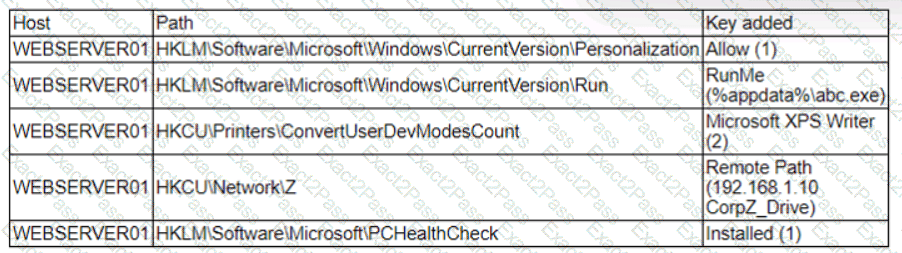
Which of the following best describes the suspicious activity that is occurring?
A security analyst found the following vulnerability on the company’s website:
< INPUT TYPE=“IMAGE” SRC=“javascript:alert(‘test’);” >
Which of the following should be implemented to prevent this type of attack in the future?
Which of the following tools would work best to prevent the exposure of PII outside of an organization?
Based on an internal assessment, a vulnerability management team wants to proactively identify risks to the infrastructure prior to production deployments. Which of the following best supports this approach?
Which Of the following techniques would be best to provide the necessary assurance for embedded software that drives centrifugal pumps at a power Plant?
Which of the following items should be included in a vulnerability scan report? (Choose two.)
Two employees in the finance department installed a freeware application that contained embedded malware. The network is robustly segmented based on areas of responsibility. These computers had critical sensitive information stored locally that needs to be recovered. The department manager advised all department employees to turn off their computers until the security team could be contacted about the issue. Which of the following is the first step the incident response staff members should take when they arrive?
The Chief Information Security Officer wants the same level of security to be present whether a remote worker logs in at home or at a coffee shop. Which of the following should be recommended as a starting point?

