Exact2Pass

Modern security operations center (SOC) environments require immediate threat detection, behavioral anomaly correlation, and automated incident containment across multi-cloud and hybrid networks. Enterprise cybersecurity analysts must analyze real-time packet streams, identify evasive advanced persistent threat (APT) tactics, and manage vulnerability lifecycles under strict compliance standards. CompTIA established the CySA+ certification track to validate an analyst's ability to combat cyber threats using continuous security monitoring and intelligence-led defense strategies.
Passing the CS0-003 examination requires practical analytical competence rather than passive terminology memorization. Relying on static study sheets or high-yield cs0-003 exam questions leaves candidates unprepared for complex Performance-Based Questions (PBQs) that require interpreting SIEM alert outputs, analyzing PCAP packet captures in Wireshark, or configuring firewall remediation rules. Sourcing an updated comptia cysa cs0-003 study guide alongside realistic lab simulations ensures you build the diagnostic skills needed to score at least 750 on the official 100–900 scale. Exact2Pass provides calibrated, scenario-based practice tests that mirror official CompTIA assessment standards, helping you succeed on your first attempt.
The CS0-003 examination challenges your technical capacity to monitor infrastructure, prioritize enterprise vulnerabilities, and execute coordinated incident response procedures. Our practice tests replicate realistic terminal logs, Nmap scan outputs, and SIEM correlation queries instead of simple factual questionnaires. Practicing within timed simulations builds the analytical speed and diagnostic precision necessary to master both multiple-choice and multi-step performance-based questions under the 165-minute limit.
An incident response team is assessing attack vectors of malware that is encrypting data with ransomware. There are no indications of a network-based intrusion.
Which of the following is the most likely root cause of the incident?
An organization is conducting a pilot deployment of an e-commerce application. The application ' s source code is not available. Which of the following strategies should an analyst recommend to evaluate the security of the software?
A Chief Information Security Officer wants to implement security by design, starting …… vulnerabilities, including SQL injection, FRI, XSS, etc. Which of the following would most likely meet the requirement?
A regulated organization experienced a security breach that exposed a list of customer names with corresponding PH data. Which of the following is the best reason for developing the organization ' s communication plans?
A security team conducts a lessons-learned meeting after struggling to determine who should conduct the next steps following a security event. Which of the following should the team create to address this issue?
A web developer reports the following error that appeared on a development server when testing a new application:
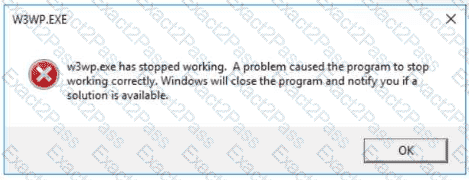
Which of the following tools can be used to identify the application ' s point of failure?
To minimize the impact of a security incident in a heavily regulated company, a cybersecurity analyst has configured audit settings in the organization ' s cloud services. Which of the following security controls has the analyst configured?
A security analyst discovers an ongoing ransomware attack while investigating a phishing email. The analyst downloads a copy of the file from the email and isolates the affected workstation from the network. Which of the following activities should the analyst perform next?
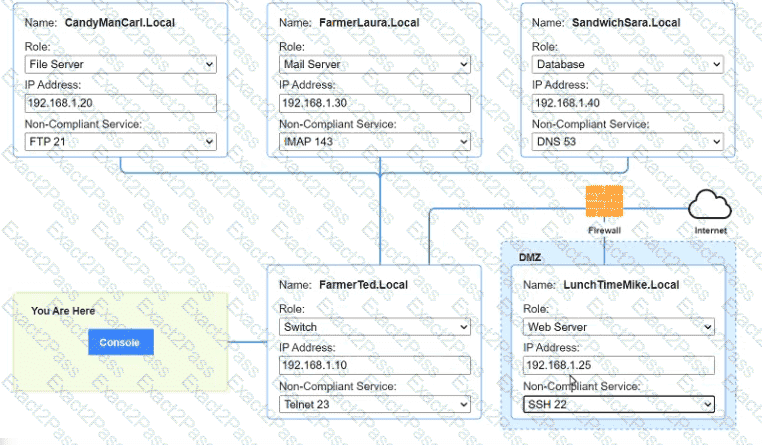
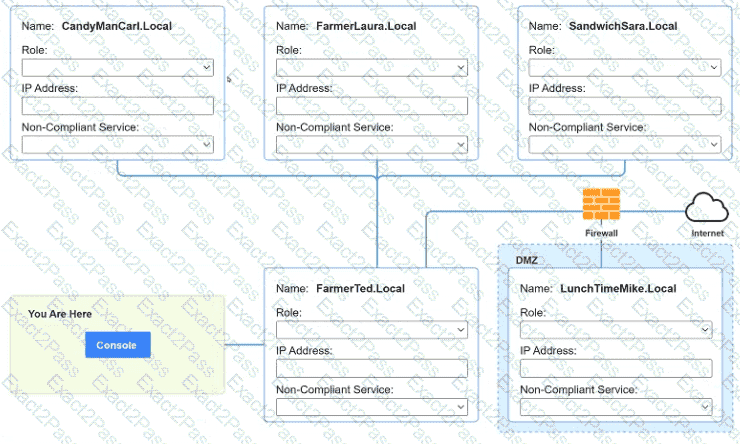
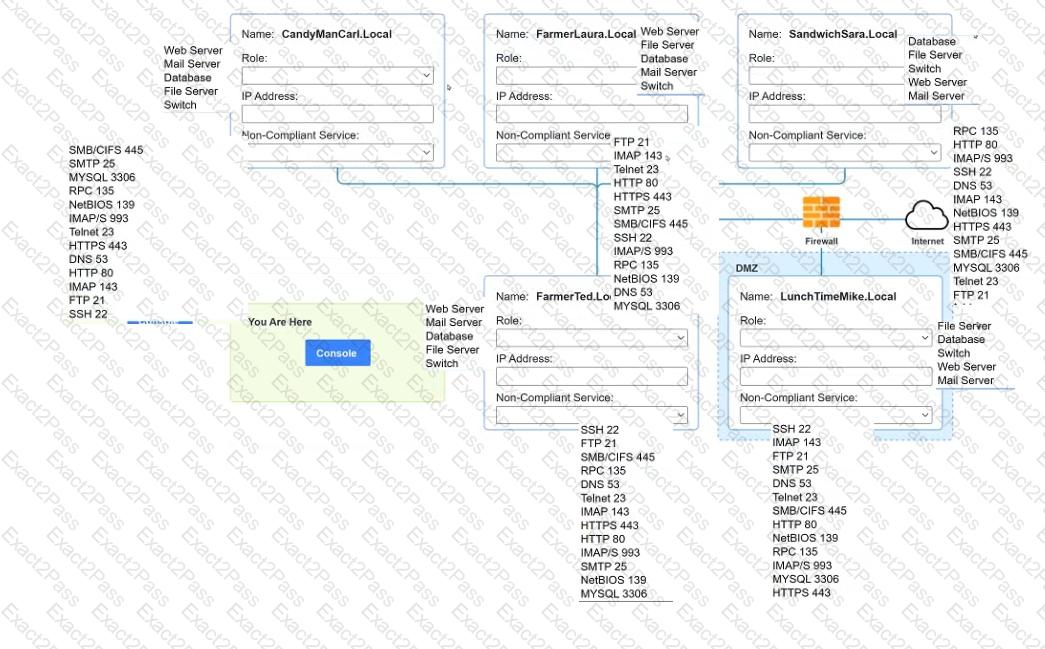
You are a penetration tester who is reviewing the system hardening guidelines for a company. Hardening guidelines indicate the following.
There must be one primary server or service per device.
Only default port should be used
Non- secure protocols should be disabled.
The corporate internet presence should be placed in a protected subnet
Instructions :
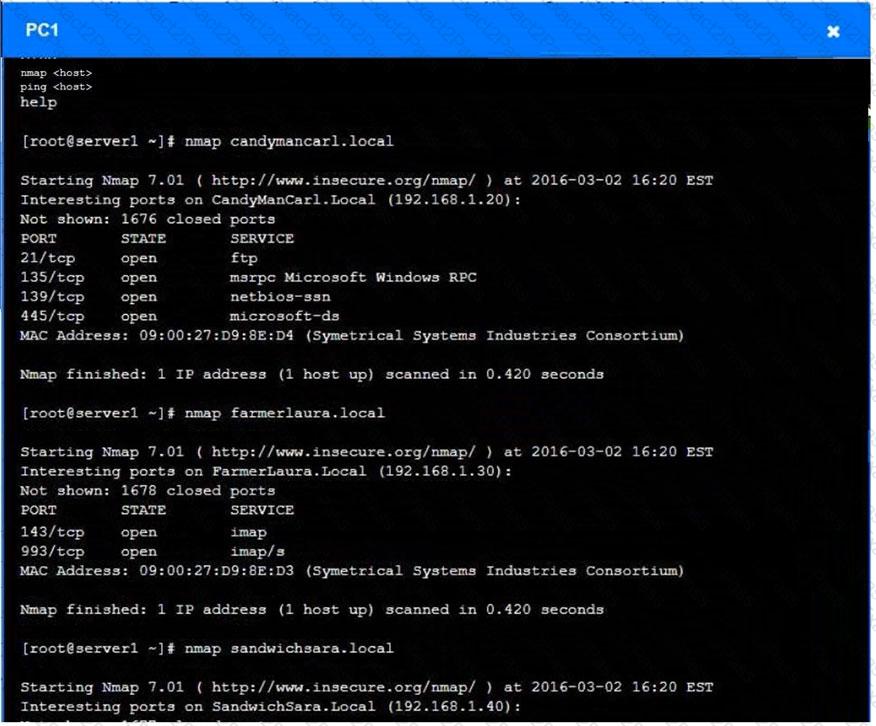
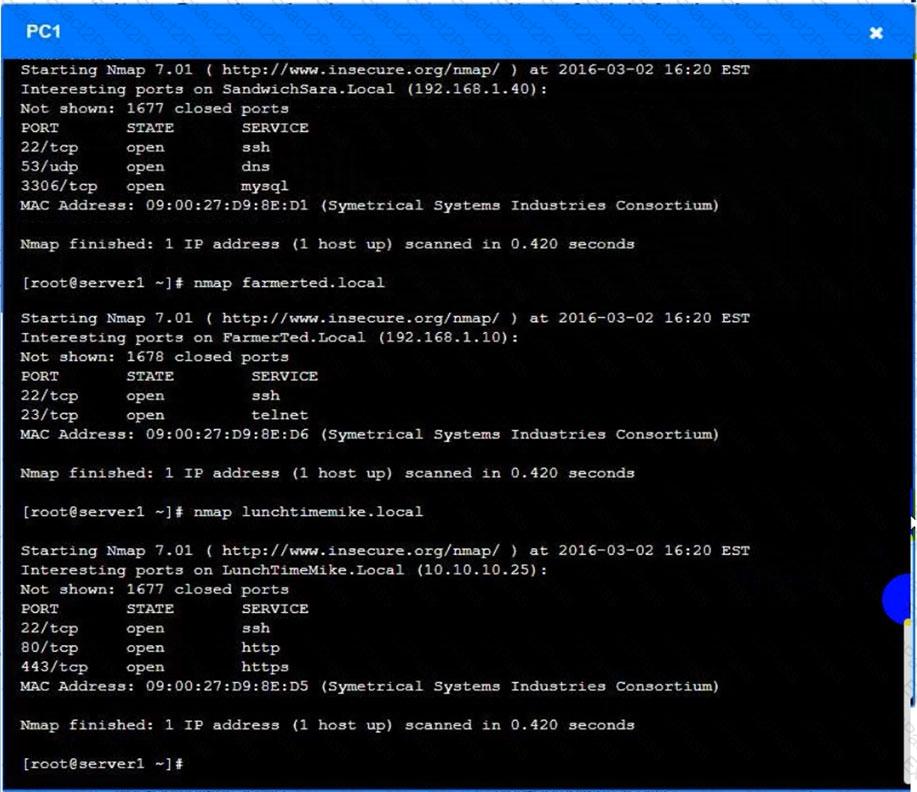
Using the available tools, discover devices on the corporate network and the services running on these devices.
You must determine
ip address of each device
The primary server or service each device
The protocols that should be disabled based on the hardening guidelines
A cybersecurity analyst is doing triage in a SIEM and notices that the time stamps between the firewall and the host under investigation are off by 43 minutes. Which of the following is the most likely scenario occurring with the time stamps?