Exact2Pass

Last Update 6 hours ago Total Questions : 525
The Designing and Implementing a Data Science Solution on Azure content is now fully updated, with all current exam questions added 6 hours ago. Deciding to include DP-100 practice exam questions in your study plan goes far beyond basic test preparation.
You'll find that our DP-100 exam questions frequently feature detailed scenarios and practical problem-solving exercises that directly mirror industry challenges. Engaging with these DP-100 sample sets allows you to effectively manage your time and pace yourself, giving you the ability to finish any Designing and Implementing a Data Science Solution on Azure practice test comfortably within the allotted time.
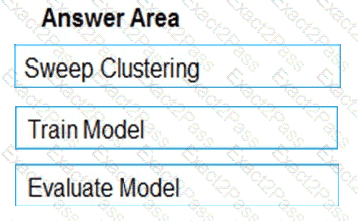
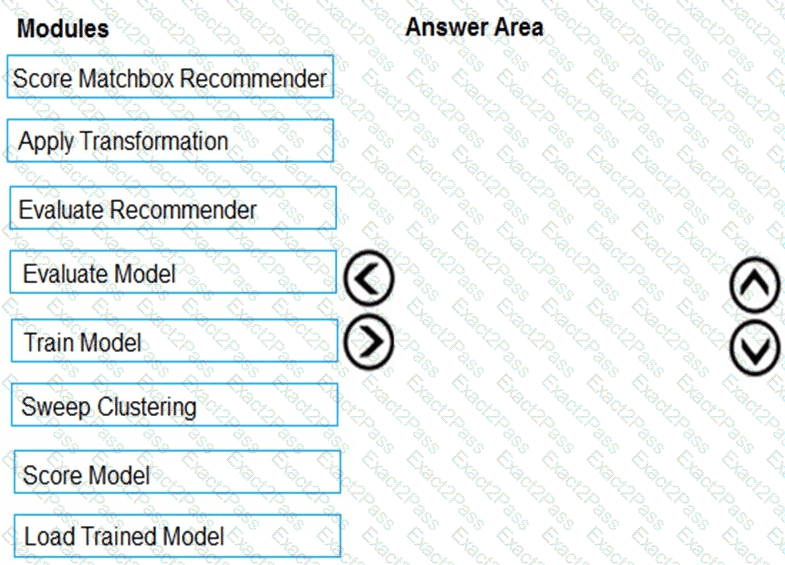
You need to produce a visualization for the diagnostic test evaluation according to the data visualization requirements.
Which three modules should you recommend be used in sequence? To answer, move the appropriate modules from the list of modules to the answer area and arrange them in the correct order.
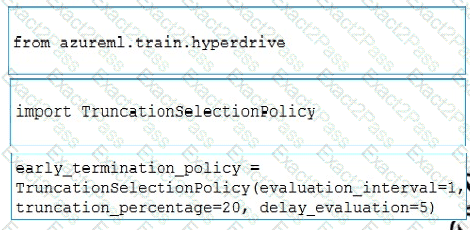
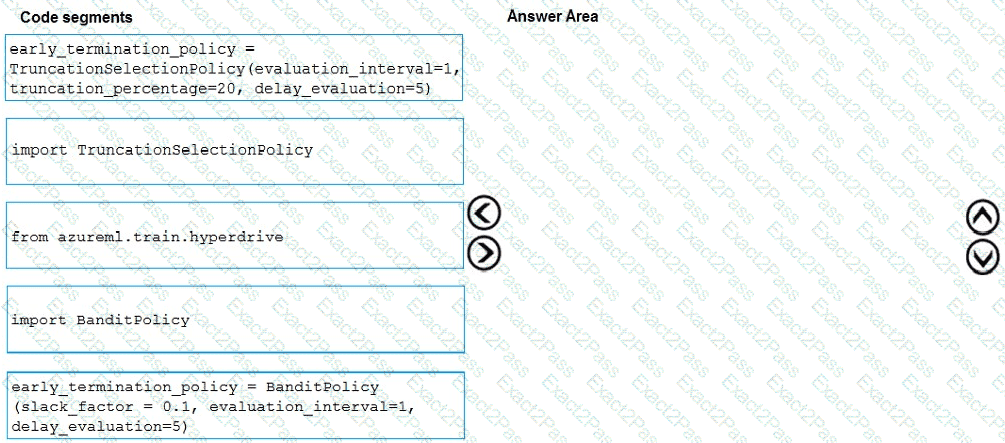
You need to implement early stopping criteria as suited in the model training requirements.
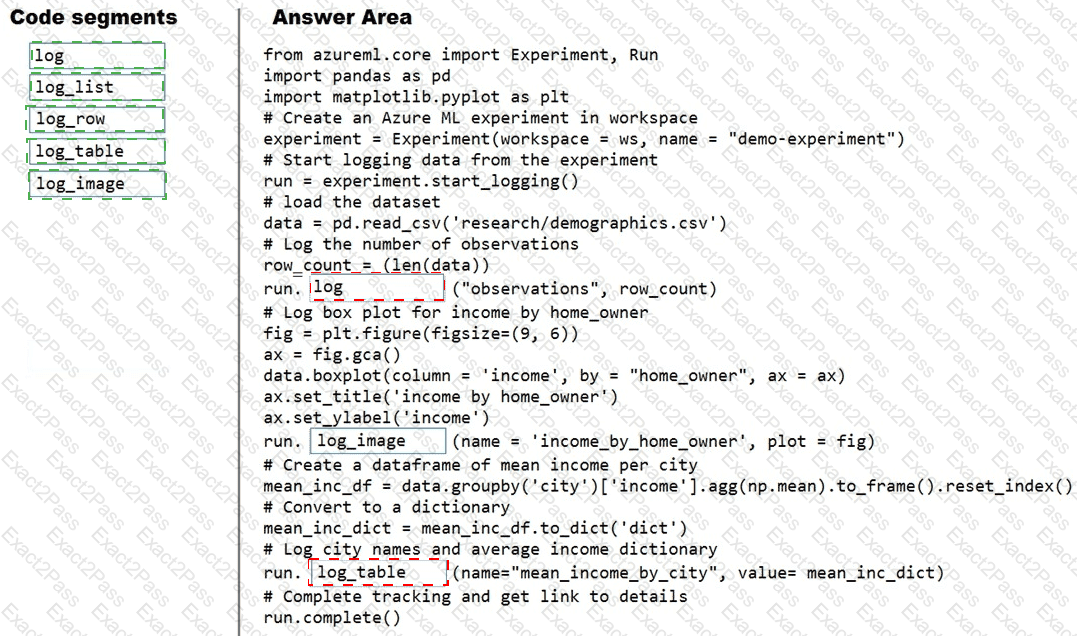
Which three code segments should you use to develop the solution? To answer, move the appropriate code segments from the list of code segments to the answer area and arrange them in the correct order.
NOTE: More than one order of answer choices is correct. You will receive credit for any of the correct orders you select.
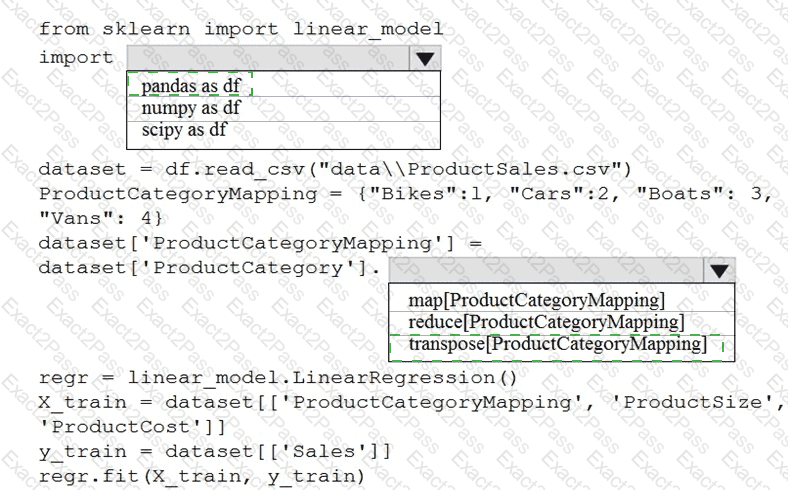
You need to select a feature extraction method.
Which method should you use?
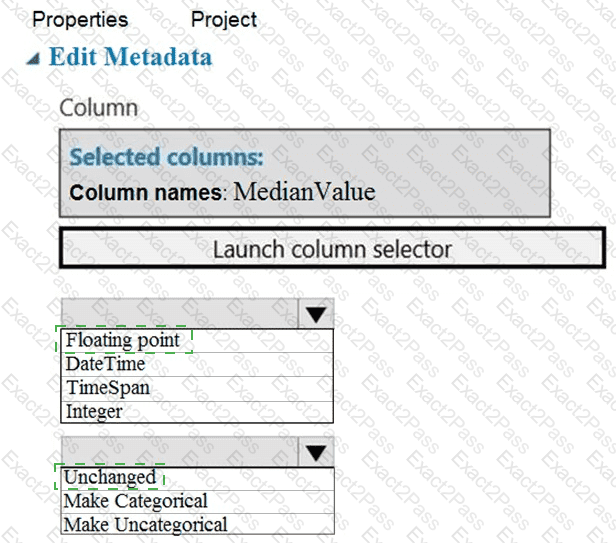
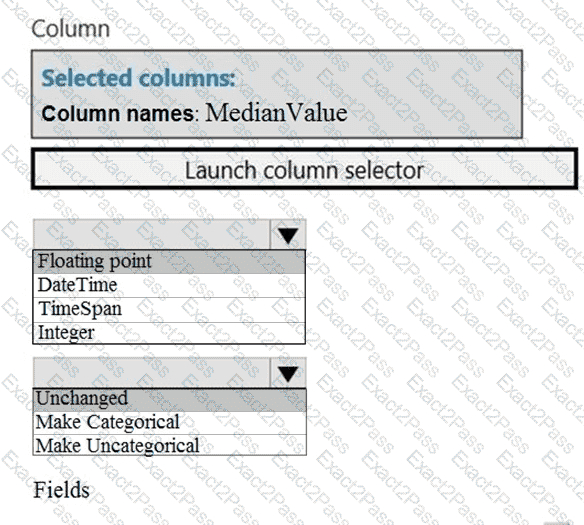
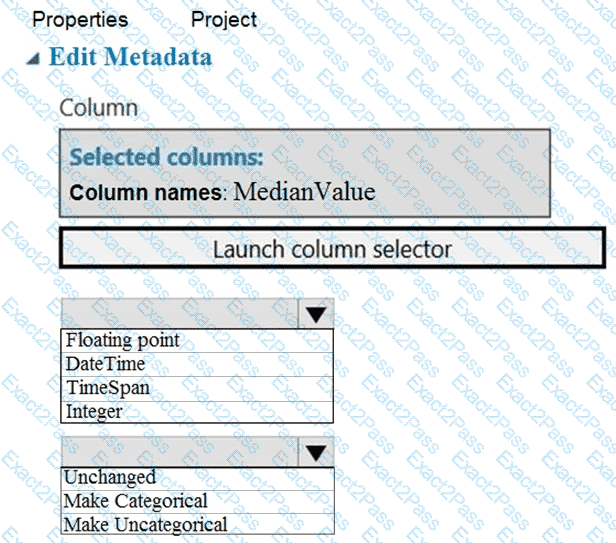
You need to configure the Edit Metadata module so that the structure of the datasets match.
Which configuration options should you select? To answer, select the appropriate options in the answer area.
NOTE: Each correct selection is worth one point.
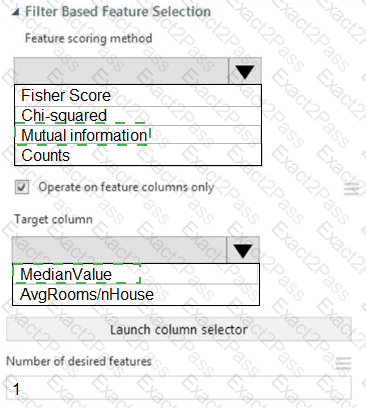
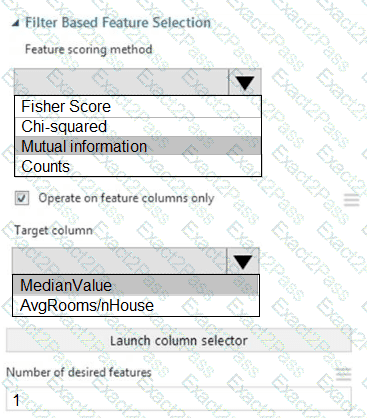
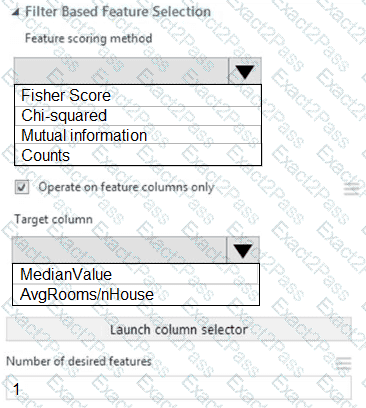
You need to configure the Feature Based Feature Selection module based on the experiment requirements and datasets.
How should you configure the module properties? To answer, select the appropriate options in the dialog box in the answer area.
NOTE: Each correct selection is worth one point.
You need to select a feature extraction method.
Which method should you use?
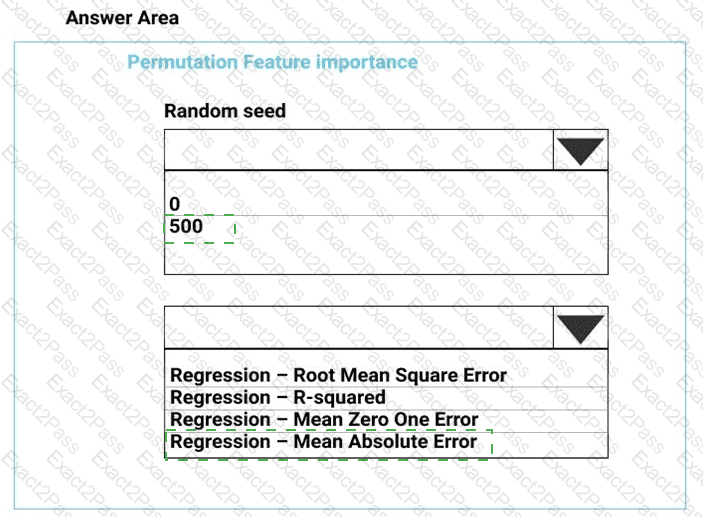
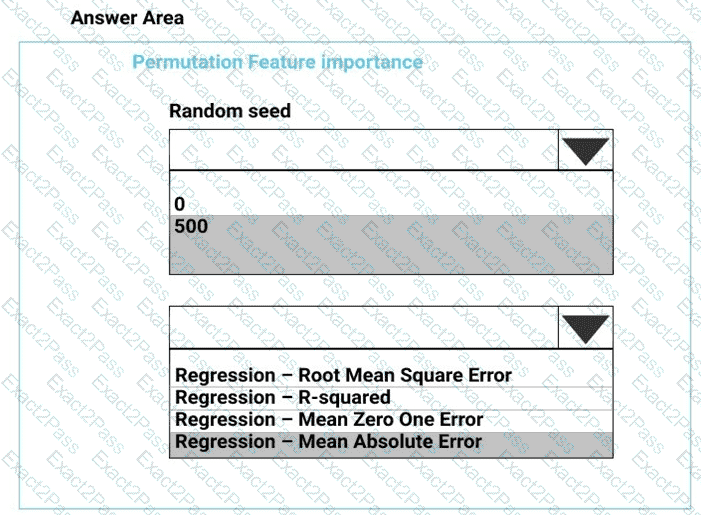
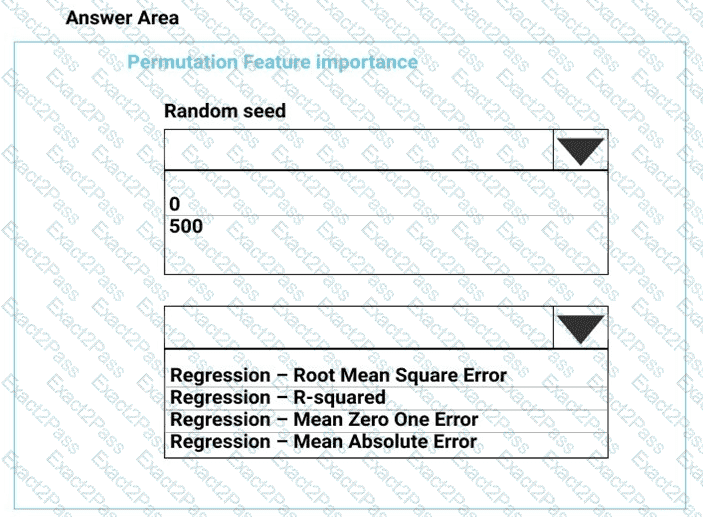
You need to configure the Permutation Feature Importance module for the model training requirements.
What should you do? To answer, select the appropriate options in the dialog box in the answer area.
NOTE: Each correct selection is worth one point.
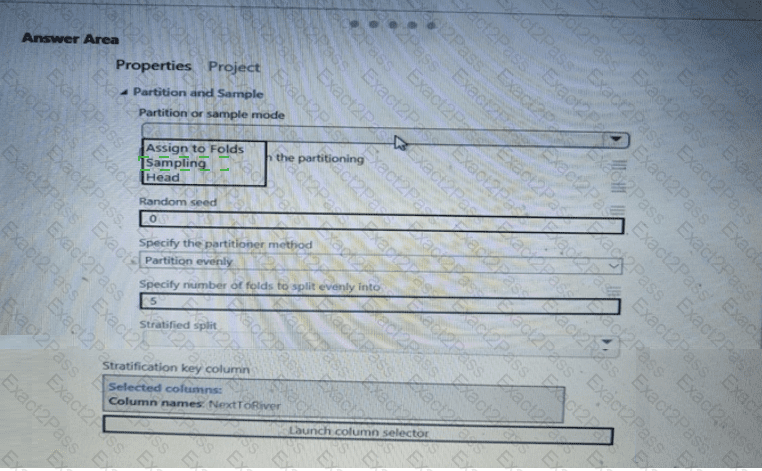
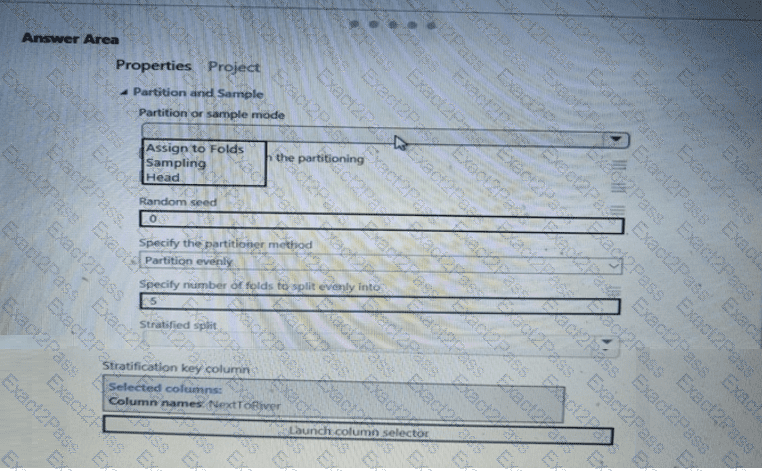
You need to identify the methods for dividing the data according, to the testing requirements.
Which properties should you select? To answer, select the appropriate option-, m the answer area. NOTE: Each correct selection is worth one point.
You create an Azure Machine Learning pipeline named pipeline1 with two steps that contain Python scripts. Data processed by the first step is passed to the second step.
You must update the content of the downstream data source of pipeline1 and run the pipeline again
You need to ensure the new run of pipeline1 fully processes the updated content.
Solution: Set the allow_reuse parameter of the PythonScriptStep object of both steps to False
Does the solution meet the goal?
You need to select an environment that will meet the business and data requirements.
Which environment should you use?