Exact2Pass

Last Update 4 hours ago Total Questions : 525
The Designing and Implementing a Data Science Solution on Azure content is now fully updated, with all current exam questions added 4 hours ago. Deciding to include DP-100 practice exam questions in your study plan goes far beyond basic test preparation.
You'll find that our DP-100 exam questions frequently feature detailed scenarios and practical problem-solving exercises that directly mirror industry challenges. Engaging with these DP-100 sample sets allows you to effectively manage your time and pace yourself, giving you the ability to finish any Designing and Implementing a Data Science Solution on Azure practice test comfortably within the allotted time.
You need to implement a model development strategy to determine a user’s tendency to respond to an ad.
Which technique should you use?
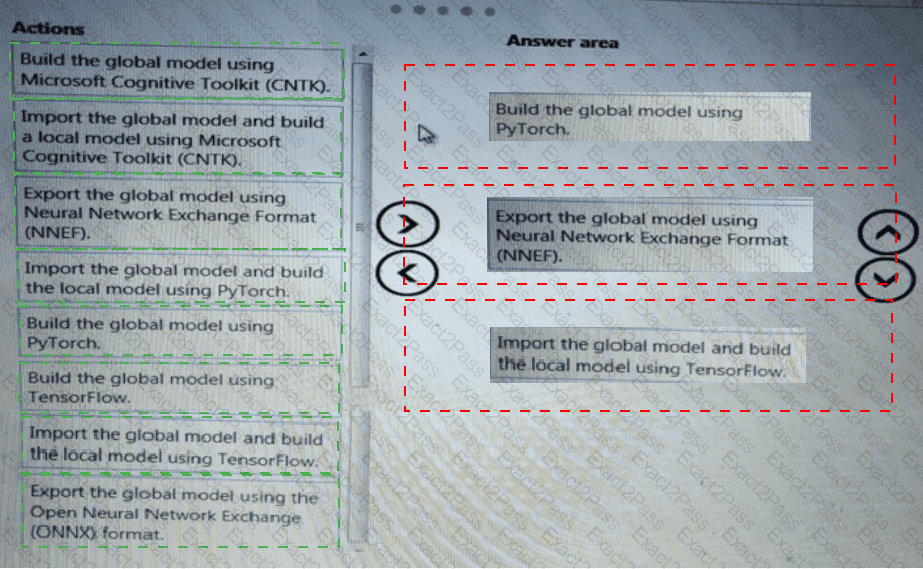
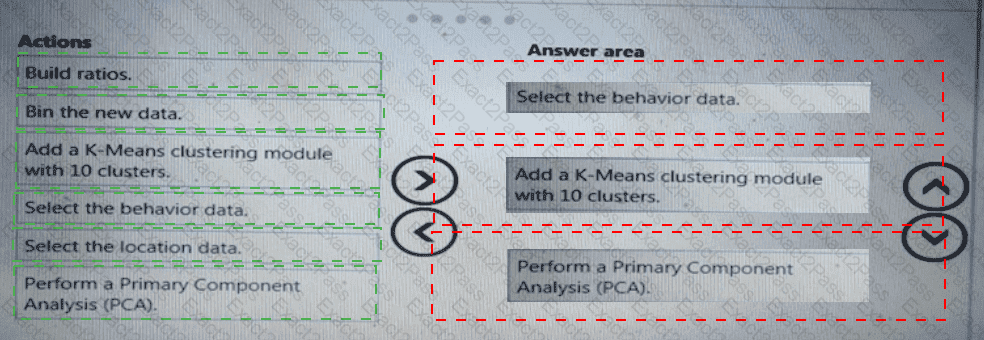
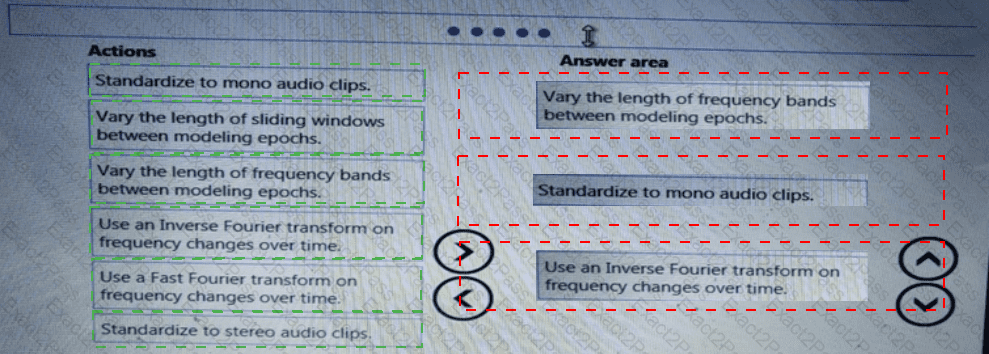
You need to define a process for penalty event detection.
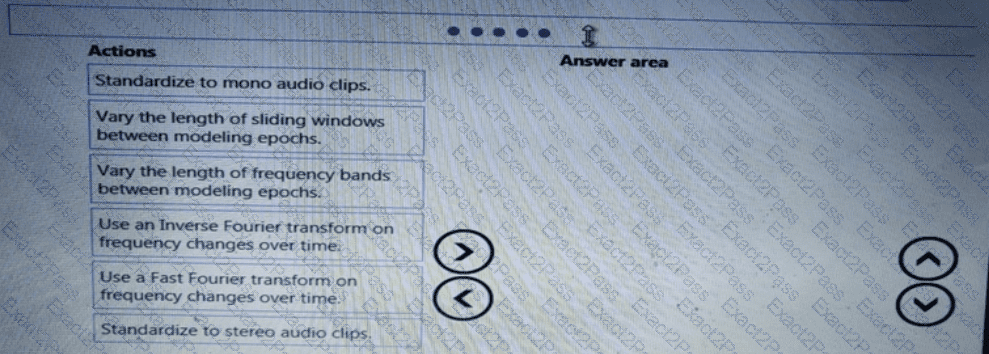
Which three actions should you perform in sequence? To answer, move the appropriate actions from the list of actions to the answer area and arrange them in the correct order.
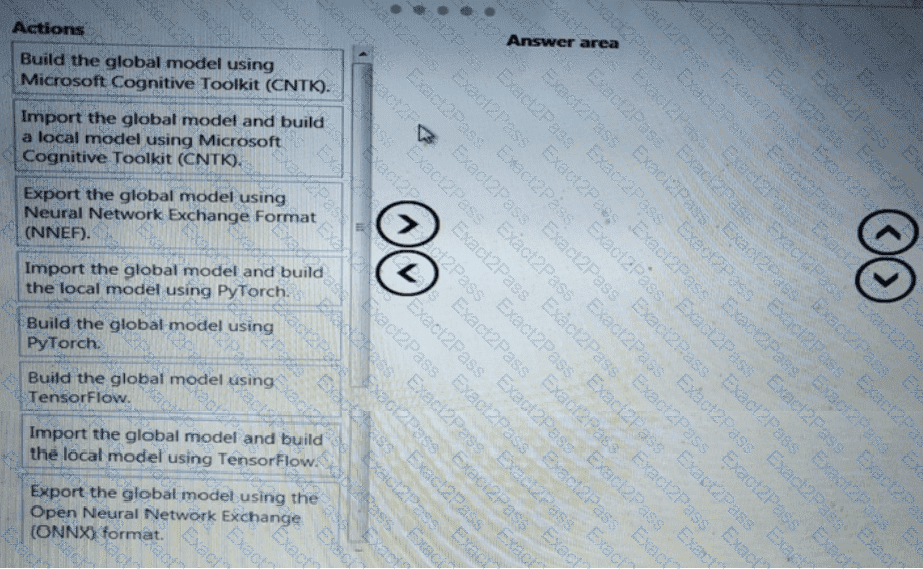
You need to resolve the local machine learning pipeline performance issue. What should you do?
You need to implement a feature engineering strategy for the crowd sentiment local models.
What should you do?
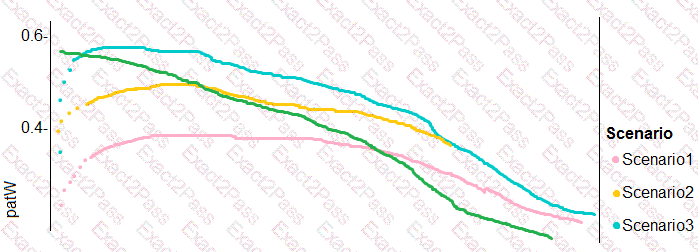
You need to implement a new cost factor scenario for the ad response models as illustrated in the
performance curve exhibit.
Which technique should you use?
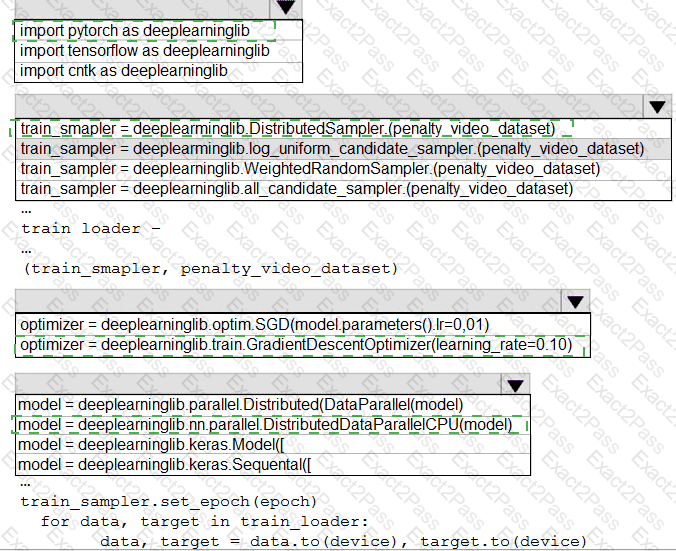
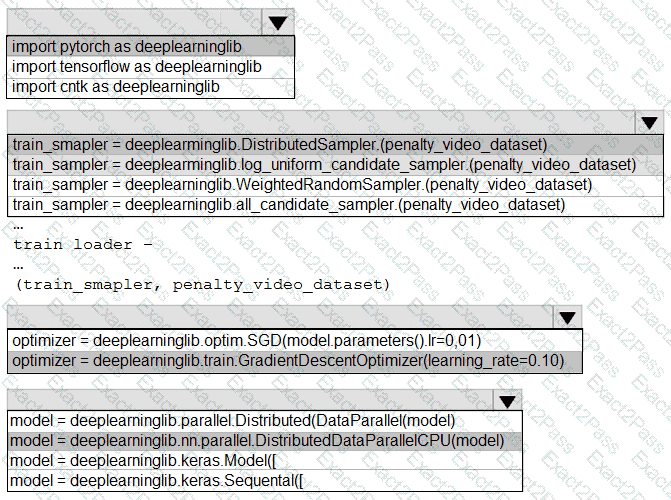
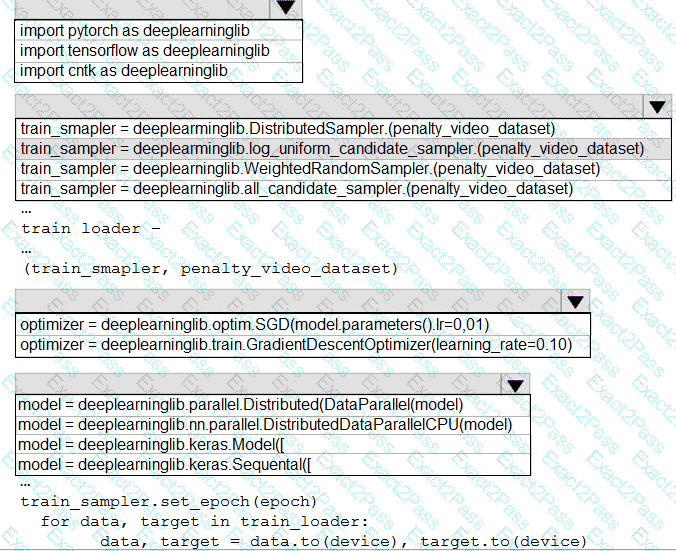
You need to use the Python language to build a sampling strategy for the global penalty detection models.
How should you complete the code segment? To answer, select the appropriate options in the answer area.
NOTE: Each correct selection is worth one point.
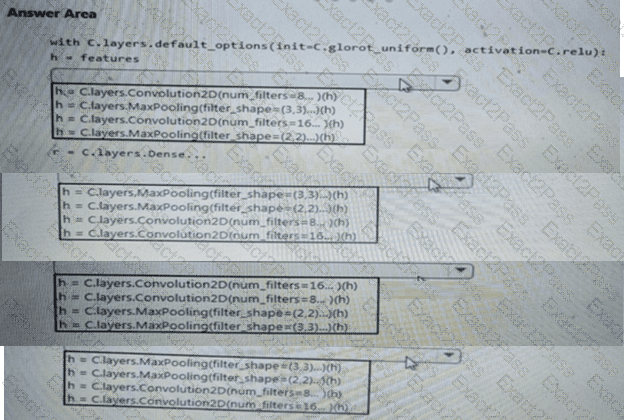
You need to build a feature extraction strategy for the local models.
How should you complete the code segment? To answer, select the appropriate options in the answer area.
NOTE: Each correct selection is worth one point.
You need to implement a scaling strategy for the local penalty detection data.
Which normalization type should you use?
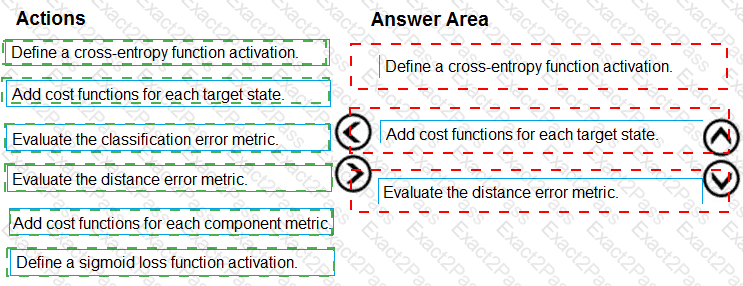
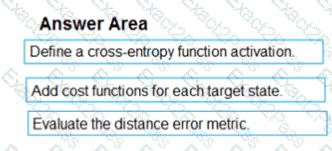
You need to define an evaluation strategy for the crowd sentiment models.
Which three actions should you perform in sequence? To answer, move the appropriate actions from the list of actions to the answer area and arrange them in the correct order.
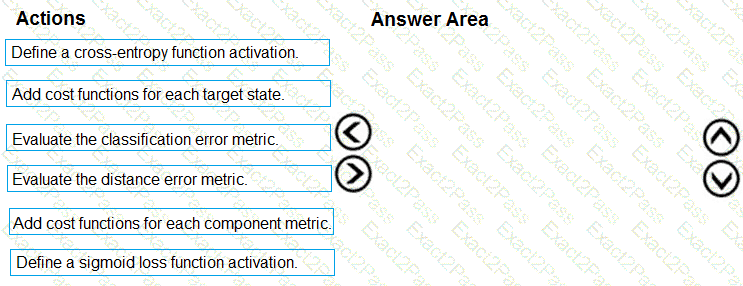
You need to define a process for penalty event detection.
Which three actions should you perform in sequence? To answer, move the appropriate actions from the list of actions to the answer area and arrange them in the correct order.